Researchers at Aberystwyth University are investigating whether intolerance of uncertainty makes a distinct contribution to anxiety in autistic adults. The April 2, 2026 announcement described the question and planned methods. It did not report results.
That distinction controls every clinical claim. The project may clarify how unpredictability relates to distress, but it has not shown that uncertainty is the primary cause of anxiety, identified who would benefit from a particular intervention or established a new diagnostic pathway.
The Study Starts With a Question
Intolerance of uncertainty refers to finding unknown or unpredictable situations particularly stressful. The Aberystwyth team asks whether it is a separate, measurable pathway to anxiety in autistic adults rather than treating all anxiety as generalised or social.
Researcher Eleanor Gamble used a last-minute lecture-room change as an example. The distress may involve not knowing the new location or seating arrangement, not simply the fact that a room changed. This illustrates the hypothesis; it is not a result showing how often that mechanism applies.
The university also said anxiety frequently occurs alongside autism and that autism affects at least 1% of the population. It did not provide a 70% clinical-anxiety estimate. A prevalence percentage from elsewhere cannot be inserted into this project without a matching population, definition and source.
Three Methods Will Examine Different Evidence
The team plans to use surveys to measure intolerance of uncertainty, anxiety and autistic traits. Focus groups will explore how autistic adults describe uncertainty, coping methods and barriers in daily life.
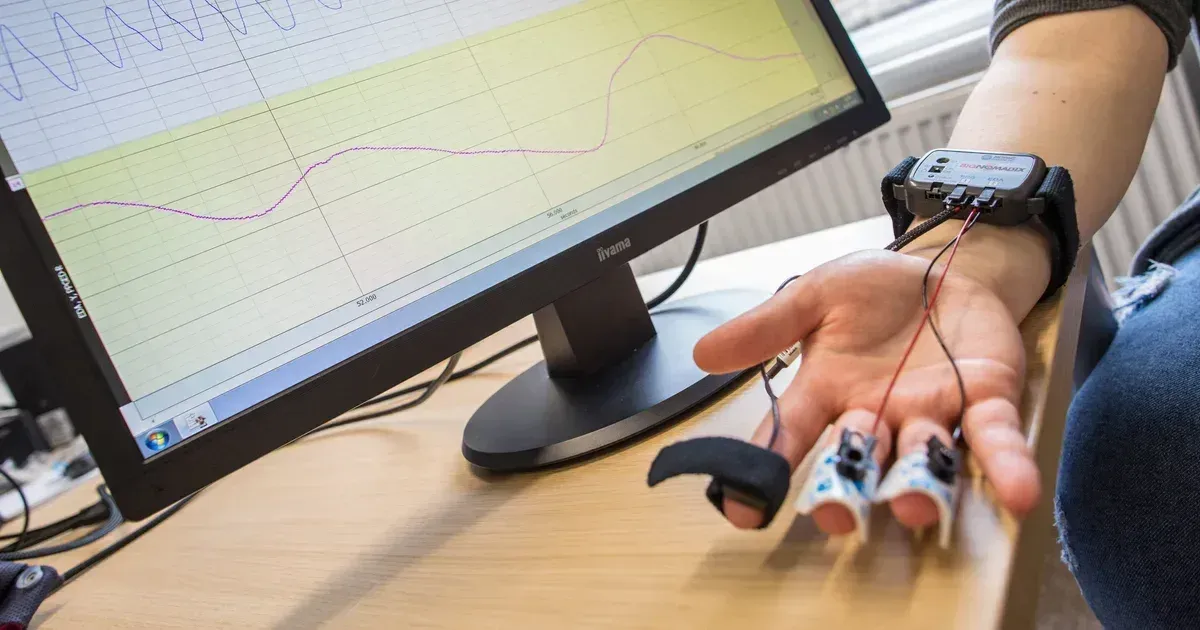
Laboratory tasks will present social and non-social stimuli in predictable or unpredictable sequences. The planned outcomes include accuracy, reaction time, heart rate and skin conductance. Researchers also intend to examine whether patterns differ between men and women.
These methods can answer different questions, but combining them does not automatically establish causation. Self-report associations, focus-group accounts and short experimental responses need separate analysis before they can support a single mechanism.
Earlier Research Supports an Association, Not Primacy
A 2020 systematic review and meta-analysis found a positive relationship between intolerance of uncertainty and anxiety across studies involving autistic people. The authors reported that the strength of the link was broadly similar to findings in people without an autism diagnosis.
That evidence makes the Aberystwyth question plausible. It does not prove that intolerance of uncertainty sits above sensory differences, social experiences, emotion regulation or other contributors. An association can be consistent with several causal directions and shared influences.
The new project may add value by combining lived-experience accounts with behavioural and physiological measures in adults. Its eventual contribution will depend on sample selection, statistical analysis, measurement quality and whether findings are published in enough detail to be scrutinised.
Practical Changes Remain a Hypothesis
The researchers hope their work could inform clearer communication, advance notice and more predictable workflows in clinical, educational and workplace settings. Those changes may be reasonable accommodations on their own terms, but the announcement does not show that they reduce anxiety or improve clinical outcomes.
Gamble said that if uncertainty is demonstrated as a key trigger, services could prioritise clear information, preparation time and predictability. Dr Catherine O'Hanlon similarly framed targeted interventions as a future possibility if the team identifies a distinct trait.
The conditional language matters. The study has not established that therapeutic success depends on environmental predictability, and it does not recommend replacing established, individualised support with a single uncertainty-focused approach.
Results Must Come Before Clinical Promotion
The announcement did not state a sample size, recruitment frame, preregistered analysis, completion date or effect threshold. It also did not describe a diagnostic-accuracy study or intervention trial. Those omissions do not invalidate a project at its opening stage; they limit what can responsibly be claimed from the announcement.
Sex and gender comparisons will also require careful interpretation. A difference within a study sample would not by itself define all autistic men or women, explain diagnostic patterns or justify sex-specific treatment.
The hard conclusion is methodological. This is a research programme about a plausible contributor to anxiety, not confirmation of a dominant cause. Clearer environments need not wait for a biomarker, but clinical claims must wait for reported data. Until the team publishes methods and results, turning “whether” into “is” would erase the very uncertainty the study was designed to measure.