The Alzheimer’s problem is partly medical and partly detection failure. Researchers are trying to find disease signals before families notice decline. The diagnosis gap is the reason the project matters. Mass General Brigham researchers on March 30, 2026, launched a broad initiative to deploy artificial intelligence against the silent progression of Alzheimer’s disease. Clinical data shows that nearly 90 percent of Americans in the earliest stages of cognitive decline remain undiagnosed, leaving families and primary-care doctors to recognize risk only after daily function has already changed. The next phase will be less about a single algorithm and more about workflow. Doctors need alerts that are specific enough to act on, families need explanations they can understand, and patients need protection from being reduced to a risk score before a human clinician reviews the evidence. The strongest use case is a second set of eyes inside primary care, not a machine diagnosis delivered without context.
The project centers on a practical gap in routine medicine. Brief appointments rarely give clinicians enough time to test memory, language, gait and sleep patterns in detail. AI screening is being tested as a way to flag subtle changes across electronic health records, speech patterns and other patient signals before a crisis forces a neurology referral.
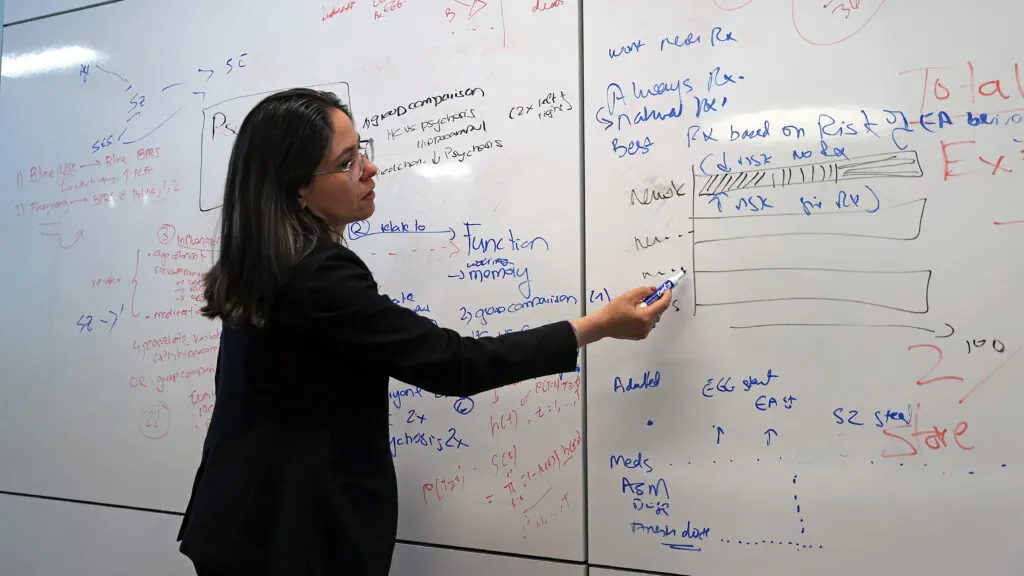
Lidia Moura, director of population health in neurology at Mass General Brigham, has argued that earlier detection may be the most realistic way to improve outcomes. New drugs remain costly, selective and difficult to time correctly. A tool that identifies risk earlier could help patients enter monitoring, lifestyle support and treatment discussions while more options remain open.
Primary Care Detection Gap
Most patients do not receive formal cognitive screening until memory loss disrupts work, travel, medication routines or family life. By that point, disease may have been developing for years. The 90 percent undiagnosed figure matters because it describes a system that is reacting late rather than managing risk early.
Artificial intelligence cannot diagnose Alzheimer’s disease by itself, and clinicians will still need imaging, lab work, neurological exams and careful conversations with families. The value of the tool is triage: it can help identify who should be examined sooner and who needs closer follow-up.
Early Alzheimer’s detection also raises equity questions. Communities with limited access to specialists could benefit if screening becomes easier in primary care, but only if the system avoids false reassurance, false alarms and uneven follow-through after a patient is flagged.
AI Screening and Patient Risk
The strongest version of the approach would combine medical history, language changes, sleep data and functional markers without turning every forgetful moment into a diagnosis. That balance is difficult. Families need useful warnings, not automated labels that create fear before a human review.
Researchers also have to prove that the model works across age groups, languages, education levels and clinical settings. A tool trained on narrow data could miss patients outside the original population or overstate risk for people whose speech and behavior differ for unrelated reasons.
The ethical test is therefore not only accuracy. It is how clinicians explain risk, protect privacy and make sure a flagged patient can actually receive care. Screening has limited value if it creates a waiting list without diagnosis, treatment planning or support.
Neurology Care Before Symptoms Escalate
The initiative points toward a broader shift in dementia care: finding disease earlier, matching patients to the right level of monitoring and using limited specialist capacity more intelligently. That would not cure Alzheimer’s disease, but it could change the timing of help.
For families, earlier notice can mean more time to plan finances, driving decisions, caregiving and treatment choices. For health systems, it can mean fewer missed opportunities to slow decline or rule out other causes of cognitive change. The challenge is to make the technology serve clinical judgment rather than replace it.