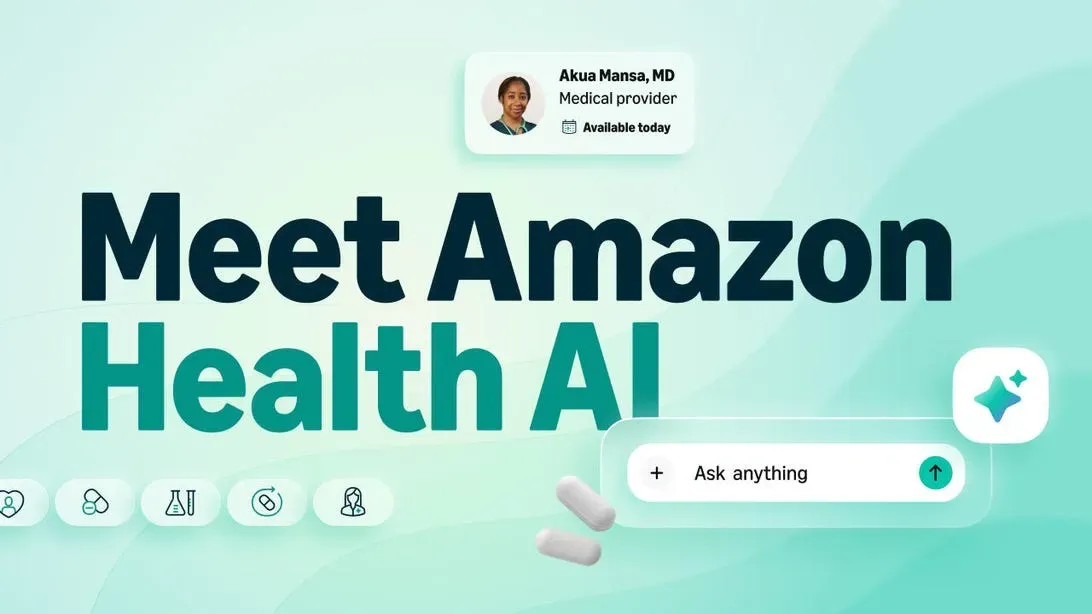
Amazon's medical AI expansion drew scrutiny on March 12, 2026, because diagnostic error questions remain unresolved while the company pushes deeper into virtual care.
Amazon’s medical AI expansion is moving faster than public trust, especially while diagnostic error questions remain unresolved.
Medical AI Moves Faster Than Trust
Seattle headquarters for Amazon became the center of a medical ethics debate this March. Software engineers finalized the rollout of a sophisticated AI chatbot designed to serve as the primary interface for its virtual health care members. Subscribers now have the ability to prompt the system with personal health data, seeking guidance on everything from chronic pain to acute symptoms. Executives at the company claim that these tools will broaden access to medical expertise, particularly for those in remote areas or with limited mobility. Rapid adoption of large language models within the corporate structure suggests a firm belief that algorithms can streamline the patient experience. Early adopters have already begun using the interface to query symptoms, hoping for the speed of a Google search with the precision of a medical degree. Nature Medicine threw a cold towel on the corporate excitement this week. A peer-reviewed study published by the journal indicates that these large language models fail to provide a correct diagnosis more than 50% of the time. Medical AI errors carry consequences that ordinary software failures do not. Researchers found that when humans interact with these tools, the systems frequently lack the requisite context to differentiate between a common cold and a life-threatening infection. Scientists conducted thousands of trials where patients provided symptom descriptions to various AI models.
Diagnostic Error Is the Core Risk
Accuracy plummeted when cases involved rare conditions or subtle, overlapping symptoms. Misinterpretation of patient intent and a lack of physical examination capabilities led to a failure rate that would be grounds for malpractice in any human-run clinic. The math doesn't add up for an industry looking to cut costs. Amazon's expansion into virtual care utilizes large language models to triage patient concerns. Millions of users now have access to a digital assistant capable of parsing symptoms. Corporate leaders argue that the AI is not a replacement for doctors, yet the interface design encourages users to treat it as a definitive source of truth. Internal documents suggest the goal is to reduce the burden on human practitioners by filtering out non-emergency cases. Critics point out that if the filter is broken, the entire system collapses. A missed diagnosis at the triage stage can lead to delayed treatment, worsening outcomes, and increased legal risk for the provider. Still, the rollout continues at a pace that suggests market share is being prioritized over clinical validation.
Hospitals Need Accountability Before Scale
Clinicians participating in the Nature Medicine study observed a pattern of hallucinated confidence within the AI responses. Chatbots would often latch onto a single symptom, like a persistent cough, while ignoring a patient's history of heart disease. Researchers noted that medical professionals rely on non-verbal cues and physical examinations that a digital interface cannot replicate. Patients tend to under-report certain symptoms or over-emphasize others, leading the AI down a path of statistical probability that ignores clinical nuance.
Large language models operate on patterns in text, not the biological realities of the human body. Because these models are trained on internet data, they often reflect common misconceptions or outdated medical advice found in public forums. Correcting these biases requires a level of oversight that current tech giants have yet to demonstrate. Reliability remains the primary hurdle for the integration of generative tools in hospital settings.
While Bloomberg suggests that some hospitals are seeing administrative efficiency gains, the Reuters report on clinical failures paints a darker picture. One specific test case in the Nature Medicine data involved a patient describing symptoms of a pulmonary embolism.
Amazon Wants the Platform Layer
The AI categorized the case as a mild anxiety attack, recommending breathing exercises instead of an emergency room visit. Such errors are not statistical outliers but are systemic flaws in how language models process medical urgency. Doctors involved in the study expressed horror at the prospect of patients relying on these tools for triage without a human backstop. Medicine is an art of deduction that requires more than word prediction.
Corporate strategies at Amazon involve integrating this technology across their entire Prime ecosystem. Integration into the virtual health portal is only the first step. Rumors from within the company suggest that future iterations will link AI diagnostic tools with the Amazon Pharmacy division, creating a closed loop of symptom analysis and medication delivery. Such a system would be incredibly profitable.
Health Care Is Not a Beta Test
Amazon expanded medical AI efforts despite concerns about diagnostic failure rates. The central risk is whether automation errors are caught before they affect patient care. Hospitals need transparency, audit trails and liability rules before scaling these tools. Medical AI can help clinicians, but it cannot become a shield for under-tested systems.
Diagnostic failure rates matter because even small error rates can affect many patients when a tool is deployed across large health systems. Hospitals should require validation data, monitoring, human review and clear accountability when AI advice is wrong.