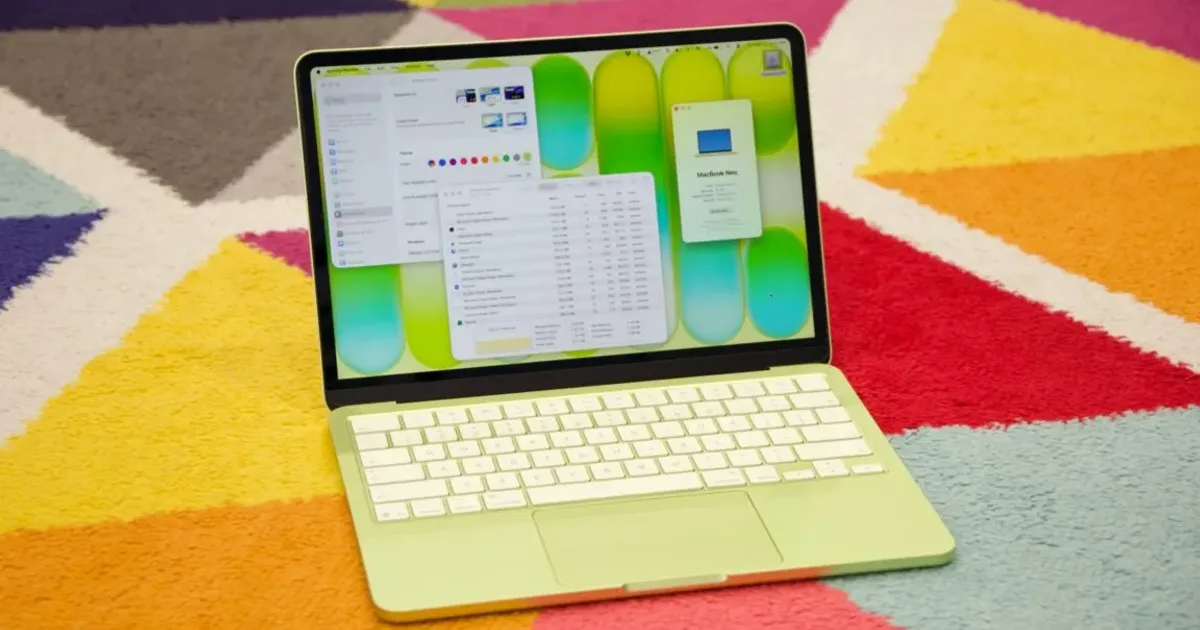
Cupertino Prepares for Half a Century of Innovation
Cupertino is bracing for a milestone that transforms a garage start-up into a half-century-old institution. Apple turns 50 on April 1, 2026, and the upcoming celebration has already begun with a rare public reflection from its leadership. Tim Cook, the company's chief executive, published a letter this Thursday titled 50 years of thinking different on the official corporate website. Cook recounted the origins of the firm, noting that fifty years ago in a small garage, a big idea was born. He emphasized the radical notion that technology should be personal, a belief he claims changed everything for the global consumer market.
Cook’s anniversary message avoids specific product announcements, focusing instead on the company's roots and the legacy of his predecessors. While the letter does not mention co-founder Steve Jobs by name, it concludes with a familiar quote regarding those crazy enough to think they can change the world. Separate announcements on the Apple site suggest that the coming weeks will involve the global community in a series of events recognizing innovation and creativity. This strategy seeks to capture the nostalgia of longtime users while positioning the brand for a future that looks increasingly different from its high-margin past.
Apple is traditionally known for its obsession with the future, but the 50th anniversary offers a rare moment to look back. The internal corporate posts describe this as a period to honor the enduring values that guide their work. Industry analysts expect the celebration to stretch through April, potentially coinciding with the release of rumored hardware like the iPhone Fold. For now, the spotlight remains on a surprising shift in the laptop lineup that challenges the historical perception of the brand as an exclusive luxury provider.
MacBook Neo Redefines Entry-Level Portability
Hardware enthusiasts and budget-conscious students have found a new focus in the MacBook Neo, a device that recently hit the market with a $599 starting price. Apple’s latest laptop is serious effort to compete with midrange Windows machines and Chromebooks, which have long dominated the educational and entry-level sectors. Recent documentation published on the company’s support site reveals that the Neo is not just cheaper, it is fundamentally more accessible to those who wish to maintain their own hardware.
Repair documentation for the Neo highlights a significant departure from the M5 MacBook Air’s design philosophy. Internal layouts in the Neo are more modular, allowing for easier access to critical components. Technicians at Ars Technica observed that replacing almost any part in the Neo involves fewer steps and specialized tools compared to the high-end M5 models. This modularity could win over schools and businesses that frequently deal with the wear and tear of a large device fleet.
The battery replacement process serves as the clearest example of this new design direction. In the M5 MacBook Air, the battery is secured to the chassis with a combination of multiple screws and stubborn adhesive strips. The Neo simplifies this by allowing the battery to be removed with relative ease once the initial shielding and flex cables are cleared. Such a change suggests that the company is responding to legislative pressure regarding the right to repair, which has gained significant traction across the United States and Europe.
Early Discounts Hit the M5 MacBook Air
Amazon and other major retailers have already begun slashing prices on the flagship M5 MacBook Air despite its recent launch. As of March 12, both the 13-inch and 15-inch versions of the M5 model with 16GB of RAM and a 512GB SSD have seen their first significant price cuts. The 13-inch model is currently listed at 1,049.99 dollars, down from its original price of 1,099 dollars. Larger 15-inch models have dropped to 1,249.99 dollars, representing a 50-dollar saving for early adopters.
Price drops occurring this early in the product cycle are unusual for Apple hardware. This reduction makes the M5 chip more competitive against surging competition from Qualcomm’s latest silicon and Intel’s refreshed mobile processors. Market observers suggest these discounts might be a tactical move to clear inventory as the MacBook Neo begins to eat into the lower end of the market. High-performance users still gravitate toward the Air for its superior display and thermal efficiency, but the value proposition is shifting rapidly.
Retailer data indicates that consumer interest remains high for the 16GB RAM configurations, which have become the new baseline for those running local artificial intelligence models. As the 50th anniversary approaches, the combination of the affordable Neo and the discounted M5 Air creates a multi-tiered entry point that Apple has historically avoided. The firm seems intent on saturating every price bracket from 600 dollars to 1,300 dollars.
Legacy and Modern Market Realities
Balancing a premium brand image with a budget-friendly laptop like the Neo presents a unique challenge for Tim Cook’s team. The 50th-anniversary marketing focuses heavily on the idea of technology as a tool for personal empowerment, a theme that resonates with the Neo’s repairable design. By making hardware easier to fix, Apple aligns itself with the sustainability goals mentioned in its recent environmental reports. Internal components are no longer treated as disposable, a trend that could eventually move up the product stack to the Pro models.
Documentation for the Neo also reveals a cooling system that, while less sophisticated than the M5 Air, is far easier to clean and replace. Dust buildup has long been a quiet killer of thin-and-light laptops, and the Neo’s accessible fans suggest a longer lifespan for the average user. While Bloomberg suggests that the Neo might use slightly older screen technology to hit its price point, the modularity is what has captured the attention of the tech world.
The garage-born company of 1976 has grown into a titan with a complex supply chain, yet the Neo feels like a nod to the era when enthusiasts could tinker with their machines. It is a calculated move that addresses both economic headwinds and the growing public demand for durable, fixable electronics. As April 1 nears, the industry will watch to see if these celebrations include not merely letters and discounts.
Apple continues to dominate the high-end market, but the Neo shows they are no longer ignoring the masses. The next fifty years of the company may be defined not by how many luxury items they sell, but by how long their devices remain in the hands of users through repair and upgrades.
The Elite Tribune Perspective
Legacy is a heavy anchor for a company that once begged us to think different. As Apple celebrates fifty years, the irony of the MacBook Neo should not be lost on any serious observer. For decades, Cupertino fought the right to repair with the ferocity of a cornered animal, claiming that user access threatened safety and security. Now, we are expected to applaud a 599-dollar laptop because it finally allows a battery to be removed without a heat gun and a prayer. Such a move is not a sudden epiphany of corporate kindness, it is a strategic surrender to global regulators who have finally grown tired of the planned obsolescence that built Apple’s trillions. The M5 MacBook Air discounts further signal a brand in transition, realizing that the prestige of the glowing logo is no longer enough to justify a thousand-dollar entry fee in a tightening economy. Tim Cook’s garage-themed nostalgia is a clever distraction from the reality that the company is becoming a utility provider. If Apple truly wants to honor its roots of rebellion, it should stop hiding behind commemorative letters and make every device in its lineup as modular as the Neo. Anything less is just marketing for a birthday party that the average consumer can barely afford to attend.