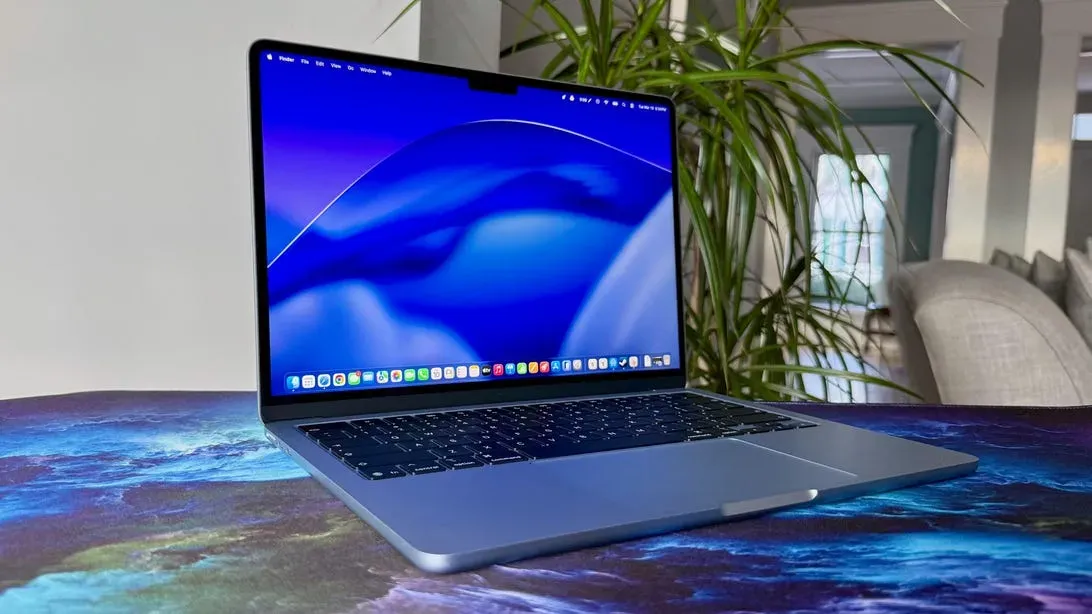
March mornings in Silicon Valley usually arrive with the crisp scent of new aluminum and silicon, but the 2026 hardware cycle feels different. Apple released its M5 MacBook Air alongside the intriguing MacBook Neo this week, causing a ripple of confusion throughout the consumer electronics market. By March 11, 2026, analysts had spent years predicting a streamlined future for the Mac, yet the current reality suggests a brand willing to slice its market into thinner segments than ever before. Buyers once walked into an Apple Store with a simple choice between a portable Air and a powerful Pro, but that binary has dissolved into a spectrum of varying price points and performance metrics. The MacBook Neo is a significant deviation from the company's recent trajectory.
Apple's M5 MacBook Air and the new MacBook Neo have left buyers sorting through a more fragmented laptop lineup.
ZDNet recently analyzed the Neo against its Windows and Chromebook rivals, identifying a machine that targets users who possess some budget to spare but remain platform-agnostic. While the Neo occupies the space previously held by the base-model Air, its internal specifications suggest a focus on efficiency over raw power. This shift has forced the 13-inch M5 MacBook Air into a precarious position. CNET reviewers noted that the 13-inch Air is no longer the entry point for students, who are now being nudged toward the Neo or the larger, more expensive 15-inch Air. This change in positioning leaves the standard 13-inch model as a bit of a question mark in the 2026 ecosystem.
The M5 Chip and the Price of Progress
Performance benchmarks for the new M5 silicon reveal a chip optimized for localized artificial intelligence processing, yet these gains come at a literal cost. Apple increased the starting price for the M5 MacBook Air 13-inch, moving it further away from the important sub-$1,000 threshold that historically dominated college campuses. Logic dictates that a student looking for a reliable machine would gravitate toward the M5, but the price increase creates a barrier that did not exist two years ago. Most users will find themselves better off with the larger Air if they need the screen real estate for multitasking, or the Neo if their needs are purely clerical.
Engineering choices within the Neo show where Apple cut corners to maintain its profit margins.
Unlike the M5 Air, the Neo utilizes a slightly older display technology and a cooling system that struggles under sustained video editing loads. Windows competitors like the latest Dell XPS 13 and premium Chromebooks from Google are now offering 120Hz OLED panels at price points that undercut the Neo. ZDNet found that several high-end Chromebooks actually outperform the Neo in web-based productivity tasks, a startling development for a company that once claimed total dominance in the mobile computing sector. But Apple relies on its software ecosystem to retain customers who might otherwise be tempted by superior Windows hardware.
Managing the 13-Inch Air Identity
Internal competition often breeds excellence, but in this case, it seems to have bred redundancy. The M5 MacBook Air 13-inch remains a beautiful piece of industrial design, though its utility is being squeezed from both sides. Professionals who need portability but not the bulk of a Pro model might find the M5 Air sufficient, yet the 15-inch variant offers a sharply better battery life and thermal headroom for a relatively small price jump. CNET's testing suggests the 13-inch model is caught in a no-man's-land where it is too expensive for the budget-conscious and too small for the power user.
Market data from the first week of sales indicates that early adopters are favoring the 15-inch M5 Air by a three-to-one margin.
Retailers in New York and London report that the MacBook Neo is seeing high interest from corporate fleet buyers rather than individual consumers. Companies looking to outfit hundreds of employees with macOS machines find the Neo's price point attractive, even if the specs are uninspiring. Such a trend suggests that Apple is successfully pivoting the Neo into a business tool while attempting to maintain the Air's status as a premium lifestyle product. Still, the overlap between these devices creates a confusing shopping experience for the average parent buying a laptop for a high school senior.
Silicon Valley no longer holds a monopoly on innovative power management in laptops. Rivals in the Windows space have largely closed the gap that Apple created with its initial transition to ARM-based processors. Qualcomm and AMD now provide chips that rival the M5 in single-core performance while offering better compatibility with legacy enterprise software. Apple must justify its ecosystem lock-in through unique features, yet the M5's focus on AI tasks feels identical to the marketing pushes coming from Microsoft and Intel. The hardware parity makes the software experience the primary differentiator for 2026 buyers.
Consumers are becoming more cynical about yearly refresh cycles that offer incremental improvements.
Apple MacBook Air price increase March 2026 reports have surfaced in financial circles, suggesting that the company is passing the rising cost of 3-nanometer fabrication onto the end user. If the price of entry continues to climb, the MacBook Neo will need to do more than exist as a cheaper alternative. It will need to define a new category of computing that doesn't feel like a compromise. Currently, the Neo feels like a placeholder, a machine designed to protect the high margins of the Air while preventing a mass exodus to Windows 11 devices.
Buyer Confusion
Choosing a laptop in 2026 requires a level of research that borders on the academic. Buyers should look closely at their daily workflows before committing to the M5 Air 13-inch, especially when the 15-inch model provides a more cohesive experience. Students should compare the current MacBook Neo and Windows laptop benchmark data carefully to ensure they aren't paying a premium for a logo while sacrificing screen quality. The 13-inch Air is a relic of an era when it was the clear choice for everyone, a title it can no longer claim in this fragmented environment. Apple has traded simplicity for market segmentation, and the user must now do the work of deciding where they fit into that plan.
Mac Lineup Readout
Does anyone truly believe that adding a 'Neo' to the lineup was about user choice? History suggests that Apple only expands its product tiers when it is under pressure to hide stagnation in core innovation. By introducing a lower-spec machine and bumping the price of the M5 Air, Apple is essentially taxing its most loyal customers for the privilege of not using a budget laptop. We are looking at a classic bait-and-switch where the legendary Air name is being used to justify a price hike, while the Neo is cast as the savior for those who cannot afford the new standard. It is a cynical strategy that treats the MacBook like a tiered subscription service rather than a piece of professional equipment. If the M5 chip were the revolutionary leap Apple claims, they wouldn't need to surround it with a confusing array of lesser machines to make it look desirable. The 13-inch Air has become the neglected middle child of Cupertino, too expensive to be a bargain and too underpowered to be a pro. It is time for consumers to stop rewarding this complexity. If you want a laptop that actually delivers value in 2026, look at the competitors that Apple is so clearly afraid of or buy the 15-inch model and admit that the 13-inch era is dead.