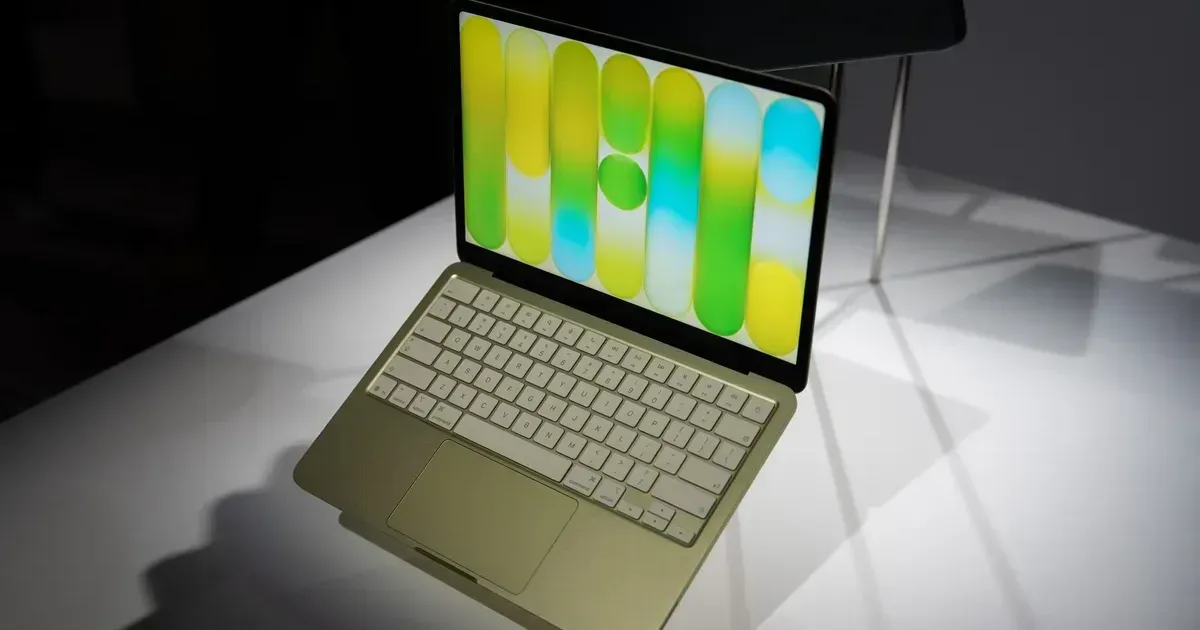
Apple is facing resistance over a rumored budget MacBook because buyers expect lower prices without obvious compromises. Hardware limits could protect premium models but weaken the appeal of a cheaper laptop.
Budget MacBook Promise Meets Hardware Limits
Cupertino analysts often describe Apple as a luxury brand, but the release of the $599 MacBook Neo suggests a concerted grab for the volume market. Critics and hardware enthusiasts spent the last week dissecting the neon-colored laptop, finding a machine that triumphs in price while stumbling on professional-grade utility. The Apple Hits Resistance Over Budget MacBook Neo Hardware Limits report carried a March 12, 2026 time marker for readers following the latest account. Most reviewers, including those at Mashable and The Verge, initially celebrated the entry-level price point.
Students and casual users find the $499 education pricing particularly attractive for a device running the latest silicon. Beneath the citrus-colored aluminum shell, however, a series of engineering choices has sparked a heated debate regarding the longevity of Apple's most affordable computer. Hardware limitations define the Neo experience more than its vibrant aesthetic. Every model ships with 8GB of RAM, a figure that remains static throughout the life of the machine.
Apple opted for a soldered memory configuration, meaning buyers cannot upgrade their RAM at the time of purchase or via a third-party technician later. Such a decision ensures the $599 price remains feasible, but it creates a narrow window for future software updates. While 8GB serves basic tasks like word processing or streaming video, it creates a bottleneck for users who need to keep dozens of browser tabs open while running productivity software. Industry experts argue that 8GB in 2026 is the functional equivalent of 4GB a decade ago, barely enough to maintain a smooth experience under modern operating system loads.
Apple Protects the Premium Ladder
Apple has bet heavily on efficiency over raw capacity. Benchmarking tests conducted by 9to5Mac revealed a fascinating split in performance between the Neo and its more expensive siblings. The A18 Pro chipset, borrowed from the iPhone 16 Pro architecture, delivers single-core speeds that surpass even the older M1 and M2 chips. This hardware configuration allows the Neo to feel incredibly snappy during immediate actions, such as launching an app or scrolling through a complex webpage.
But the narrative shifts when the workload spreads across multiple cores. In multi-core stress tests, the Neo falls behind the MacBook Air and Pro models, revealing the limitations of a chip designed originally for mobile phone thermal envelopes. For users editing high-definition video or managing large databases, the Neo quickly hits a ceiling that its single-core brilliance cannot hide. Connectivity remains the most controversial aspect of the Neo design.
Apple equipped the laptop with two USB-C ports, yet they are not created equal in functionality. Macworld recently confirmed that only one of these ports supports data transfer speeds of up to 10Gb/s. The secondary port is restricted to a mere 480Mbps, a speed standard that dates back to the USB 2.0 era. This tiered system means that while one port can handle an external display or a relatively fast drive, the other is effectively relegated to charging duties.
Buyer Expectations
Users attempting to transfer large files from two external sources simultaneously will find themselves throttled by hardware that feels out of place in a 2026 release. This tiered port system creates unnecessary friction for modern workflows. Thunderbolt 4 support is entirely absent from the Neo, a departure from the 40Gb/s standard found on the MacBook Air. By capping data speeds at 10Gb/s, Apple has ensured that high-end peripheral users stay within the more expensive Air or Pro ecosystems.
Creative professionals who rely on external NVMe drives for fast scratch space will find the Neo nearly unusable for their specific needs. The decision to include a 480Mbps port in 2026 feels like a deliberate attempt to segment the market rather than a cost-saving necessity. It forces a hierarchy of cables on the user, who must remember which side of the laptop offers actual performance and which side is a glorified power socket. Transitioning the A-series chips into the Mac lineup allows Apple to maximize its supply chain, but it introduces mobile-first constraints to a desktop environment.
The A18 Pro was never intended to compete with the sustained thermal demands of a laptop chassis. While the Neo lacks a fan, its passive cooling system must work harder than the MacBook Air because the A18 Pro lacks the same multi-core efficiency found in M-series silicon. Technical teardowns show a smaller heat spreader compared to the Air, suggesting that the Neo will likely throttle performance during extended gaming sessions or complex rendering tasks.
Budget MacBook Trade-Off
Why should anyone celebrate a $600 laptop that deliberately includes technology from the year 2000? By including a 480Mbps port on a machine released in 2026, Apple is not just being frugal, it is being insulting. It is a classic bait-and-switch designed to lure budget-conscious students into an ecosystem that will feel sluggish and restricted within twenty-four months. The adulation from some tech circles ignores the reality that Apple is selling planned obsolescence under the guise of affordability. The fixed 8GB memory ceiling looks less like generosity than a way to preserve the profit margins of the higher-end MacBook Air. We have seen this playbook before with the 16GB iPhone and the base-model iPad, where the entry-level price is merely a marketing ghost meant to drive people toward the $800 tier. If you buy the Neo, you are paying for the privilege of needing a new computer by 2028. It is a citrus-colored trap for the uninformed, and no amount of single-core speed can justify hardware that treats data transfer like an afterthought. Smart consumers should either find the extra $200 for an Air or look elsewhere entirely.
Selling 8GB of non-upgradeable memory in the age of generative AI is a cynical move to protect the profit margins of the higher-end MacBook Air.