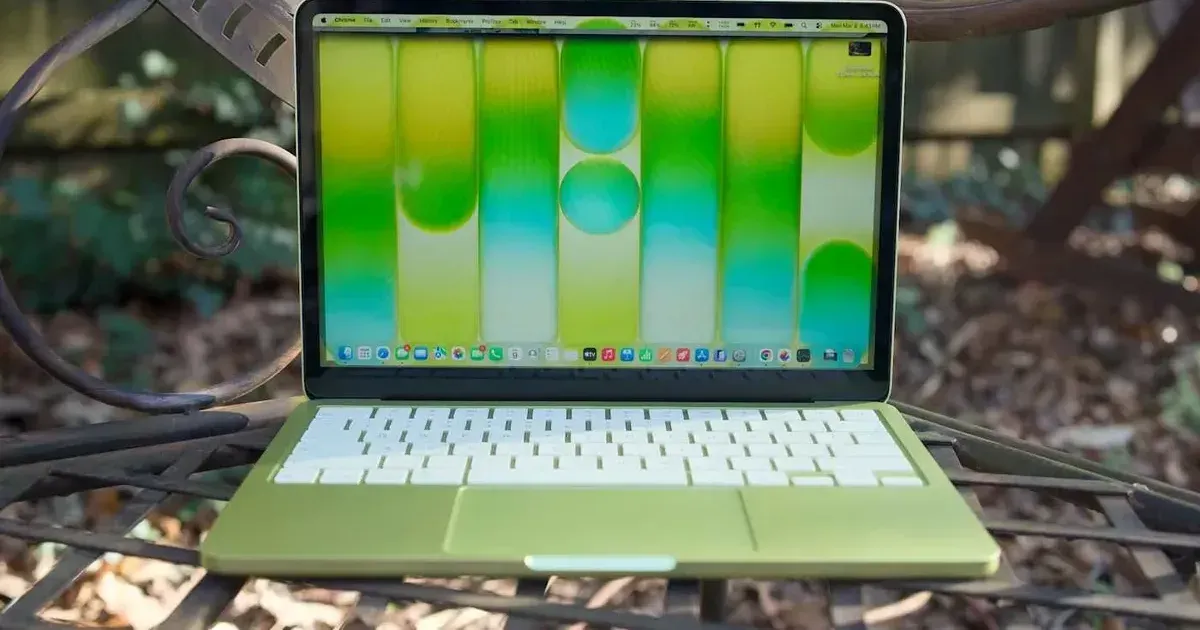
Apple engineers redesigned the internal architecture of their most affordable laptop to accommodate school district maintenance budgets. Released today, the MacBook Neo adopts a modular philosophy that stands in opposition to the sealed chassis designs dominating the company's premium lineup. This change reflects a calculated pivot toward the education sector where hardware longevity dictates purchasing decisions. Technical analysts at iFixit awarded the machine a repairability score of 6/10. While such a number appears modest in isolation, it represents the highest rating for an Apple laptop in nearly fourteen years. Engineers achieved this by abandoning several proprietary assembly techniques that previously frustrated independent repair technicians and IT departments alike.
Apple Reworks the School Laptop Pitch
iFixit reports that the laptop features a flat disassembly tree. Accessing critical components like the trackpad, speakers, or ports no longer requires the removal of the logic board. Technicians simply remove the back case to reveal a layout where parts are immediately reachable. Apple even included internal labels for the Torx Plus screw sizes to simplify the process further. Battery replacement, once a hazardous task involving high-strength adhesives, now relies on traditional screws. This design choice prevents the risk of thermal runaway during removal and transforms a complex procedure into a routine maintenance task. Every USB-C port and the headphone jack are modular, ensuring that a broken connector does not necessitate an expensive logic board replacement.
The MacBook Neo's repairability is a real comeback.
Antenna assemblies were also simplified to allow the display to separate cleanly from the base. Apple replaced the sophisticated Force Touch trackpad with a mechanical version. But the keyboard remains the most difficult part to service, requiring the removal of 41 individual screws and adhesive tape to reach the switches. Efficiency now yields to serviceability.
Repairability Becomes the Selling Point
Educational institutions operate on thin margins and multi-year hardware cycles. Apple set the MacBook Neo retail price at $599, but offers a discounted rate of $499 for bulk school purchases. This pricing strategy directly challenges the dominance of high-end Chromebooks in the American classroom. Schools demand hardware that students can use for five years without requiring total replacement for a minor port failure. Costs were recouped through specific hardware compromises. Users will find the speaker quality sharply lower than that of the MacBook Air. Analysts noted that the audio drivers lack the resonance and clarity found in higher-end models. Still, for a classroom environment where students predominantly use headphones, the trade-off remains a logical financial decision. Regulatory pressure across the United States and Europe likely influenced this design direction. New legislation, including the California Right to Repair Act, mandates that manufacturers provide parts and tools for devices sold within the state. By creating a device designed for easier repair, Apple minimizes its potential liability under these evolving consumer protection laws. Apple Repair Assistant software plays a central role in the new maintenance system. In the past, software locks prevented the use of third-party or salvaged components by requiring serial number validation. Tests on the Neo show the software now accepts replacement parts without the typical error messages that previously hindered independent shops. It suggests a relaxation of the company's controversial parts-pairing policies.
Soldered components still present a significant barrier to total user freedom. Both the RAM and the solid-state storage remain permanently attached to the logic board. The design choice prevents any future upgrades to the machine's memory capacity or storage volume. Purchasers must select their desired configuration at the point of sale, as the device cannot grow with the user's needs over time.
Consumer electronics are becoming maintenance assets. Whether this modular design philosophy will migrate to the MacBook Pro or iPad Pro remains a subject of intense debate among industry observers. For now, the repairable architecture is confined to the $599 price point where the economic pressure of the education market forced Apple's hand. High-end users continue to receive the sleek, sealed machines that have defined the brand for a decade.
Schools Need Devices They Can Maintain
Why should consumers believe that a company built on planned obsolescence has suddenly found religion in the repair shop? The MacBook Neo is not a selfless gift to the environment or a sudden embrace of consumer rights. It is a cynical, necessary retreat designed to stop the bleeding in the education market where Chromebooks have decimated Apple's former stronghold. School districts are tired of throwing away thousand-dollar bricks because of a broken charging port, and Apple finally realized that its proprietary arrogance was costing it billions in long-term contracts. While the tech press fawns over a 6/10 repair score, we must call it what it is: a tactical concession to regulatory threats from the EU and US lawmakers. If Apple truly cared about sustainability, they would stop soldering storage onto the logic board of every device they sell. Until the MacBook Pro receives this same modular treatment, the Neo remains a niche experiment for children rather than a real change in corporate philosophy. Do not be fooled by labels on screws when the most expensive components remain permanently fused to the board.
The laptop is a financial hedge, not a moral awakening.