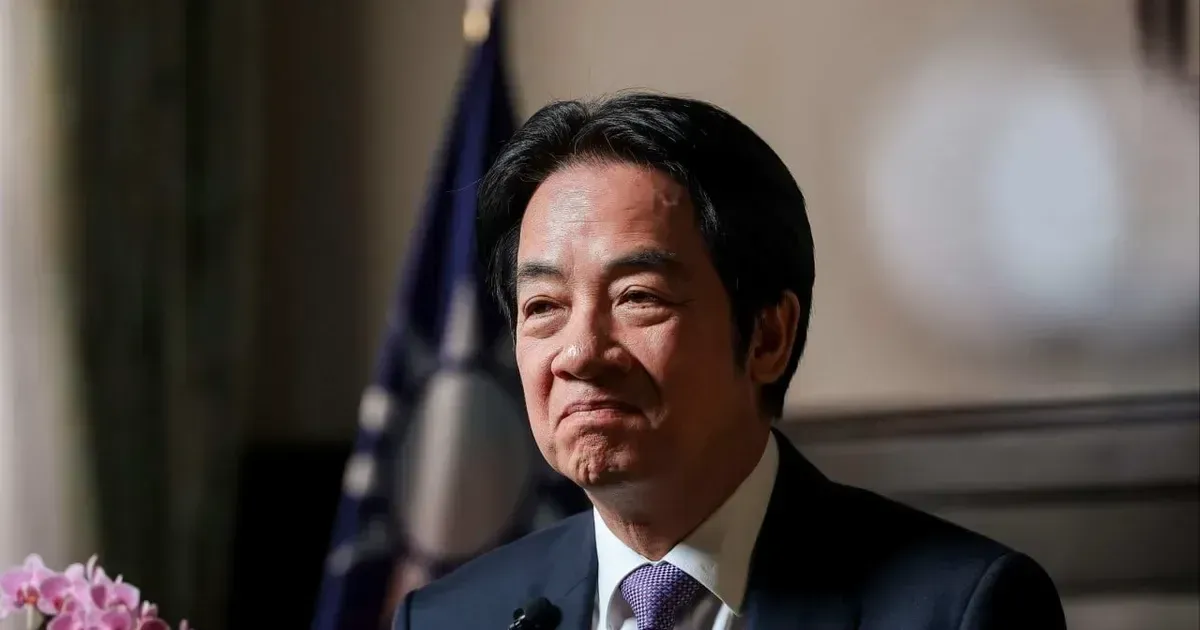
Taiwan’s leadership flight disruption shows how Beijing can project pressure through third-country airspace. The Africa route matters because eSwatini is one of Taipei’s remaining diplomatic partners. On April 21, 2026, President Lai Ching-te aborted a high-stakes diplomatic journey to Africa when three sovereign governments unexpectedly rescinded overflight permissions for his presidential aircraft. Diplomatic staff in Taipei confirmed the grounding late in the afternoon, citing a historic blockade that prevented the official delegation from reaching its destination. Military analysts suggest the coordinated denial of airspace access is a significant escalation in the ongoing campaign to isolate the island internationally. Staff members in the president’s office described the situation as a direct result of external interference by Beijing. Flight plans originally indicated a departure for Wednesday morning.
These arrangements collapsed within hours of the scheduled takeoff. Records from the Civil Aviation Authority show that the necessary permits were initially granted before being revoked without detailed explanation. Officials at the Ministry of Foreign Affairs have spent the last 12 hours attempting to secure alternative routes. Every proposed flight path was met with similar refusals from regional neighbors. The delegation intended to spend five days on the continent to reinforce ties with its sole remaining partner. This specific mission was viewed as essential for maintaining a presence in a region increasingly dominated by Chinese infrastructure investments.
Reports from the South China Morning Post indicate this is the first instance of a Taiwanese head of state being forced to delay an overseas visit at the last minute due to overflight issues.
Diplomatic Gridlock in African Airspace
Airspace access for the presidential flight was denied by three nations whose names have been withheld by Taipei to protect ongoing back-channel negotiations. Observers at DW News reported that Beijing used specific economic levers to ensure these governments complied with the request to block the flight. Sovereign states maintain absolute control over their upper atmosphere under the Chicago Convention. Using this legal framework as a geopolitical tool has effectively created a no-fly zone for Taiwanese officials. Logistical planners noted that the geographical position of the blocking nations made a detour practically impossible for the short-range aircraft assigned to the mission.
Technical teams evaluated refueling stops in secondary locations, but those territories also declined to participate. One official stated that the pressure applied was both financial and political in nature. Financial aid packages from the People’s Republic of China often include clauses regarding the recognition of the One China principle. Compliance in this instance appears to have been a requirement for continued project funding. The interruption left the presidential entourage stranded at Songshan Airport. Security details remained on high alert throughout the day as the standoff deepened. No new departure time has been set for the five-day trip.
Economic Levers and Sovereign Denials
Economic coercion remains a primary tool for the Chinese Communist Party in its efforts to strip Taipei of its remaining diplomatic recognition. Statistics from the Taiwan Foreign Ministry show a steady decline in African partners over the last decade. Nations like Burkina Faso and Gambia previously switched allegiances following large-scale investment offers from the mainland. Three countries involved in the current overflight dispute are currently beneficiaries of multi-billion-dollar railway and port projects. Local officials in those capitals have avoided public comment on the aircraft denial.
Silence from these governments suggests a coordinated effort to avoid diplomatic friction with their largest creditor. Taipei has characterized the move as a violation of international norms regarding the safe passage of civilian and government vessels. Legal scholars argue that while sovereign, such denials for a non-military flight are rare in modern diplomacy. Most international flights transit through multiple jurisdictions without such abrupt interference. The timing of the revocations, occurring just hours before the mission, suggests a calculated effort to maximize the public embarrassment of the Lai administration.
Beijing maintains that Taiwan has no right to official diplomatic relations or state-level travel. A spokesperson for the Chinese Foreign Ministry reiterated that foreign countries should handle Taiwan-related issues with caution. The statement did not explicitly mention the overflight permits.
Taiwanese leader William Lai Ching-te was forced to postpone a visit to the island’s last African partner after three other nations abruptly refused to allow his aircraft to fly over their territory.
The Strategic Isolation of eSwatini
Eswatini remains the final African monarchy and the last nation on the continent to maintain formal ties with Taipei. King Mswati III has consistently resisted pressure to switch recognition to the People’s Republic of China despite lucrative offers. Maintaining this relationship is a foundation of the foreign policy of Lai Ching-te. The blocked trip was intended to mark several new cooperation agreements in healthcare and agricultural technology. Representatives from the Kingdom of eSwatini expressed disappointment over the delay. They confirmed that preparations for the state visit were complete on their end.
Diplomatic sources in Mbabane suggest that the pressure to isolate their kingdom is growing from within the Southern African Development Community. Many neighboring states have deepened their reliance on Chinese trade and telecommunications infrastructure. This regional alignment makes the logistics of supporting a Taiwanese ally increasingly difficult for Eswatini. Intelligence reports indicate that several neighboring countries were warned of trade repercussions if they enabled the transit of the Taiwanese leader. The current blockade is a physical manifestation of this political reality. Grounding the flight prevents the physical meeting of heads of state, which is an essential component of personal diplomacy.
Taipei officials have not yet indicated if they will attempt a longer, more expensive route over the Indian Ocean. Such a path would require multiple refueling stops in more distant, friendly territories. The cost of such a detour would be substantial for the island’s budget.
Aviation Rights as Political Weaponry
Aviation authorities in Taipei are currently reviewing the legal consequences of the airspace denial. International civil aviation rules generally promote the freedom of transit for non-military aircraft. Using these rules to settle territorial disputes sets a dangerous precedent for global travel. Security experts in Washington have expressed concern that this tactic could be applied elsewhere, such as in Southeast Asia or the Pacific. If airspace can be turned off like a faucet based on political whims, the stability of international flight corridors is at risk.
China has previously used similar tactics with commercial airlines, forcing them to change how they list the island on their websites. This escalation to the level of a presidential flight marks a new phase in the gray-zone campaign. Beijing’s ability to influence the sovereign decisions of three separate governments simultaneously demonstrates the depth of its reach. Independent analysts have observed a pattern of increasing aggression since the last election cycle. Every successful blockade of a high-level visit encourages further use of the tactic. Taipei is now facing a future where its leaders may be physically confined to the island. Officials are considering lodging a formal complaint with the International Civil Aviation Organization. Such a move is unlikely to yield results given the influence of Beijing within that body. The administration must now decide whether to persist with the mission or concede to the logistical reality. For now, the presidential aircraft remains in its hangar. The diplomatic mission is on indefinite hold.
Africa Flight Tests Taiwan Space
How much longer can the international community ignore the weaponization of civilian airspace as a transactional commodity? The grounding of Lai Ching-te is not a mere logistical hiccup. It is an exercise in the privatization of the global commons. Beijing has demonstrated that it no longer needs to fire a shot to impose a blockade. By leveraging the debt obligations of developing nations, it has effectively extended its borders across the African continent. It creates a terrifying precedent where the right to travel is contingent upon political alignment with a single superpower. Western nations often speak of the rules-based order, yet they remain silent when those rules are bent to stifle the movement of democratically elected leaders. Sovereignty in the 21st century is increasingly an illusion sold to the highest bidder. Three nations that revoked these permits did not do so out of national interest, but out of financial necessity. They have traded their control over their own skies for the continuation of credit lines. The transaction effectively turns their territory into an extension of the Chinese state. If the United States and the United Kingdom do not offer viable alternatives to this economic dependency, they must accept the reality of a world where Beijing dictates who can fly where. The failure to provide a steady counterweight to the Belt and Road Initiative has led directly to this moment of diplomatic paralysis. Taiwan is the immediate victim, but the ultimate casualty is the concept of international neutrality in aviation. If overflight rights become a weapon, the global transportation network will fragment into rival spheres of influence. We are moving toward a future where a flight from London to Sydney could be diverted because of a disagreement over a trade treaty or a human rights resolution. It is the death of the open sky. Beijing has won this round by proving that money speaks louder than international law. Strategic failure.