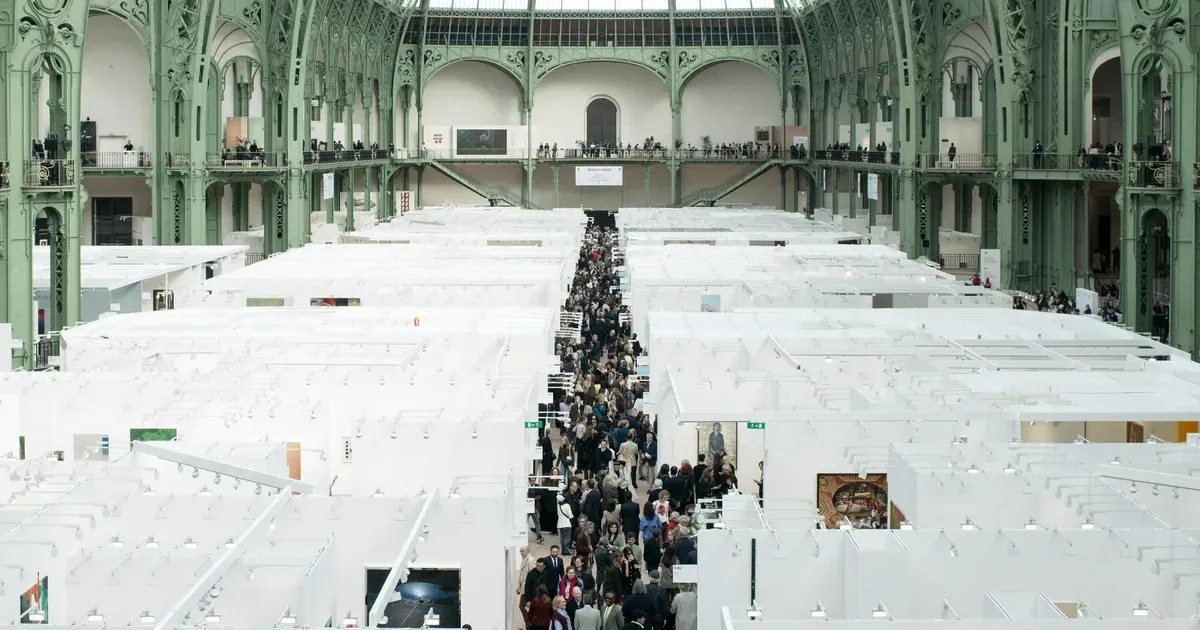
New York auction houses entered March with proof that wealthy collectors had not disappeared; they had simply become more selective after two weaker years. The auction rebound became visible on March 12, 2026, as New York rooms finally broke the two-year chill.
New York Auction Rooms Recover
Data released in the latest Art Basel and UBS Art Market Report reveals a significant shift in fortune for global collectors. Total sales reached $59.6 billion throughout 2025, representing a 4 percent increase from the previous year. Two consecutive years of contraction ended as trophy assets moved back into the spotlight, though the market remains below the record peaks seen in 2022. Economists led by Clare McAndrew of Arts Economics found that wealthy buyers regained their confidence, specifically in the highest price brackets.
New York functioned as the primary engine for this modest expansion. A single week of auctions in Manhattan generated $2.2 billion, demonstrating that the appetite for blue-chip masterpieces remains intact even during broader economic uncertainty. High-end sales provided the momentum necessary to pull the industry out of its recent slide. Such a recovery relies heavily on a narrow slice of the population, specifically those capable of bidding on works priced above $10 million. These elite transactions grew nearly 40 percent in the United States, effectively masking stagnation in more affordable segments.
Wealthy buyers are no longer waiting for the economy to settle.
Collectors Return to Trophy Works
Public auction houses reported a 9 percent increase in sales, a figure that sharply outperformed the gallery sector. While auction rooms buzzed with activity, dealers and private galleries saw much more conservative results. Dealer sales grew a mere 2 percent, reaching $34.8 billion globally. Smaller galleries struggled to find the same footing as their larger counterparts, as the cost of doing business at international fairs continues to squeeze margins for all but the biggest names in the trade. United States activity continues to define the health of the international art trade.
Accounting for 44 percent of the global total, the U.S. market reached $26 billion in sales last year. London and Hong Kong remain the other two pillars of this triad, with the United Kingdom capturing 18 percent of the market and China holding 14 percent. Together, these three nations represent 76 percent of all global art sales by value. This reliance on a few geographic hubs highlights the concentration of cultural wealth in established financial centers.
China's performance remains a point of intense scrutiny for analysts.
Art Market Confidence Stays Fragile
Despite internal economic pressures, the Chinese market maintained its third-place position, though it faces increasing competition from emerging hubs in Southeast Asia and the Middle East. Stability in the UK market surprised some observers who expected a decline after shifting European trade regulations. Instead, London held steady, proving that its infrastructure for high-value shipping and storage remains a preferred choice for the world's most affluent sellers. Transaction volume tells a different story than the headline dollar amounts. Total sales volume rose only 2 percent to 41.5 million transactions, indicating that the recovery is driven by price appreciation rather than a surge in the number of works changing hands.
This pattern holds true across most major regions, where fewer items are selling for much higher prices. It suggests a consolidation of value into a handful of recognizable artists whose work functions more like a financial asset than a purely aesthetic choice. Private sales within auction houses saw a notable decline of 5 percent. Collectors shifted back toward the transparency of the public rostrum, abandoning the discreet, behind-the-scenes deals that characterized the pandemic era. When confidence is high, sellers often prefer the competitive environment of a public auction to drive prices beyond initial estimates.
A Rebound Is Not a Reset
New York auction houses saw billion-dollar sales after a two-year market slump. The recovery suggests top-tier collectors are returning to trophy works, while lower tiers of the art market remain exposed to weak liquidity. One strong auction week proves renewed demand at the top; it does not prove that the whole market has recovered.
Broader confidence still depends on depth beyond trophy lots. The art market loves to call every strong sale a major shift. That is too generous. Billion-dollar rooms prove that wealth still wants prestige assets, not that the whole market has healed.