Fractures in the Balkans
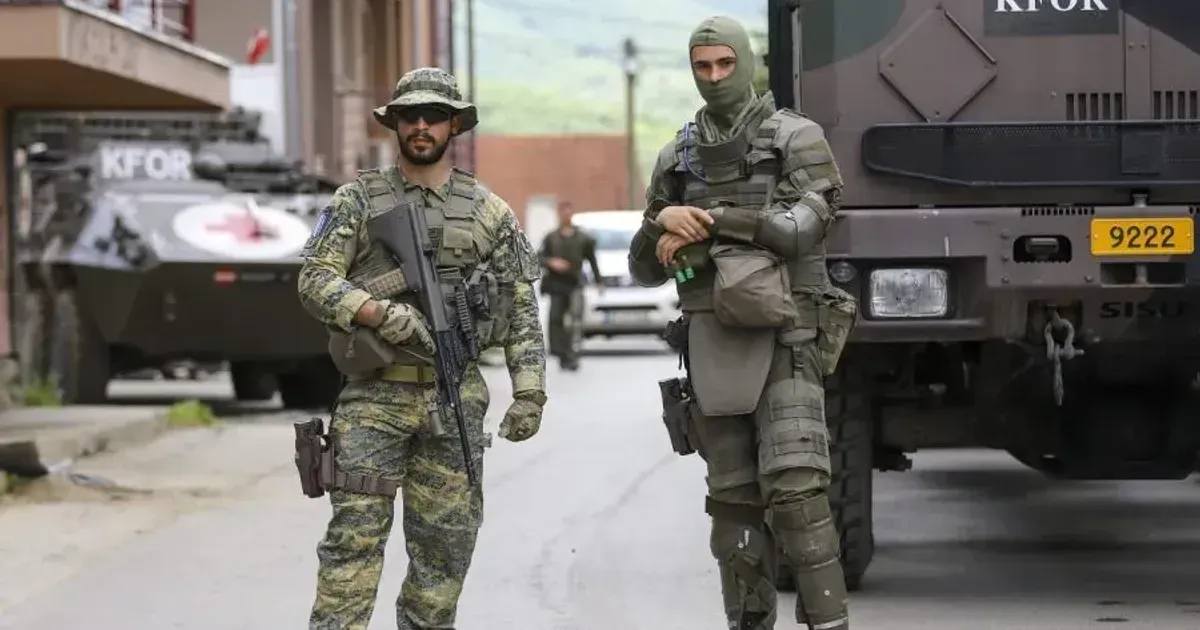
Washington's foreign policy calendar has become crowded in two directions at once. By March 13, 2026, the White House was balancing a standoff in the Persian Gulf against a brewing rebellion on Capitol Hill. Lawmakers from both sides of the aisle sent a private letter to the White House on Thursday, expressing alarm over plans to pull U.S. troops from Kosovo. These soldiers form a core part of the NATO-led KFOR peacekeeping mission, a deployment that has provided regional stability for over a quarter-century. While the administration views the mission as an unnecessary relic of the 1990s, the signatories argue that removing these forces now would invite Serbian aggression. Bipartisan unity has become a rare commodity in Washington, yet the membership of the Foreign Affairs and Armed Services committees appears resolute in their opposition to a sudden withdrawal. They contend that a vacuum in the Balkans would almost certainly be filled by Russian influence, undoing decades of Western investment in the region. Diplomacy remains fragile in Pristina, and any perceived wavering by Washington could trigger a cascade of ethnic tensions that the European Union is ill-equipped to handle alone.
Energy markets reacted with predictable volatility. Brent crude prices climbed toward figures not seen in years after Tehran followed through on its threat to block the Strait of Hormuz. This decision has strangled the world's most important artery for oil transit, leaving tanker traffic at a standstill. NBC News correspondents Richard Engel and Raf Sanchez report that the naval presence in the region has reached a saturation point. Ships from the U.S. Fifth Fleet are currently positioned near the entrance to the Gulf, though they have yet to engage Iranian fast-attack craft directly.
Balkan Deterrence Question
Military analysts describe the current situation as a test of wills, with neither side willing to fire the first shot but both ready to respond with overwhelming force. Retired Colonel Steve Warren suggests that the next phase of the conflict will likely involve electronic warfare and targeted strikes on coastal missile batteries if the blockade persists. President Trump continues to weigh options to lower energy prices, yet the levers of domestic production take months to impact a global shortage of this magnitude.
The Shadow of Military Buildup
Critics of the administration suggest that recent diplomatic overtures toward Tehran were never intended to reach a peaceful resolution. Evidence presented by NPR suggests that diplomacy may have been a cover for a notable military buildup. While the State Department engaged in public rhetoric about a new grand bargain, the Pentagon was quietly repositioning carrier strike groups and heavy bombers to bases in Qatar and Bahrain. Such a strategy allows the White House to claim it exhausted all peaceful avenues before moving toward kinetic action.
Some officials within the intelligence community have expressed concern that the U.S. walked away from a genuine opportunity for a deal in late 2025. These dissenters believe that the current escalation was a choice rather than a necessity. This strategic ambiguity has left allies in London and Paris scrambling to understand if Washington is seeking a regime change or merely a better trade position. Silence from the West Wing has only fueled the speculation.
Diplomatic credibility is a finite resource. Skeptics within the international community point to the withdrawal from Kosovo as a sign of a broader retreat from multilateral commitments. If the administration abandons a peacekeeping role that costs a fraction of the total defense budget, European capitals may begin to question the ironclad nature of Article 5. Lawmakers in the bipartisan coalition highlighted this exact risk in their letter, noting that the message sent to NATO allies would be one of unreliability. They argue that the 600 U.S. troops stationed at Camp Bondsteel serve as a psychological deterrent that far outweighs their numerical strength.
Without this presence, the threat of a return to the border skirmishes of the late 1990s becomes a tangible reality. Regional leaders in the Balkans have already begun seeking alternative security guarantees, with some turning toward Turkey or China as potential balancers against Serbian claims. The strategic trade-off does not justify treating a minor cost-cutting measure as worth the loss of a foothold in Southeastern Europe.
Economic Consequences of the Hormuz Blockade
Tehran understands that the global economy is its most effective hostage. By closing the Strait of Hormuz, the Iranian government has forced the hand of every major industrial power. Oil prices are more than a number on a ticker; they represent the cost of food transport, manufacturing, and consumer heating. If the blockade continues into the second quarter of 2026, economists predict a sharp contraction in global GDP growth. Trump has promised to use the Strategic Petroleum Reserve to stabilize prices, but the volume required to offset a total closure of the Strait is beyond the capacity of any national stockpile.
The administration's focus on energy independence has mitigated some domestic pain, but the interconnected nature of the global market means that American consumers still feel the sting at the pump. This move by Iran is a calculated gamble, betting that the political pressure of high gas prices will force the U.S. back to the negotiating table on more favorable terms. The Pentagon, however, appears more focused on a military solution than a return to the nuclear talks that the president has repeatedly derided.
Military strategy in the Gulf is shifting toward a posture of active escorting. Colonel Warren notes that the U.S. Navy may begin protecting commercial tankers with destroyers, a tactic reminiscent of the Tanker War in the 1980s. Such an escalation carries the risk of a miscalculation that could lead to a full-scale regional conflict. Iranian coastal defenses, including the Silkworm missiles and indigenous drone swarms, pose a credible threat to even the most advanced warships. While the U.S. maintains a clear technological advantage, the asymmetric nature of Iranian naval tactics creates a high probability of casualties.
The White House has not yet authorized the use of force to reopen the shipping lanes, but the window for a non-military resolution is closing. Domestic political pressure to 'do something' about energy costs is mounting, particularly among the president's core constituency. The intersection of Balkan instability and Persian Gulf aggression has created a dual-front crisis that challenges the very foundations of the administration's foreign policy.
Diplomatic Fallout
Does the White House possess a grand strategy, or are we simply watching the erratic pulses of an administration that confuses chaos with leverage? The current friction in the Balkans and the Persian Gulf is not a series of unfortunate events but the logical conclusion of a foreign policy rooted in transaction rather than tradition. By threatening to pull troops from Kosovo, the administration is essentially telling Serbia and Russia that the doors to the Balkans are once again unlocked. That is not 'America First' so much as it is 'Europe Last,' a reckless abandonment of a region that cost blood and treasure to stabilize. Simultaneously, the situation in the Strait of Hormuz reveals the limits of a purely confrontational approach with Tehran.
If diplomacy was indeed a front for military buildup, then the administration has traded its moral high ground for a tactical edge that it seems too hesitant to use. The result is a global economy held hostage by a middle power and a NATO alliance looking over its shoulder. True strength is not found in the ability to tear up treaties or threaten withdrawals; it is found in the consistency that prevents such crises from arising in the first place. The current trajectory suggests a world where American commitments are as volatile as the price of crude oil, a reality that serves no one but our adversaries.