Oil Breaks Through the Fear Line
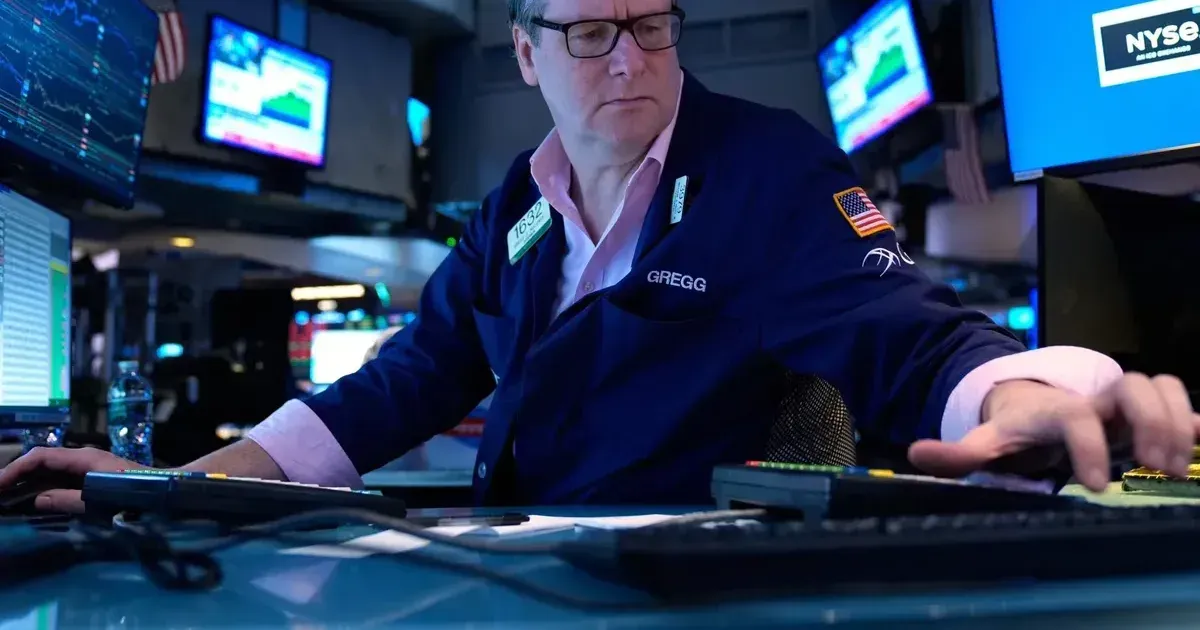
The oil-market shock began with a frantic notification on trading terminals across Manhattan. Brent crude oil, the international benchmark for energy costs, breached the 100 dollar threshold for the first time in years. On March 12, 2026, the oil shock moved from a trading risk to a wider market reset. Prices climbed 7.9% to settle near 99.25 dollars after a brief mid-morning spike touched 101.59 dollars.
Traders are reacting to the tightening noose around the Strait of Hormuz, where the de facto closure has paralyzed the movement of a fifth of the world's daily oil supply. Regional producers are already slashing output because their crude has no clear path to international buyers. Iran's new supreme leader issued his first public statement on Thursday, solidifying fears of a prolonged disruption. Succeeding his late father, the leader confirmed that Tehran will maintain its campaign of attacks on Gulf Arab neighbors.
He explicitly cited the closure of the Strait of Hormuz as a strategic lever against the United States and Israel. This aggressive stance has forced the International Energy Agency to act. On Wednesday, the agency announced its members would release a record 400 million barrels of oil from emergency stockpiles. While such a massive infusion provides temporary relief, analysts at major firms believe these measures fail to address the underlying structural deficit if the shipping lanes remain blocked.
Hormuz Risk Hits Every Asset Class
Traditional equity markets are feeling the strain of these energy spikes. The Dow Jones Industrial Average plunged 575 points, or 1.2%, by midday in New York. The S&P 500 fell 1.1%, returning to a pattern of erratic swings that characterize the current trading environment. Nasdaq composite shares fared even worse, dropping 1.4% as high energy costs threaten the margins of tech giants and logistics firms alike.
Fear has effectively paralyzed the traditional equity markets. Farmers across the United States are facing a secondary crisis that mirrors the volatility in the energy sector. Fertilizer prices surged roughly 30% between late February and early March, driven by the same shipping blockades in the Persian Gulf. Approximately one-third of all seaborne fertilizer travels through the Strait of Hormuz.
Persian Gulf nations are responsible for exporting nearly half of the world's urea and 30% of its ammonia, both of which are critical nutrients for modern industrial agriculture. This sudden shift in input costs has forced American growers to reconsider their entire strategy for the 2026 planting season. Seth Meyer, director of the Food and Agricultural Policy Research Institute at the University of Missouri, notes that many farmers are caught between rising costs and shrinking margins. Corn is particularly vulnerable, as it accounts for roughly 95% of the total grain and feed grown in the United States and requires heavy nitrogen application.
Emergency Barrels May Not Calm Traders
Growers are now weighing the benefits of pivoting toward crops like soybeans, which require fewer added nutrients. Political factors are also complicating these decisions. President Donald Trump's One Big Beautiful Bill Act includes specific subsidies for wheat, corn, and soybeans, creating a complex incentive structure that might not align with the reality of 100 dollar oil. Agricultural experts suggest that while many farmers pre-purchased their fertilizer late last year, those who waited are now priced out of the market.
The math doesn't add up for many American growers. Risk management has become the primary concern in America's heartland, where a single bad planting decision could lead to multi-year insolvency for family-owned operations. Brasilia has taken aggressive steps to protect its domestic economy from the escalating conflict. The Brazilian government moved to cut federal taxes on the import and sale of fuels to shield consumers from the global price surge.
To offset the resulting revenue loss, officials introduced a new levy on crude oil exports. This fiscal maneuver attempts to balance the needs of the domestic population against the windfall profits being realized by national energy producers. Brazil's approach highlights the desperation of emerging economies trying to prevent inflation from spiraling into social unrest. Investors are looking beyond traditional stocks and bonds for safety.
Market Stress
Cryptocurrencies such as bitcoin and ether have shown surprising resilience over the past few weeks. While equity indices remain in the red, digital assets have begun to recover, suggesting some capital is flowing into decentralized alternatives as a hedge against sovereign instability. The financial volatility has created a bifurcated market where digital gold is outperforming industrial staples. Market analysts warn that the relief provided by the IEA's stockpile release is essentially a short-term fix.
Energy desks now treat a prolonged Strait of Hormuz closure as the dividing line between a painful supply shock and a full global recession. At that level of disruption, the cost of transportation and manufacturing would become unsustainable for many industries. The current stability is fragile, and the price of crude continues to dictate the pace of global commerce. Supply chain disruptions are also beginning to impact the manufacturing of specialty chemicals and plastics, which rely on the same petroleum byproducts currently trapped in the Gulf.
If the Strait of Hormuz remains closed for an extended period, energy experts at various investment banks predict oil could hit 150 dollars per barrel.
Factories in Europe and Asia are reporting delayed shipments and increased lead times, adding further inflationary pressure to an already heated global economy. Every day the strait remains closed adds millions of dollars in liquidated value to the global balance sheet.
Inflation Channel
Does the American political establishment truly believe that strategic petroleum reserves and agricultural subsidies can mask the terminal decline of the petrodollar era? For decades, the global economy has functioned on the assumption that the Persian Gulf would remain an open faucet, guarded by the invisible hand of Western naval power. That era ended the moment the Strait of Hormuz was effectively shuttered by a regime that no longer fears sanctions or diplomatic isolation. The 100 dollar barrel of oil is not just a price point, it is a verdict on the failure of current energy policy. Washington and Brussels are currently treating a sucking chest wound with a decorative adhesive bandage by releasing emergency stockpiles into a market that requires structural security, not temporary liquidity. Brazil's decision to tax exports while subsidizing imports is a desperate act of economic nationalism that we should expect to see replicated across the globe. We are entering a period where the globalized supply chain is being sacrificed on the altar of regional warfare. If farmers in Iowa cannot afford the fertilizer produced in Qatar, the problem is not just a market fluctuation. It is a collapse of the interconnected system that has fed the world for sixty years. The survival of the West depends on a radical re-evaluation of its energy dependencies before the 150 dollar barrel becomes a permanent fixture of our reality.