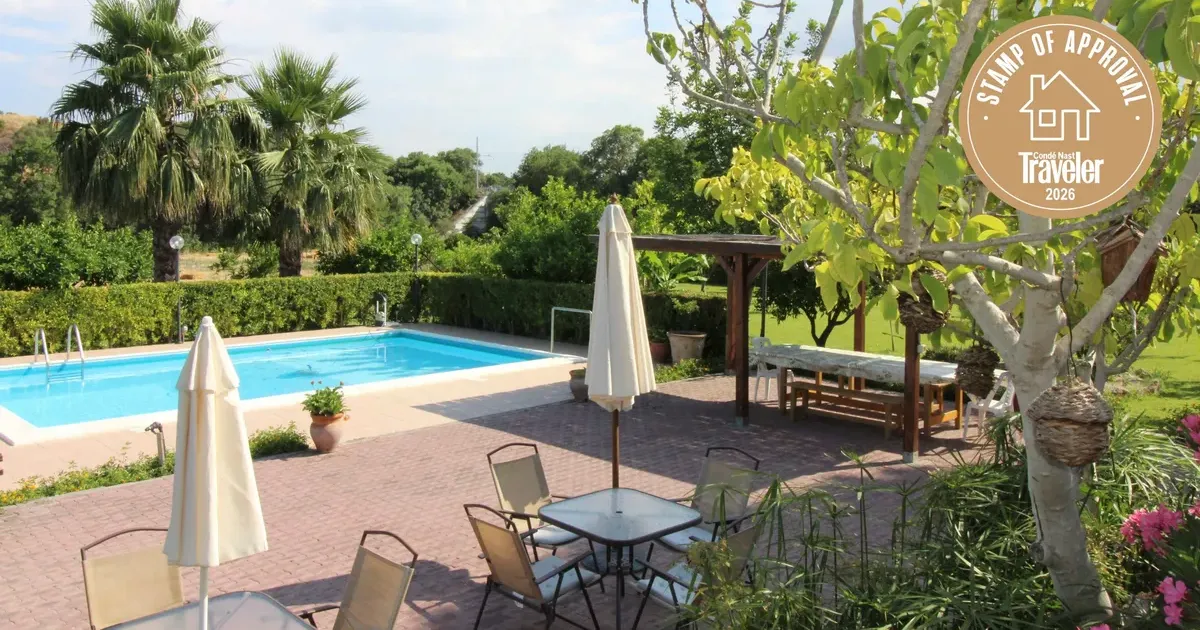
Travelers arriving in Brucoli find a town where the traditional fishing industry lives alongside a surging market for high-capacity luxury rentals. The rental market on the island had already moved upscale. On April 1, 2026, Airbnb listings in this corner of Sicily now command prices that rival established five-star hotels in Taormina. Brucoli became the reference point. On March 12, 2026, the Brucoli villa set a new benchmark for Sicilian rentals.
"Nestled in the hills of Brucoli, the property boasts a pool deck, ping-pong table, and seven bedrooms," according to Conde Nast Traveler.
Limestone cliffs surrounding the property provide natural insulation against the Sicilian heat. Architects working on the villa integrated local materials to minimize the carbon footprint of the renovation. Stone-carved terraces offer views of the Ionian Sea that were once reserved for local nobility. Property values in the immediate vicinity have increased by 14 percent over the last fiscal year. High-net-worth individuals from Northern Europe and North America represent the bulk of the current buyer pool.
Service staff at these estates often come from the local village, bridging the gap between global wealth and the local economy. Housekeeping, private chefs, and maintenance crews provide a serious employment boost to the Brucoli area. Sicilian hospitality remains a point of pride, even as the delivery methods become more digitized and standardized. Guests can book excursions or local produce delivery through the rental platform with a single interaction. Technology enables the logistics while the physical environment provides the traditional appeal.
Mediterranean Property Markets Face High Demand
Market data indicates that high-capacity rentals are the fastest-growing segment of the Italian short-term stay market. Families traveling together prefer the cost-efficiency of a single large villa over booking multiple suites at a luxury hotel. Seven bedrooms allow two or three nuclear families to share the expense of a premium location. Italy currently hosts over 500,000 active listings on short-term rental platforms. Premium tiers like Airbnb Luxe continue to see heavy investment from owners who want to capture the top 1 percent of the market.
Supply constraints in the Syracuse region keep prices elevated during the spring and summer seasons. Regional authorities have debated implementing a registration system to manage the density of short-term rentals in residential zones. Brucoli has largely escaped the anti-tourism protests seen in Venice or Florence due to its smaller scale. The balance between local residential life and the influx of seasonal guests stays relatively stable. Real estate agents report that houses with existing rental licenses carry a 20 percent premium over those without. Competition for prime hillside plots has intensified as available inventory dwindles.
Owners invest heavily in outdoor recreation features to differentiate their listings from competitors. A pool deck is no longer a luxury but a baseline requirement for properties in the Sicilian sun. High-speed internet and dedicated workspaces have also become standard as the "work from anywhere" trend persists among the wealthy. Digital nomads with high budgets often occupy these villas during the shoulder seasons of October and November. This year-round occupancy helps stabilize the local economy outside of the traditional July peak.
Economic Drivers Behind Seven Bedroom Rentals
Multi-generational travel trends dictate the layout of these modern estates. Grandparents often fund these trips to bring their children and grandchildren together in a controlled, private environment. Privacy is the ultimate currency in the modern travel market. High walls and gated entries provide a sense of security that public hotels cannot offer. The seven bedrooms are typically arranged to provide maximum acoustic separation between different wings of the house. Soundproofing technology has become a major selling point in recent renovation projects.
Financial analysts at JPMorgan Chase note that the luxury rental market is resilient even during periods of broader economic cooling. High-income travelers often prioritize experiential spending over luxury goods. A week in a Sicilian villa provides social capital and memories that a physical object cannot provide. Property taxes in Italy have undergone recent adjustments to capture more revenue from these high-yielding assets. Despite these costs, the return on investment for a well-managed Brucoli property stays above 8 percent annually. Management fees typically consume 20 to 30 percent of the gross rental income.
Maintenance of a pool deck and expansive grounds requires constant attention in the saline Mediterranean air. Saltwater corrosion affects outdoor furniture and ping-pong tables within a few seasons if not properly treated. Staffing costs have risen as the demand for specialized hospitality skills increases. Private chefs specializing in Sicilian cuisine are in high demand from May through September. Local markets in Augusta and Syracuse see increased traffic from these professional shoppers. The culinary experience is as much a part of the stay as the physical structure.
Sicilian Tourism Logistics and Coastal Development
Logistical planning for a group of fourteen or more guests requires precision. Rental agencies often coordinate airport transfers from Catania-Fontanarossa to ensure a seamless arrival. Narrow Sicilian roads can be challenging for drivers used to American or British highways. Private drivers are frequently included in the rental package for the duration of the stay. Brucoli acts as a quiet base for exploring the baroque cities of the southeast. Noto, Modica, and Ragusa are all within easy reach for day trips. This strategic location minimizes the time spent in transit between major cultural sites.
Zoning laws in the Syracuse province have limited the growth of new construction since 2022. The scarcity drives the value of existing seven-bedroom estates even higher. Water scarcity is a recurring issue in Southern Italy, leading many owners to install private desalination or filtration systems. Sustainable luxury is the new directive for the high-end market. Solar panels are often hidden on the flat roofs of these villas to provide renewable energy without ruining the aesthetic. Water recycling systems help maintain the lush gardens that surround the pool area.
Catania is the primary gateway for international arrivals into the region. The airport has seen a 12 percent increase in private jet traffic over the last three years. The trend correlates directly with the rise of the luxury villa market in Brucoli and surrounding villages. Local marinas have also upgraded their facilities to accommodate the yachts of travelers who split their time between sea and land. Brucoli harbor provides a sheltered anchorage for these vessels. Tourism in Sicily has transitioned from a budget-friendly secret to a top-tier global destination.
Is the high-end villa model in Sicily a genuine economic engine or merely a polished form of cultural displacement? We are looking at a scenario where entire hillsides in Brucoli are essentially gated off from the very people who have lived there for generations. While the influx of $11 billion in infrastructure investment sounds positive, the benefits are disproportionately skewed toward a transient class of global elite. The local fishing industry is being pushed to the margins to make way for pool decks and ping-pong tables. It creates a fragile, service-based economy that collapses the moment the wealthy find a more fashionable coastline.
The current market enthusiasm ignores the long-term sustainability of the "luxury sanctuary" concept. When every historic stone house becomes a seven-bedroom rental, the authentic charm that drew people to Sicily in the first place evaporates. What is unfolding is the commodification of the Mediterranean lifestyle, where the "experience" is curated and sold through an app. Investors should be wary of the inevitable regulatory backlash that follows such rapid gentrification. Sicily has a long history of resisting external forces, and the short-term rental market is the next battlefield. The gold rush in Brucoli will likely end with a whimper of heavy taxation and restrictive zoning.
Expect a correction when the novelty of the secluded villa wears off. The market is already oversaturated with properties that offer the same stone-washed aesthetic and infinity pool. True luxury will soon move toward something more difficult to replicate than a renovated farmhouse. The future belongs to those who can offer genuine integration rather than isolated consumption. Investors who bet everything on the current villa boom might find themselves holding expensive, empty limestone shells by 2030.