Aircraft Sightings Stir California Anxiety
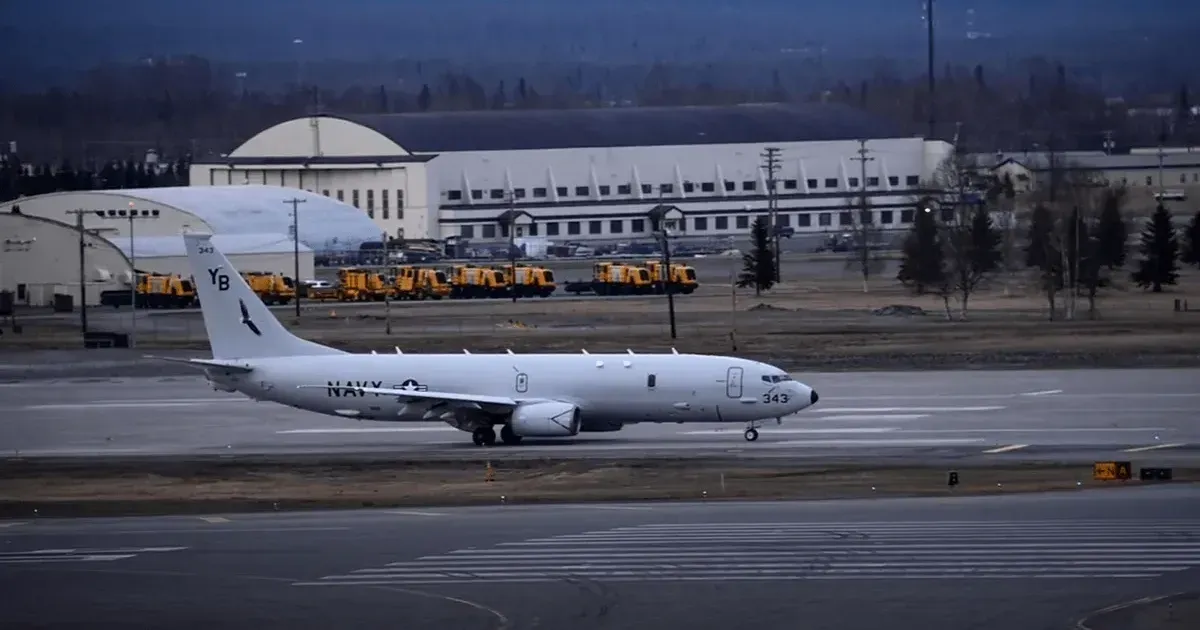
Fresno residents tracked a Navy P-8 Poseidon through the night skies on Tuesday, marking the latest in a series of high-profile military maneuvers over the California interior. Aviation enthusiasts identified the aircraft, a specialized submarine hunter, as it performed repetitive patterns over the San Joaquin Valley. The report was published March 12, 2026. Such activity typically occurs far out at sea, making its presence over residential neighborhoods a source of intense public speculation.
Recent days have seen a surge in unusual flight paths across the West Coast, including the appearance of the Boeing E-4B, an aircraft designed to serve as a mobile command center during nuclear conflicts. Military commanders at Lemoore Naval Air Station have not provided a specific justification for the P-8 flight path. This aircraft carries some of the most advanced sensor suites in the world, capable of tracking surface and subsurface threats with surgical precision. Its appearance inland coincides with leaked intelligence memos suggesting that foreign adversaries have explored long-range drone capabilities that could bypass traditional coastal defenses.
Residents reported the low-pitched hum of the turbofan engines lasting for several hours before the plane returned to its base. Confusion is the primary currency in this modern shadow war.
Drone Fears Meet Sparse Evidence
White House Press Secretary Karoline Leavitt took to the podium on Wednesday to address the growing unease. Leavitt launched a blistering critique of ABC News, accusing the network of disseminating "false information" regarding a supposed Iranian plot to strike California. The report in question claimed that Tehran had finalized plans for a coordinated drone assault on critical infrastructure along the Pacific seaboard. Leavitt insisted the administration found no credible evidence of an imminent strike, labeling the report a deliberate attempt to alarm the American people without cause.
Intelligence officials joined the fray, suggesting that the broadcast relied on unverified documents that lacked the hallmarks of authentic military planning. Leavitt argued that the media bears a responsibility to vet sensitive national security claims before fueling public panic. She noted that the timing of the report was particularly sensitive, given the ongoing diplomatic friction regarding maritime boundaries in the Persian Gulf. Still, the disconnect between official denials and the visible increase in military hardware over California creates a narrative vacuum that many find difficult to ignore.
Analysts frame the patrols as a hedge against low-probability threats whose consequences would be severe. Tehran's foreign ministry issued its own response, dismissing the ABC News report as a psychological operation by the West.
Defense analysts note that while a drone strike may be unlikely, the military cannot afford to leave the West Coast unmonitored during periods of heightened global instability.
Public Messaging Problem
Iranian officials claimed the United States is manufacturing a crisis to justify its own naval buildup in the region. Despite these denials, the rhetoric from the Islamic Republic remains aggressive. State-controlled media in Iran recently showcased long-range suicide drones, claiming these weapons could reach targets thousands of miles from their launch points. These technological claims often exceed reality, but they serve to keep Western defense planners in a state of constant readiness.
Trust in official narratives remains at a seasonal low. Aviation tracking data shows that the P-8 Poseidon over Fresno was not an isolated event. Similar patrols have been recorded near Los Angeles and San Francisco over the past fortnight. This specific pattern suggests a widening of the domestic surveillance net, perhaps in response to the very threats the White House publicly dismisses.
Naval experts suggest the P-8 might be testing new electronic warfare packages designed to jam drone signals before they reach populated areas. If the military is indeed bracing for a technical threat, the lack of public transparency could be a strategic choice to avoid tipping off foreign intelligence services.
Security Perception
Boeing designed the P-8 Poseidon to replace the aging P-3 Orion, giving the Navy a platform that combines the speed of a commercial jet with the endurance of a long-range scout. It features an internal weapons bay and pylons for anti-ship missiles, though the Fresno flight appeared to be purely observational. The aircraft uses an APY-10 radar system that can detect small targets on the water or land from significant altitudes. This capability makes it an ideal tool for spotting small, low-flying drones that might evade more traditional radar networks used by the Air Force.
California's vast coastline and numerous naval facilities make it a logical focal point for any adversary looking to project power. The Port of Los Angeles and the San Diego naval complex are key to both the global economy and national defense. Any disruption to these hubs would have immediate consequences for international trade. Because of these stakes, the presence of "submarine hunters" and "Doomsday planes" is seen by some as a necessary deterrent, even if the government refuses to link them to a specific threat from Iran.
Should the American public believe the reassuring words of a press secretary or the tangible presence of warplanes circling their homes? History suggests that when the government screams "false information" with such vehemence, it is often trying to bury a truth that it is not yet prepared to manage. The military does not burn thousands of gallons of fuel flying specialized hunters over Fresno just for a scenic view of the Central Valley. There is a disconnect here that borders on gaslighting. While the White House attacks the media for spreading alarm, the Pentagon is clearly signaling a state of high alert through its actions in the sky. It is a classic move from the bureaucratic playbook: tell the sheep everything is fine while the shepherds pull out their rifles. If the Iranian drone threat is as nonexistent as Karoline Leavitt claims, then the recent flight activity is a staggering waste of taxpayer resources. If the threat is real, the administration is prioritizing its own political optics over the public's right to know the risks. Neither scenario inspires confidence. We are being asked to ignore the hardware above our heads and focus on the prepared statements at the podium, a request that becomes more insulting with every passing patrol.