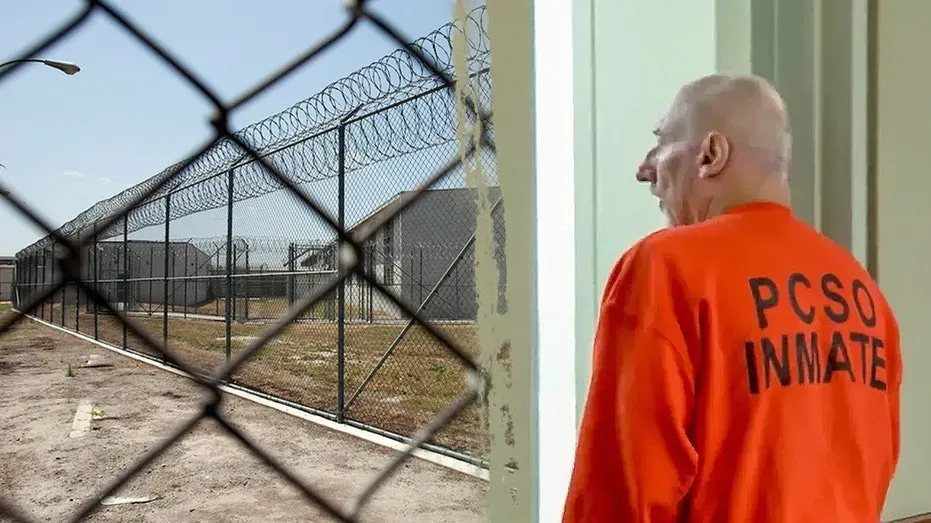
California parole failures and police-pay disputes are putting local justice oversight under a harsher public microscope.
Administrative Lapses within the Los Angeles County Sheriff’s Department
Trevor Kirk stood before a judge and listened as a jury convicted him of a felony involving excessive force. He had thrown a woman to the ground with such violence that the state eventually decertified him, stripping away his legal right to serve as a law enforcement officer in California. On March 31, 2026, the development shifted from background concern to immediate scrutiny. Despite this clear legal boundary, records show the Los Angeles County Sheriff’s Department continued to deposit paychecks into his bank account for months after the verdict. Such a delay in administrative action raises troubling questions about how the largest sheriff’s department in the United States handles its payroll for convicted felons. Public records indicate that Kirk remained on the county payroll until last month. His conviction was not a secret, nor was his decertification, which is a formal ban on his employment in any California police agency. Yet the internal machinery of Los Angeles County failed to stop the flow of public funds to a man who no longer held the legal authority to wear a badge. Critics of the department point to this as evidence of a deep-seated culture of administrative inertia where disciplinary consequences are often delayed by bureaucratic red tape. Sheriff’s officials have yet to provide a detailed explanation for why Kirk stayed on the payroll through early 2026. Payroll adjustments usually occur immediately upon a felony conviction, as state law generally prohibits felons from holding peace officer status. The disconnect between the courtroom and the human resources office suggests a breakdown in communication that cost taxpayers thousands of dollars in salary for a convicted offender. The math doesn’t add up. Kirk’s case is not an isolated incident of administrative friction in the state. While the Los Angeles Sheriff’s Department struggled to stop payments to a violent deputy, state-level officials in Sacramento faced a separate crisis involving the potential release of a notorious predator.
The Controversy Surrounding David Allen Funston
David Allen Funston, a 64-year-old serial child molester, returned to a Placer County courtroom this week to face new charges. He pleaded not guilty on Monday to a felony charge alleging lewd or lascivious acts with a child under 14. These allegations stem from a 1996 case in Roseville that recently resurfaced, potentially keeping Funston behind bars just as he was prepared for a controversial release from state prison. State law previously cleared the path for Funston to walk free under the California Elderly Parole Program. This initiative allows inmates to seek parole once they reach age 50 and have served 20 consecutive years. Funston met both criteria. He admitted during his parole hearings that he remains sexually attracted to young girls, a confession that did not initially stop the parole board from moving toward his release. His attorney recently withdrew a request for bail, and a judge ordered him held until a scheduled court date on April 6. Republicans in the California Senate are now using Funston’s case as the primary driver for legislative reform. Senate Minority Leader Brian Jones argued that the current age threshold for elderly parole is dangerously low. He noted that a 50-year-old violent criminal often retains the physical capacity to commit further crimes. Jones has introduced a bill to raise the eligibility age from 50 to 60 and increase the minimum time served from 20 to 25 years. This legislative push reflects a growing frustration with a parole system that many believe prioritizes inmate turnover over community protection. Accountability remains a rare commodity in Sacramento.
Legislative Demands and Political Pressure
The pressure has now moved directly onto Governor Gavin Newsom and the Board of Parole Hearings. A new petition demands that the governor replace several board members who approved Funston’s release despite his admissions of ongoing pedophilic attraction. Jones and his colleagues contend that the board has repeatedly failed to act in the best interest of the public, focusing instead on reducing prison populations at any cost.
The pressure has now moved directly onto Governor Gavin Newsom and the Board of Parole Hearings.
Legislative analysts suggest that the Elderly Parole Program was designed to manage healthcare costs for geriatric inmates who statistically pose a lower risk of recidivism. But the inclusion of violent sex offenders in these programs has created a loophole that many find unacceptable. If the system treats a serial molester the same as a non-violent offender simply because of their age, the logic of the program begins to crumble. The Roseville case highlights how a criminal history can remain a threat even as an inmate enters their sixties.
Roseville residents expressed relief that Funston remains in custody, but the fact that he was ever considered for release has damaged trust in the state’s judicial oversight. Many families in Placer County view the parole board’s decision as an abandonment of its duty. Law enforcement agencies in Northern California have urged the legislature to create stricter carve-outs for sex offenders within the elderly parole framework to prevent similar close calls in the future.
The parole issue also affects trust in routine county decisions. Families and defendants are left to navigate a system where accountability often appears only after a public failure.
Police-pay disputes add another layer because fiscal decisions shape staffing, overtime and discipline incentives. Reform promises carry less weight when payroll structures reward the same behavior officials say they want to change.
For California lawmakers, the challenge is to connect these files rather than treat them as isolated scandals. Oversight has to follow the person through courts, custody, supervision and local policing.
The deeper risk is that residents begin to see every release decision or pay dispute as proof that local government protects itself first. Once that belief hardens, even well-designed reforms struggle to rebuild confidence across the courts, jails and city payroll systems statewide.
Local Justice Accountability Test
The common thread is not one failed office but a weak accountability chain. Local agencies can absorb controversy for years when discipline, payroll and parole decisions are scattered across separate systems.