Galician Authorities Enforce Strict Quotas on Archipelago Access
Vigo harbor serves as the primary gateway to a cluster of landmasses the Romans once dubbed the Islands of the Gods. These granite outcroppings, known today as the Cíes Islands, sit at the mouth of the Ría de Vigo in Spain. They represent a rare experiment in total environmental isolation within the European Union. Travel demand reviewed on March 13, 2026, showed why the permit system remains central to that experiment. Small ferry boats depart from the mainland, but their capacity is strictly dictated by regional mandates that prioritize ecological integrity over tourism revenue. Access is not guaranteed for those who simply show up at the docks with cash in hand. A digital permit system controls every person who steps onto the sand, ensuring that the human footprint remains secondary to the needs of the resident bird populations.
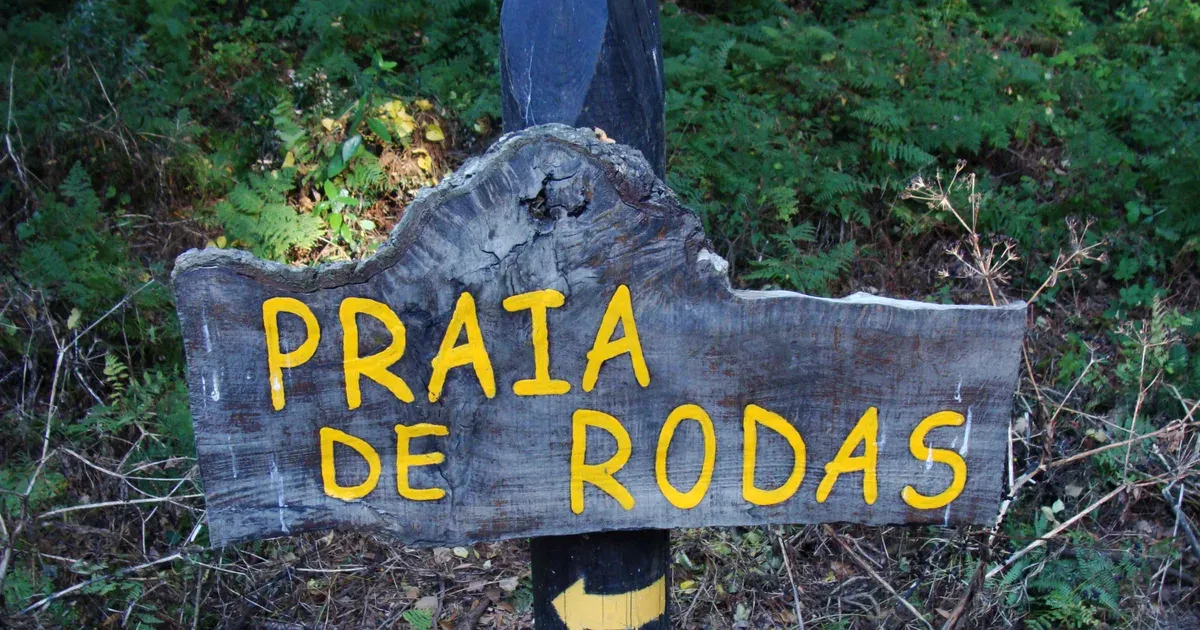
Monteagudo, do Faro, and San Martiño comprise the three main islands of the archipelago. Two are connected by the long, sweeping crescent of Rodas Beach, a strip of white sand and turquoise water that frequently appears in international rankings of the world's most pristine coastal sites. San Martiño remains accessible only by private boat, further distancing it from the typical tourist experience. This administrative control is a barrier against the mass tourism that has transformed much of the Mediterranean coast into a dense wall of concrete and sunbeds. Here, the absence of hotels is not a lack of development but a deliberate policy choice.
A digital permit system controls every person who steps onto the sand.
Galicia guards these shores with a bureaucratic zeal that rivals its military history. Current regulations cap daily visitors at approximately 1,800 people, with an additional 600 slots reserved for those staying at the single, regulated campsite. These numbers fluctuate based on seasonal assessments, but the core principle of limitation remains firm. During the peak summer months, permits often sell out weeks in advance. The regional government of Galicia implemented this digital queuing system to prevent the erosion of the dunes and the disturbance of nesting colonies. It functions as a hard ceiling on the carrying capacity of the land. How many other European destinations would willingly turn away thousands of paying customers to protect a patch of seagrass?
Ecological Sanctuary in the North Atlantic
Yellow-legged gulls and European shags dominate the cliffs on the western side of the islands, where the Atlantic Ocean crashes against the rocks with unbridled force. These birds are not just background scenery but the primary reason for the archipelago's status as a National Park. The Atlantic Islands of Galicia National Park, established in 2002, encompasses the Cíes alongside the Ons, Sálvora, and Cortegada islands. Protection extends beneath the waves, where kelp forests and underwater caves provide nurseries for a diverse array of crustaceans and mollusks. Divers who obtain the necessary permits report sightings of octopuses and spider crabs in numbers rarely seen elsewhere in Spanish waters.
Invasive species management has become a central focus for the park's rangers. Programs to remove non-native flora like eucalyptus and acacia have been underway for years, aiming to restore the original Atlantic scrubland. Native species like the sea pink and the Portuguese crowberry are slowly reclaiming the dunes. These botanical efforts require constant monitoring to ensure that the delicate balance of the sandy soil is not compromised by human traffic. Visitors must stay on designated wooden walkways to prevent the collapse of the dune systems, which act as natural barriers for the inland lagoons.
Nature does not negotiate with human convenience. Still, the lack of motorized transport on the islands defines the visitor experience more than any other rule. No cars, motorcycles, or even bicycles are permitted. Every supply for the few small restaurants on the island must be transported by hand-pulled carts or small electric service vehicles. This creates a sonic environment where the only sounds are the wind, the waves, and the constant calls of the gulls. The psychological impact of this silence is a primary draw for travelers from Madrid, London, and Paris. Most visitors find themselves walking several miles a day just to reach the lighthouse at Mount Faro, which offers a panoramic view of the Atlantic horizon. What is the value of a destination that requires physical exertion to fully appreciate?
Economic Impacts of Controlled Tourism
Local businesses in Vigo and Cangas depend heavily on the ferry traffic, yet they generally support the restrictions. A collapse in the island's ecosystem would lead to a collapse in its brand as an unspoilt paradise. Business owners recognize that the scarcity of access drives a different kind of value. While some critics argue that the permit system favors those with the time and digital literacy to handle the booking site, the regional government maintains that it is the only way to avoid the fate of the Balearic Islands. The lottery of getting a permit has become a part of the local travel culture.
Camping on the islands requires a separate authorization and a high degree of self-sufficiency. The campsite provides basic amenities, but guests must carry in their own supplies and, crucially, carry out all their waste. There are no trash cans on the beaches. This zero-waste policy forces a level of mindfulness that is absent from most resort vacations. Compliance is surprisingly high, partly because the rangers maintain a visible presence and partly because the beauty of the surroundings discourages littering. Data from the park service suggests that waste levels per capita are sharply lower here than in traditional tourist hubs on the mainland.
But the pressure to expand access is a constant political undercurrent. Some local developers have periodically proposed the construction of eco-lodges or more permanent structures to increase revenue. These proposals have consistently met with fierce opposition from environmental groups and the Spanish Ministry for the Ecological Transition. The current legal framework provides some of the strongest protections in the country, making any new construction nearly impossible. The islands remain a monument to what Spanish tourism could have been if preservation had preceded profit in the mid-twentieth century.
Seasonal shifts bring different challenges to the archipelago. While summer focuses on visitor management, winter is a period of intense biological activity. Migratory birds use the islands as an important stopover on their journeys between Africa and Northern Europe. During these months, the ferry service is severely curtailed, leaving the islands to the elements and the rangers. That cycle of human absence allows the environment to recover from the summer foot traffic. The 2026 spring season has seen a record number of nesting pairs among the European shags, a metric that park officials cite as evidence of the management plan's success.
European island destinations are increasingly looking to the Cíes model as a solution to overtourism. From the restricted access to the island of Skellig Michael in Ireland to the visitor caps on the Italian island of Giglio, the trend is moving away from volume. The Cíes Islands were an early adopter of this philosophy, proving that a destination can maintain its allure while strictly limiting its audience. Still, this model relies on a strong mainland economy that can support the infrastructure required for such a sophisticated permit system. It also requires a public willing to accept that not every beach is a public right if its survival is at stake.
Visitors often describe a sense of relief upon returning to the mainland, not because the island was unpleasant, but because the intensity of the nature can be overwhelming. The cold water of the Atlantic, which rarely rises above 18 degrees Celsius, acts as a further deterrent to those seeking a standard tropical holiday. It is a place for the hardy and the curious. The lottery of the permit, the hike to the lighthouse, and the cold Atlantic wind combine to create an experience that feels earned rather than purchased. Conservation limits do not allow for any other outcome.
Permits Shape the Visitor Experience
The Cíes model asks visitors to plan earlier, walk farther and accept limits. That friction is part of the experience, and it helps keep the islands from becoming another overloaded summer stop.