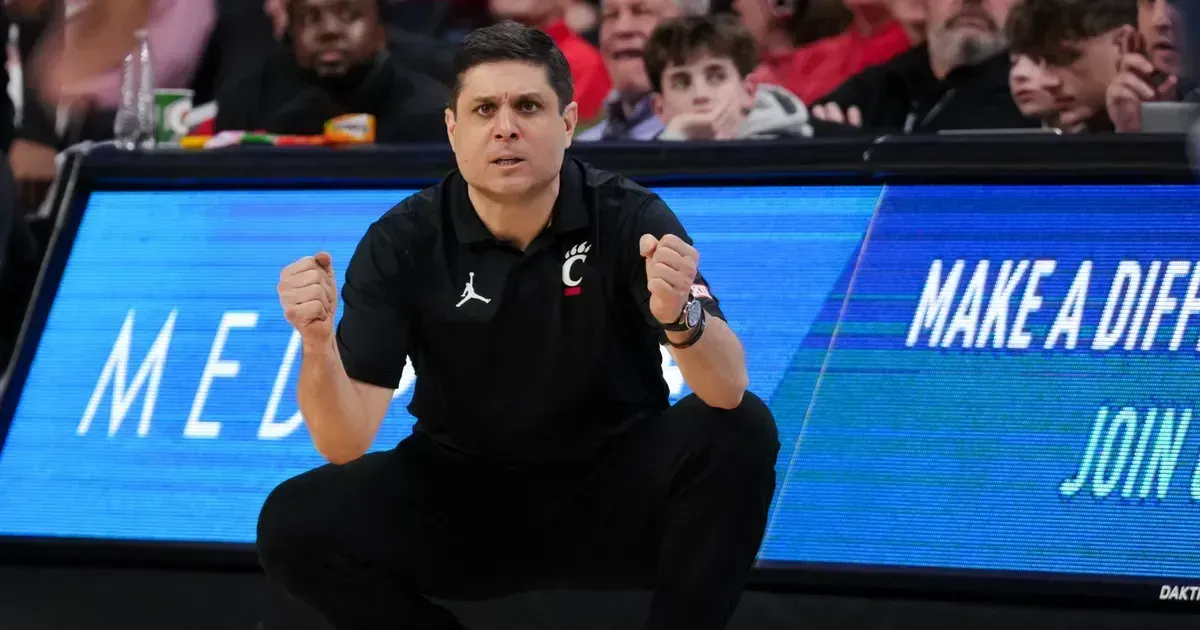
T-Mobile Center in Kansas City became the site of a professional reckoning late Thursday night. After five seasons at the helm of Cincinnati basketball, head coach Wes Miller watched a 17-point lead disappear in the closing minutes of the Big 12 quarterfinals. That defeat, a 74-72 loss, served as the final chapter of a tenure that failed to recapture the national relevance once enjoyed by the program. Sources told ESPN on Friday morning that the university moved to terminate Miller immediately. The move reset the program calendar and opened a new Big 12 chapter for Cincinnati. Bearcats fans had traveled to Missouri with expectations of a deep tournament run. Instead, they witnessed a collapse that summarized many of the systemic issues plaguing the Miller era. Stagnant offensive sets and defensive lapses in transition allowed an inferior opponent to claw back into the game. Miller stood on the sideline, arms crossed, as the momentum shifted irrevocably away from his bench. Pressure had been building for months in the Queen City. Athletic director John Cunningham faced increasing scrutiny from boosters regarding the program's lack of upward mobility in the nation's toughest conference. While Miller brought energy and a commitment to defense, the results on the scoreboard did not match the financial investment made by the university. Transitioning into the Big 12 required a leap in talent and execution that never quite materialized under the current staff.
Wes Miller Tenure and Big 12 Challenges
Miller arrived in 2021 with the task of rebuilding a program left in disarray by his predecessor. He brought a blue-collar philosophy from UNC Greensboro, emphasizing grit and physical play. Still, the step up to a high-major environment revealed limitations in tactical flexibility. The Bearcats struggled to maintain consistency, often following a significant victory with a perplexing loss to a bottom-tier opponent. Success in the Big 12 requires a depth of talent that rivals NBA rosters. Miller found some success in the transfer portal, but the core of the roster lacked the elite shooting necessary to compete with the likes of Kansas or Houston. Statistics from the 2025-2026 season showed Cincinnati ranking in the bottom third of the conference in three-point percentage. This offensive deficiency made every game a slog, putting immense pressure on the defense to be perfect. Recruiting within the local Ohio footprint also became a point of contention. Several top-ranked recruits from the Cincinnati area chose programs in the Big Ten or ACC over the local option. Maintaining a fence around the city was a hallmark of the Bob Huggins era, but that dominance had eroded over the last decade. Miller was unable to close the gap on elite prospects who viewed the program as a secondary option.
Attendance at Fifth Third Arena remained respectable, yet the sellout crowds of the early 2000s were no longer a guarantee. Donors began to express frustration with the lack of NCAA Tournament appearances. For a program with two national championships and six Final Four appearances, missing the Big Dance for multiple consecutive seasons is an untenable situation. The standard of excellence established by previous regimes loomed large over every decision.
Cincinnati Basketball Recruiting and Financial Impact
Financial considerations played a significant role in the timing of the dismissal. Miller signed a contract extension in 2023 that included a substantial buyout clause, rumored to be in the $12 million range. Supporters of the program reportedly met earlier this week to discuss the logistics of funding that separation. The willingness of boosters to write such a check indicates the level of dissatisfaction with the current path of the team. In fact, the economics of modern college basketball leave little room for patience. With the advent of Name, Image, and Likeness (NIL) collectives, the cost of maintaining a competitive roster has skyrocketed. Cincinnati has invested heavily in its collective, but the return on investment on the court has not met the expectations of the primary contributors. They demand a coach who can translate those dollars into tournament seeds.
Wes Miller is going to have a long time to think about choking away a big lead in the Big 12 quarterfinals.
Money spent on facilities further raised the stakes. The university recently completed upgrades to its practice environment and player lounges to compete with the top tier of the Big 12. These amenities were designed to lure five-star talent, yet the roster remained composed largely of three-star development players and mid-major transfers. The disconnect between the infrastructure and the talent level was a primary driver for the leadership change. But the transfer portal has also created a volatile environment for coaches. Miller lost key contributors to graduation and professional opportunities, forcing him to rebuild the rotation every offseason. This lack of continuity hampered the development of a cohesive offensive identity. By the time the team reached the 2026 conference tournament, the cracks in the foundation were visible to even casual observers.
Tournament Meltdown in the Big 12 Quarterfinals
Kansas City provided a brutal backdrop for the final act of the Miller era. Leading by double digits with eight minutes remaining, the Bearcats appeared to be cruising toward a semifinal berth. Then, a series of unforced turnovers and missed free throws opened the door. The opposing team went on a 15-2 run that quieted the Cincinnati section of the crowd and ignited the neutral fans in attendance.
Miller failed to call a timeout during the most critical stretch of that run. This decision drew immediate fire from social media and television analysts who questioned his game management. By the time he finally gathered his players, the lead had shrunk to a single possession. The body language of the athletes suggested a group that had lost confidence in the plan.
The collapse in Kansas City was not an isolated incident. Throughout the season, the Bearcats surrendered late leads in at least four conference games. These losses turned a potential top-four seed into a bubble team that eventually fell out of the conversation entirely. Elite programs close out games with precision and discipline, two traits that were noticeably absent from the Cincinnati bench on Thursday night. The lack of a go-to scorer in crunch time proved fatal.
Final shooting numbers from the game were telling. The Bearcats shot just 22 percent from the floor in the final ten minutes. Meanwhile, their opponents converted nearly 60 percent of their attempts during the same period. The defensive intensity that Miller preached for five years evaporated when it was needed most. The locker room after the game was described by observers as somber and silent.
Candidates for the vacancy are already being discussed in basketball circles. The university is expected to target a high-major assistant or a successful mid-major head coach with a proven track record of offensive innovation. Names like Sean Miller or perhaps a return to the Mick Cronin coaching tree have surfaced in early speculation. The goal is to find a leader who can handle the unique challenges of the Big 12. So the search begins immediately to ensure the new staff can salvage the upcoming recruiting class. Several verbal commits have already signaled they will re-evaluate their options following Miller's departure. Retaining the current roster in the age of the transfer portal will be the first and most difficult task for the incoming coach. Stability is a luxury that Cincinnati cannot afford.
Winning in the Big 12 is a zero-sum game. For every program like Kansas that maintains dominance, others must languish at the bottom of the standings. Cincinnati refuses to accept a role as a conference doormat. The administration believes the resources are in place to compete at the highest level, and the firing of Miller is a clear statement of that ambition. Failure is no longer tolerated in the new era of Bearcats athletics.
Cincinnati Faces a Real Program Reset
Cincinnati did not fire Wes Miller because of one blown lead alone. The collapse gave the administration a public reason to act on a deeper concern: a proud program had become ordinary in the league it fought so hard to join. Big 12 membership raises the standard, and Cincinnati can no longer sell patience as a plan.