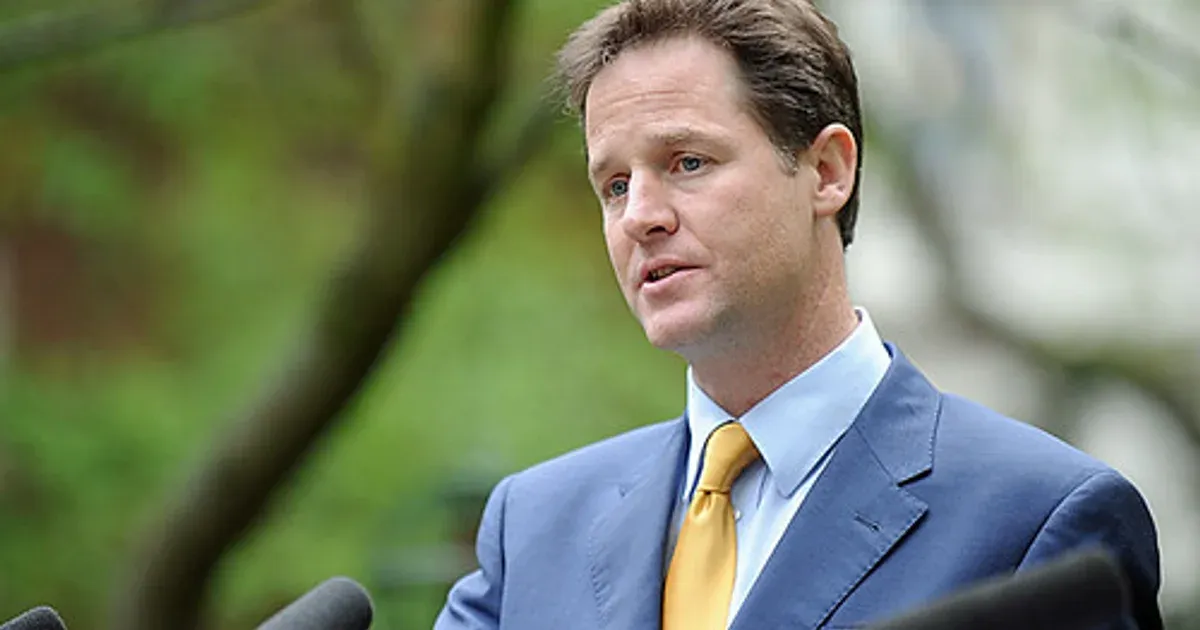
Nick Clegg’s admission about UK tuition fees lands as universities face deficits and graduates question whether the funding model still works.
Clegg Reopens the Tuition Wound
Nick Clegg, the former architect of the United Kingdom's most controversial education reform, has finally broken his silence on the long-term failure of the student finance model. Speaking with the BBC, the man who once served as the junior partner in the 2010 coalition government described the current state of university funding as a total mess. His admission comes at a time when British higher education institutions face an existential threat from rising costs and stagnant domestic income. Clegg stated he would take on the chin any criticism regarding his role in the policy shift that tripled fees more than a decade ago. The admission resonated on March 11, 2026, as universities and graduates faced the bill for a broken funding model.
History remembers Clegg most vividly for the 2010 Liberal Democrat manifesto pledge to abolish tuition fees entirely. When his party entered government with the Conservatives, that promise vanished within months. Instead of abolition, students saw fees jump from 3,290 to 9,000 per year, a move that sparked nationwide protests and permanently damaged the political brand of the Liberal Democrats. Critics today argue that his recent comments are a belated attempt to sanitize a legacy that remains a source of deep resentment among a generation of graduates now burdened with five-figure debts. Economic realities in 2026 have pushed the system to its breaking point.
Inflationary pressures have eroded the real value of the 9,250 cap on domestic tuition, leaving universities with a funding gap that some analysts estimate at 2,500 per student. Research by the Office for Students suggests that nearly 40 percent of English universities are currently operating in a deficit. These institutions have relied heavily on international student fees to cross-subsidize domestic losses, yet tightening visa regulations have throttled that revenue stream. The funding model no longer works. Clegg's tenure in the coalition government is often cited by political scientists as a primary reason for the subsequent erosion of trust in centrist politics.
While he now resides in California serving as a high-ranking executive at Meta, the policy decisions he signed off on continue to ripple through the UK economy. Interest rates on student loans have fluctuated wildly, at times reaching 7 or 8 percent, ensuring that many graduates never even touch the principal balance of their debt. Such a structure has transformed a promise of social mobility into a long-term tax on the middle class.
Universities Face a Funding Trap
London and other major academic hubs are seeing the consequences of this fiscal instability first-hand. Several mid-tier universities have started cutting specialized departments, focusing only on high-volume courses that require minimal overhead. This reduction in academic diversity limits the choices available to students from lower-income backgrounds who cannot afford to move across the country for niche subjects. Clegg acknowledged that the current configuration satisfies neither the students, who feel exploited, nor the universities, which remain underfunded. Opposition lawmakers have been quick to point out that Clegg's newfound candor offers little comfort to those still paying for the 2010 U-turn.
Shadow education ministers argue that the system requires a complete structural overhaul rather than rhetorical apologies. They suggest that the current model of marketization has failed to deliver the improved facilities or better teaching outcomes promised by the coalition government. Instead, students report larger class sizes and a sense that they are viewed as customers rather than scholars. Self-reflection is rare among retired politicians. Public opinion polls show that a significant majority of voters believe the current funding model is unsustainable.
Some advocacy groups propose a graduate tax, which would decouple the cost of education from individual debt balances, while others call for a return to direct state grants. Still, the Treasury remains hesitant to take on the massive liability of funding higher education directly, especially with the national debt at record levels. Clegg's comments highlight a vacuum in leadership where no party seems willing to propose a radical solution that might alienate taxpayers. University vice-chancellors have expressed frustration with the political stalemate. They claim that the tuition fee freeze has lasted too long, effectively cutting their budgets by 30 percent in real terms since 2012.
Without a change in the funding formula, more institutions may face mergers or outright closure by the end of the decade.
Why Belated Honesty Is Not Accountability
Rarely does a man so instrumental in breaking a social contract find the audacity to complain about the resulting wreckage from the safety of a Silicon Valley boardroom. Nick Clegg's admission that the tuition fee system is a mess would be laughable if it were not so insulting to the millions of British citizens currently shackled by the debt he authorized. It is quite convenient to take criticism on the chin when you are earning a seven-figure salary in a different hemisphere, far removed from the bailiffs or the interest rate hikes that define the lives of UK graduates. Clegg is not a victim of circumstance but a deliberate architect of a broken machine.
His attempt to frame this as an objective observation of a systemic failure ignores his own hand in the design. The British higher education sector is indeed in a death spiral, yet this is the predictable outcome of treating a public good like a retail commodity. If Clegg truly cared about the mess he made, he would be lobbying for a total cancellation of the interest rates that have turned education into a form of indentured servitude. Instead, we receive a polite shrug from a man who has already moved on to his next high-paying act. Conventional wisdom suggests we should appreciate the honesty, but true accountability requires more than words in a BBC studio; it requires a plan to undo the damage.