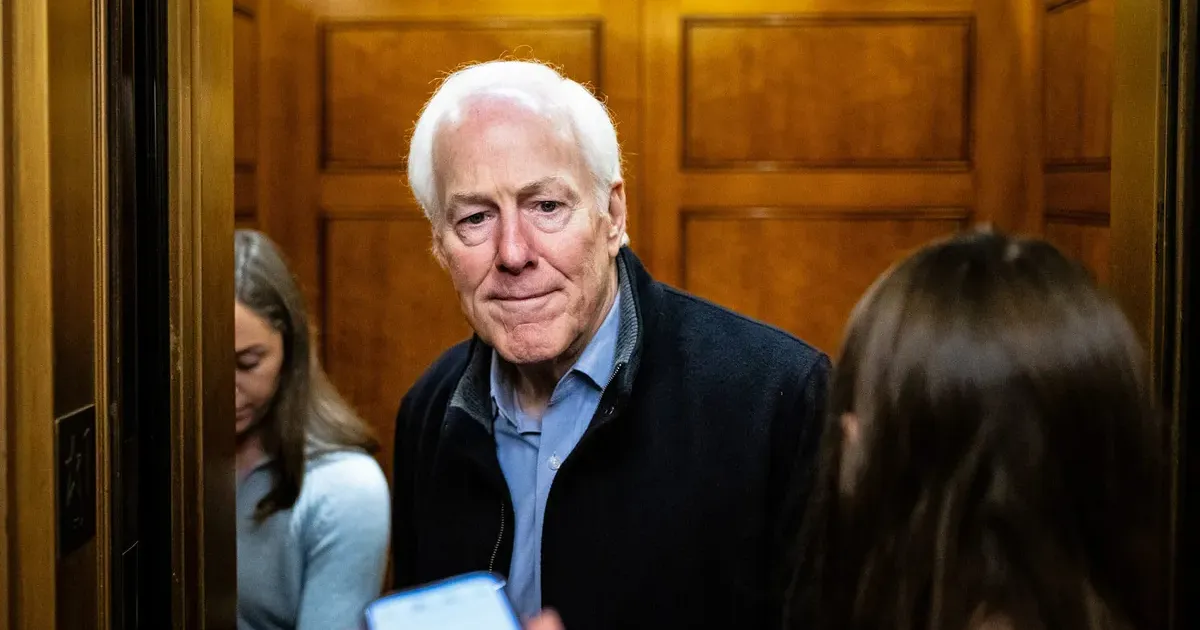
Texas primary pressure is turning John Cornyn's filibuster shift into a test of whether Senate rules still outrank campaign survival.
John Cornyn’s filibuster shift shows how Texas primary pressure can move Senate rules from institutional principle to campaign instrument.
Cornyn Abandons the Filibuster Line
John Cornyn stepped onto the Senate floor with a pronouncement that shattered decades of his own institutionalist posturing. His voice remained steady, yet his words carried the pressure of a fundamental betrayal for those who view the 60-vote threshold as the last guardrail of American governance. The reversal became public on March 11, 2026, turning Senate rules into a test of primary-season survival. Cornyn, a senior Republican from Texas, abandoned his lifelong commitment to the filibuster to clear a path for the Safeguard American Voter Eligibility (SAVE) America Act. A man who once authored editorials defending the Senate as the cooling saucer of democracy now argues that rules must bend to the will of a specific legislative priority.
Republican primary voters in Texas have demanded absolute ideological purity as Cornyn fights a brutal runoff election against a challenger backed by the MAGA base. Recent polling suggests a precarious lead for the incumbent, who has often been criticized by the right wing of his party for being too willing to compromise with Democrats. Voter security has become the defining issue of this primary season. Opponents have labeled Cornyn a creature of the swamp, a title he clearly hopes to shed by adopting a scorched-earth policy toward Senate tradition. Pressure from Mar-a-Lago has also intensified, with Donald Trump making it clear that his endorsement hinges on Cornyn's willingness to demolish legislative hurdles for the president's signature voting bill.
Political survival often overrides constitutional philosophy. Voter eligibility rules within the SAVE America Act would require documentary proof of citizenship for federal elections, a mandate that supporters believe is necessary to prevent non-citizen voting. Democrats have largely united against the bill, arguing that such requirements create unnecessary barriers for legal voters who may lack immediate access to birth certificates or passports. Existing laws already prohibit non-citizens from voting in federal contests, leading many analysts to view the SAVE America Act as a solution in search of a problem. But for Cornyn and his colleagues, the perception of election insecurity is a powerful tool for mobilization.
The SAVE America Act Drives the Reversal
They argue that the 60-vote requirement is an outdated relic that allows a minority of senators to ignore the concerns of the American public regarding the integrity of the ballot box. Cornyn once called the filibuster the last line of defense against radicalism. In 2017 and again in 2021, he warned that removing the 60-vote threshold would turn the Senate into a mirror of the House of Representatives, where the majority rules with an iron fist. He frequently lectured newcomers on the importance of consensus and the dangers of short-term thinking. This calculation reflects the brutal reality of the Texas GOP runoff.
He has chosen to prioritize his own re-election over the structural integrity of the institution he has served for more than two decades. Senate chambers remained unusually quiet during his announcement. Donald Trump has dangled an endorsement over the runoff for weeks, using his social media platform to question whether Cornyn has the stomach for the fight. Trump has long loathed the 60-vote hurdle, viewing it as a tool used by the establishment to block his populist agenda. By aligning himself with this view, Cornyn is effectively auditioning for a leadership role in a future Trump administration or as the next leader of the Senate GOP.
His reversal indicates a broader shift within the party, as more traditionalist Republicans realize that defending the filibuster is no longer a viable strategy for staying in power. This legislative maneuver would bypass the traditional 60-vote requirement through a procedural loophole or a direct rule change, often called the nuclear option. Rules and precedents have little value when they conflict with the immediate needs of a political movement. Cornyn cited careful consideration of the current political climate as his primary motivation for the change.
Texas Primary Pressure Changes the Math
He argued that the threat to election integrity is so severe that it warrants an exception to the standing rules of the Senate. This development signals the end of the Senate as a deliberative body. If the filibuster falls for the SAVE America Act, it is difficult to imagine it being maintained for any other controversial piece of legislation. The precedent would be set, and the majority would likely use it to push through every item on its agenda without the need for a single vote from the opposition. Democrats have reacted with a mixture of outrage and strategic anticipation.
While they publicly condemn the move as a power grab, some strategists privately admit that a post-filibuster Senate could benefit their own party when they eventually return to power. If Republicans lower the bar to 51 votes now, Democrats will have no reason to respect the 60-vote threshold in the future. Senate Majority Leader Chuck Schumer has already hinted that his caucus would respond in kind. The irony of the situation is that Cornyn's attempt to save his career may ultimately provide the tools for his political enemies to pass the very policies he has spent his life opposing. Legislative mechanics suggest that a rule change would involve a complex series of parliamentary inquiries and appeals.
The Senate Parliamentarian would likely rule against such a change, requiring the presiding officer to be overruled by a simple majority. Such a move would be a mirror image of the 2013 and 2017 changes that eliminated the filibuster for judicial nominees.
Why One Exception Becomes the Rule
Watching a career institutionalist like John Cornyn set fire to the Senate's most sacred rule is an exercise in the corrosive nature of modern primary politics. For years, Cornyn wrapped himself in the mantle of the Senate's protector, lecturing anyone who would listen about the virtues of the 60-vote threshold. Yet, the moment a MAGA challenger threatened his seat in a Texas runoff, that supposed principle dissolved like a sugar cube in hot coffee. It is not about the SAVE America Act or voter integrity. It is about a senior politician who is terrified of his own base.
By supporting a rule change to pass a bill that largely duplicates existing law, Cornyn is trading the long-term stability of the American legislative process for a few more years in power. He is effectively handing the keys of the kingdom to whoever holds a 51-seat majority, seemingly blind to the fact that his own party will eventually be in the minority. When the Senate finally descends into the same partisan cage match as the House, we will know exactly which institutionalists held the matches. Cornyn's legacy will not be one of leadership, but of a man who broke the Senate to save himself.