March 12 brought another reminder that daily puzzles now compete with headlines by building routine rather than urgency. The March 12, 2026 puzzle cycle showed again that small daily rituals can be more valuable than a single traffic spike.
Streaks Beat Headlines
Morning light hits millions of smartphone screens across London and New York simultaneously as a specific kind of intellectual labor begins. Before many office workers open their first email or brew a second pot of coffee, they navigate to a specific suite of digital challenges. Thursday marked another day when the linguistic and logical dexterity of the global workforce is tested by the New York Times Games department. Wordle #1727 leads the charge, accompanied by the evolving complexities of Strands and the tactile logic of Pips.
Success in these arenas provides a micro-dose of dopamine that carries professionals through their early meetings. Critics might call it a distraction, but the scale of participation suggests a deeply ingrained cultural habit. Digital engagement metrics prove that these games are no longer casual pastimes. They are the scaffolding of the modern morning routine.
Wordle #1727 arrived on Thursday with a sequence of letters that challenged even veteran players who have maintained streaks for years. Forbes reported that today's hints focused on a specific consonant-heavy structure that often trips up those using the popular starting word ADIEU. Identifying the vowel placement early became the primary strategy for many on social media platforms. While some purists argue the game has become more difficult since its acquisition, others find the curated vocabulary essential for maintaining interest.
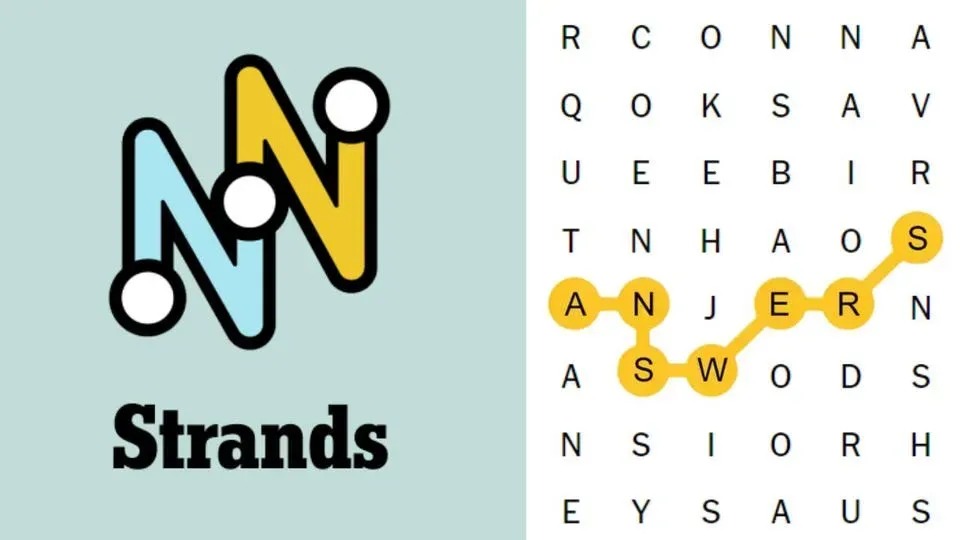
The math of the grid remains a brutal master, offering only six chances to avoid the shame of a broken streak. Most users found success today by focusing on the third and fourth positions, where a specific vowel pair often hides in plain sight. The digital grid has become the new town square. Linguistic agility takes center stage in Strands, which featured the theme Out-And-Out for the March 12 iteration.
Habit Is the Product
Experts noted that this particular theme required players to search for synonyms of completeness and totality. Uncovering the Spangram for Out-And-Out demanded a level of lateral thinking that goes beyond simple word searches. Players found themselves hunting for terms like ABSOLUTE or THOROUGH, woven through a dense web of decoy letters. Forbes provided extra clues for those stuck on the final three words, highlighting the increasing difficulty of the Strands interface.
Unlike the linear nature of Wordle, Strands forces a spatial awareness that many find more rewarding yet sharply more time-consuming. Pips offers a different kind of mental exercise by bridging the gap between dominoes and tile-matching puzzles. Thursday's walkthrough emphasized the importance of matching specific domino faces to pre-set tiles on the board. Success in Pips relies on foresight, as one wrong move can create a bottleneck that prevents the board from clearing.
Forbes contributors suggested starting from the outer edges to maintain maximum flexibility in the center of the grid. It is a game of patience rather than vocabulary, appealing to the segment of the audience that prefers mathematical logic over linguistic trivia. This specific puzzle on March 12 utilized a symmetrical layout that rewarded those who planned three moves ahead. NYT Games executives have transformed a simple crossword supplement into a dominant revenue driver.
Subscription data indicates that many users now pay for access specifically for the games, rather than the investigative journalism or opinion columns. Every daily puzzle is designed to increase the time spent on the application. Engagement numbers for Wordle #1727 and the March 12 Strands suggest that the habit is not fading, even four years after the Wordle craze first peaked. Rival publishers have attempted to replicate the formula with varying degrees of success.
The Puzzle Page Is the Retention Machine
Daily puzzles look harmless because the format is modest, but that modesty is exactly the business advantage. Streaks, hints and quick completion loops create a low-friction appointment with the publisher every morning, even when the news agenda feels exhausting.
The Times is not just selling games. It is selling habit, and habit is harder to cancel than curiosity. A solved grid gives users a tiny sense of order before the day becomes chaotic. That may be good product design, but it is also a retention machine with a friendly face.