A Glossy Veneer on a Gritty Premise
Apple TV+ and A24 arrived at the spring 2026 television season with an adaptation of Rufi Thorpe’s novel that promised to blend the prestige of Michelle Pfeiffer with the digital-era grit of subscription-based adult content. Margo’s Got Money Troubles follows a trajectory many had hoped would redefine the streamer’s reputation for overly sanitized high-budget fare. Instead, the series delivers a product that oscillates between flashes of inspired visual storytelling and the safe, familiar rhythms of a traditional broadcast dramedy. While the pilot opens with a sequence that feels genuinely fresh, the momentum quickly dissipates into a structural predictability that David E. Kelley fans will recognize instantly.
David E. Kelley has spent decades mastering the art of the relatable eccentric, from Ally McBeal to the wealthy, traumatized mothers of Big Little Lies. With Margo, he attempts to pivot toward the Zoomer experience, centering on a college freshman played by Elle Fanning. Margo finds herself pregnant after a brief affair with her literature professor, Mark, portrayed with a calculated lack of charm by Michael Angarano. When Margo decides to keep the child against the advice of her mother, Shyanne, the narrative shifts from a campus scandal into a survival story. The juxtaposition of Fanning’s youthful idealism and Pfeiffer’s weary pragmatism provides the show’s emotional backbone, yet the writing often feels a decade behind the culture it seeks to critique.
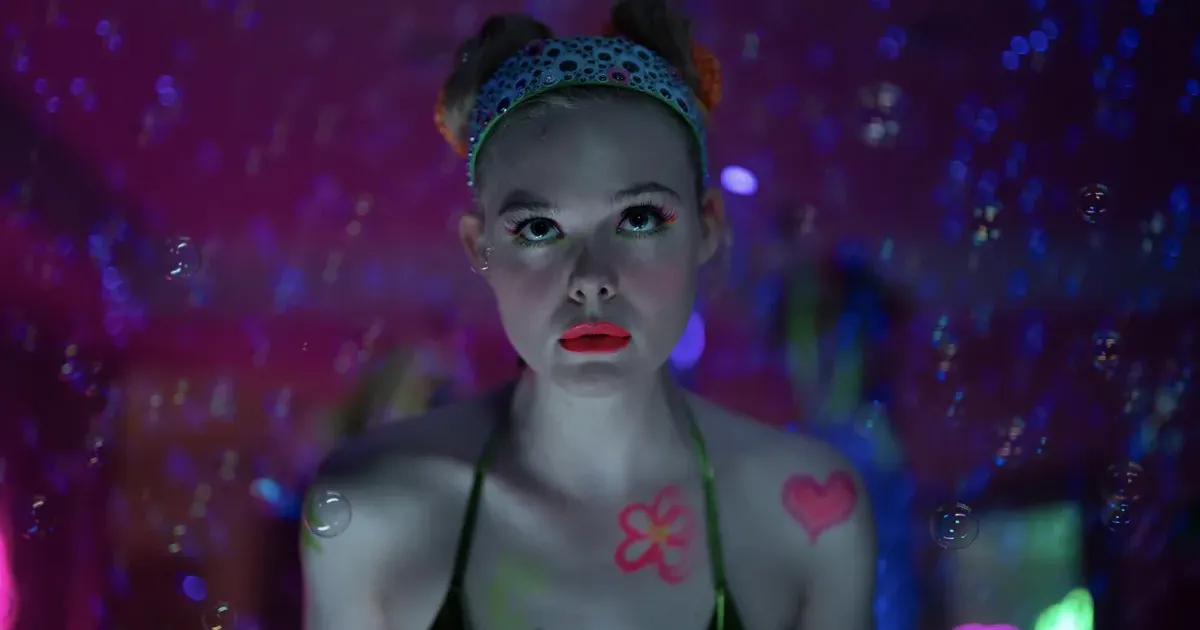
Visual flair is the show's primary weapon in its fight against mediocrity. The opening sequence, a pinball-themed journey through Margo’s cluttered reality of unpaid bills and baby supplies, suggests a whimsicality that the subsequent episodes struggle to maintain. A green alien woman rolling atop a silver ball is metaphor for Margo’s resilience, managing the bumpers and chutes of a system designed to make her fail. Robyn’s "Blow My Mind" sets a high-energy tone that the script, unfortunately, cannot sustain once the heavy lifting of plot development begins.
The Digital Labor Disconnect
Central to the marketing and the intrigue of the series is Margo’s decision to start an OnlyFans account where she portrays an alien. This creative friction defines much of the first season. By donning green body paint and leaning into the "nerd-bait" niches of the internet, Margo finds a financial lifeline that traditional employment cannot offer a single mother. It is here that the show had its greatest opportunity to explore the intersection of labor, autonomy, and the commodification of the self in the 2020s. But the narrative treats the platform more as a quirky plot device than a systemic reality. Kelley seems more interested in the family than the friction.
A24’s involvement usually indicates a certain level of indie credibility and formal experimentation. In this collaboration, however, the Apple TV+ aesthetic of hyper-saturated colors and pristine environments seems to have won out. Even the most desperate moments of Margo’s financial crisis look remarkably clean. The "money troubles" of the title are often discussed but rarely felt through the lens. This financial desperation serves as the catalyst for the show’s most inventive subplot. Yet the struggle feels curated rather than lived-in, a common critique of Apple’s foray into stories about the working class.
Performance alone cannot salvage a script that refuses to take risks.
Elle Fanning delivers a performance that is both luminous and grounded, capturing the specific panic of a young woman who has outpaced her own maturity. She handles the absurdity of the alien persona with a sincerity that prevents the show from descending into pure farce. Michelle Pfeiffer, playing a former pro-wrestler and beauty queen, brings a jagged edge to the role of Shyanne. Her chemistry with Fanning is the most authentic element of the series, providing a window into a cycle of mother-daughter dysfunction that feels far more real than the professor-student affair that triggers the plot.
The Kelley Formula vs. The Modern World
Kelley’s writing has always thrived on the pageantry of the courtroom or the high-stakes drama of a murder mystery. In a domestic setting, his reliance on sharp-tongued repartee can occasionally feel artificial. The dialogue in Margo’s Got Money Troubles often sounds like it was written for a stage play, with characters delivering perfectly timed quips in situations that would normally elicit stunted, messy human reactions. This tension between the old world of linear television and the new world of digital labor remains unresolved. While the show attempts to speak the language of the internet, its heart remains firmly planted in the character-driven tropes of the 1990s.
Michael Angarano’s Mark is perhaps the most frustrating component of the ensemble. The character is written as a generic catalyst for Margo’s plight, lacking the depth or complexity to explain why a student of her intelligence would risk her future for him. Without a compelling reason for their initial connection, the fallout feels like a mechanical necessity rather than a tragic mistake. The show is at its best when it moves away from the men in Margo’s life and focuses on the strange, shimmering world she builds for herself online.
The alien OnlyFans content is presented as a form of performance art, a way for Margo to reclaim her narrative by becoming something literally non-human. When she is in character, the show’s cinematography shifts, adopting a grainier, more intimate feel that mimics the handheld reality of social media creators. These moments are brief, however, and the show quickly retreats to the safety of its high-budget, multi-camera feel. One wonders if a smaller studio or a different showrunner would have leaned harder into the surrealism suggested by the title sequence.
Technical Precision and Missed Opportunities
Sound design and music supervision are consistently excellent. The use of Swedish pop and electronic tracks creates a sense of momentum that the pacing sometimes lacks. Every time the story threatens to stall in a familiar family argument, a needle drop or a sharp edit pulls the viewer back in. Still, these are technical fixes for a narrative that feels like it is pulling its punches. The show wants to be edgy enough for the A24 brand but safe enough for the Apple ecosystem. It is a difficult balance to strike, and the result is a series that is undeniably watchable but ultimately forgettable.
Critics will likely point to the series as a missed opportunity to truly engage with the realities of the creator economy. Instead of exploring the psychological toll of selling one's image to strangers, the show uses the alien persona as a costume that can be taken off when the scene requires a more traditional emotional beat. The stakes never feel truly existential. Margo is always too talented, too pretty, and too well-supported for the audience to believe she is ever in real danger of falling through the cracks of society.
The first season ends on a note that suggests more to come, yet it leaves the viewer wondering what the ultimate point of the exercise was. Is it a commentary on modern motherhood? A satire of the digital age? Or just another David E. Kelley drama with a slightly more modern hook? The answers remain as elusive as the green alien woman on her silver ball. How much of this was ever meant to be a critique of the system rather than a pleasant diversion?
The Elite Tribune Perspective
Why does a trillion-dollar company like Apple keep making shows about poverty that feel like they were written in a Silicon Valley board room? The fundamental problem with Margo’s Got Money Troubles is not the acting or the direction; it is the sheer lack of authenticity in its depiction of financial ruin. Apple’s version of "struggling" involves living in a beautifully lit apartment that most people in Margo’s situation could only dream of. By sanitizing the grit, the show lobotomizes its own premise. David E. Kelley is the wrong architect for this project. He is a master of the elite, the articulate, and the wealthy. Asking him to write about the desperate world of subscription-based adult work is like asking a classical composer to write a mumble rap track. The notes are all there, but the soul is missing. We are tired of prestige television that treats the hardships of the lower class as a colorful aesthetic choice rather than a crushing reality. If Apple wants to tell stories about the digital frontier, it needs to stop hiring the guards of the old guard to do it. It show is a textbook example of a corporate entity attempting to buy coolness and failing to understand that coolness requires a willingness to be ugly.