Democrats are testing a more populist tax-cut message to rebuild credibility with working-class voters who doubt the party's economic priorities. The debate sharpened on Capitol Hill in March 2026, with lawmakers weighing proposals that would pair relief for lower- and middle-income households with sharper attacks on billionaire tax avoidance. The shift is not only about policy. It is about tone. By March 18, 2026, the problem was partly rhetorical. For years, Democrats had often described their economic agenda through programs, credits and administrative detail. That language can be accurate and still fail politically. A working-class pitch has to sound direct: who pays less, who pays more and why the system feels unfair.
Democrats are turning toward a more populist tax-cut message as they try to rebuild credibility with working-class voters who no longer see the party as a reliable economic champion.
Tax Relief Becomes a Trust Exercise
The party's challenge is that voters are skeptical of promises that arrive through complicated credits or delayed benefits. A simple wage-earner tax cut is easier to explain. It also lets Democrats argue that tax policy should reward work rather than wealth parking, carried interest strategies or paper gains that ordinary families cannot access. working-class tax cuts can carry political force if voters believe they are real and durable. If the proposal looks like a campaign-season slogan, it may reinforce the problem Democrats are trying to solve. Republicans will likely argue that Democrats are borrowing conservative language after years of supporting spending increases. Democrats will answer that the current tax code already favors the wealthy and that relief for workers can be funded by closing loopholes at the top.
The Billionaire Frame Is Useful but Limited
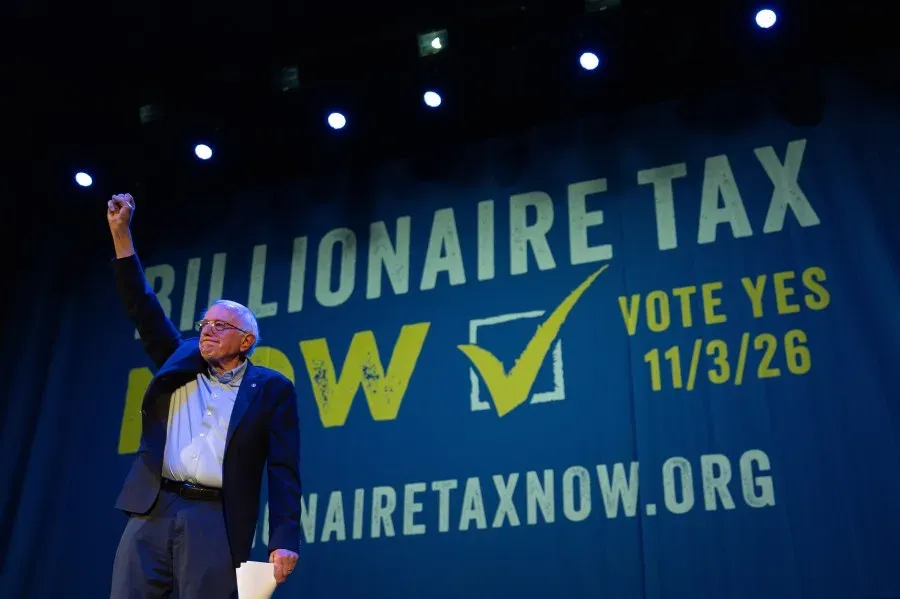
Billionaire taxes are popular in polling because they give voters a clear villain and a clear fairness claim. The difficulty is implementation. Wealth taxes, minimum taxes on unrealized gains and stricter enforcement all raise design questions that opponents can exploit. Complexity gives lobbyists room to slow or reshape the policy. That is why the broader message matters. Democrats may not need every voter to understand each enforcement mechanism. They need voters to believe the party is fighting on the correct side of the ledger. That means connecting billionaire taxation to childcare, wages, housing costs and take-home pay instead of treating it as a moral slogan alone.
Populism Can Clash With Donor Politics
The strategy also creates tension inside the party. Democrats depend on affluent donors, finance-sector supporters and professional-class voters who may agree with fairness language but resist aggressive tax design. A sharper working-class pitch can expose those contradictions. Candidates in competitive districts will have to decide how far to go. Some may embrace direct attacks on billionaires. Others may prefer narrower family tax cuts or payroll relief. The risk is that the message becomes fragmented before voters hear a coherent offer.
The Test Is Whether Voters Feel It
Economic trust is built through visible results. If voters hear tax-cut language but still face high rent, expensive groceries and medical bills, the political benefit may be limited. The strongest version of the Democratic argument would connect tax relief to a larger cost-of-living agenda that feels immediate. That agenda also has to avoid sounding like a spreadsheet. Working-class voters do not need another explanation of macroeconomic performance if their paycheck feels thin. They need a party that can explain why the system works better for asset owners than for wage earners, and what specifically will change. The pivot is therefore necessary but not sufficient. Democrats have identified a real weakness in their economic brand. Whether they can repair it depends on whether populist tax language becomes a governing plan rather than a campaign costume. The next budget fight will show how much of the rhetoric survives contact with donors, lobbyists and deficit politics. The party also has to decide whether it is promising relief through the income tax code, payroll taxes or refundable credits. Those choices matter because different households feel them differently. A credit that arrives once a year is not the same as a larger paycheck every two weeks, even if the annual value looks similar in a policy table. Labor unions and progressive groups may welcome the direction but still press for stronger wage, healthcare and housing policies. They know that tax relief can be swallowed quickly by rent, child care or medical premiums. A populist tax cut works best as part of a broader claim that the economy should be reorganized around work. Moderate Democrats will watch the deficit argument. Republicans have often passed tax cuts while accepting larger deficits, but Democrats are usually forced to explain offsets in more detail. That asymmetry frustrates party strategists, yet it remains part of the political terrain.
The messaging test will be whether candidates can say the same thing in union halls, suburban districts and donor rooms. If the pitch changes too much by audience, voters will sense the calculation. If it stays clear, Democrats may finally have an economic line that cuts through abstraction.
The policy detail most likely to matter is refundability. A nonrefundable tax cut does little for households with low income-tax liability, while a refundable credit can reach workers with thinner margins. That distinction sounds technical, but it determines whether the pitch reaches the voters Democrats say they are prioritizing.
There is also a race against cynicism. Many working-class voters have heard promises from both parties while watching wealth concentrate and basic costs rise. Democrats cannot solve that distrust with a slogan. They need a policy that appears in paychecks, bills or annual refunds in a way people can recognize without a briefing memo.
If the party can connect tax relief to enforcement against high-end avoidance, it may recover some of the fairness language it lost. If it cannot, Republicans will argue that Democrats discovered tax cuts only after losing ground with the voters who needed them most.
That is why the billionaire contrast matters. Democrats are not only selling a tax preference; they are trying to sell a moral order in which work receives more respect than avoidance. The argument can resonate if the policy is simple enough for voters to repeat in one sentence.
The risk is overloading the proposal with too many exceptions, phaseouts and administrative tests. A working-class tax cut that requires a long explanation may satisfy policy experts while missing the audience it was designed to reach.