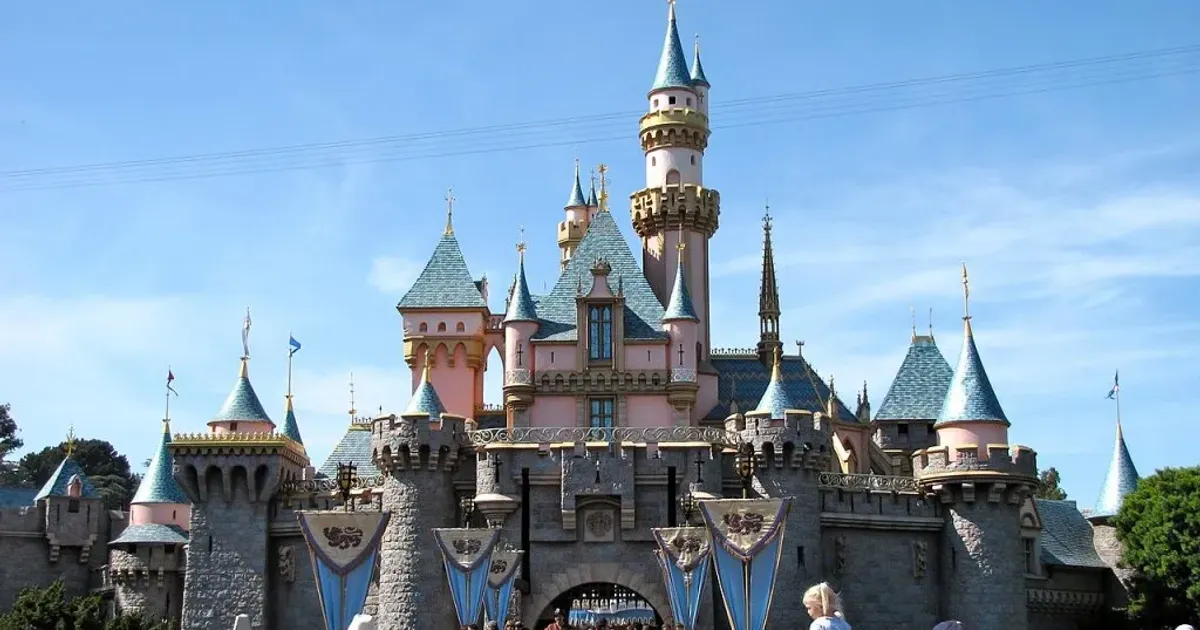
Disney’s new parks leader inherits a division expected to fund expansion while keeping guests willing to pay higher prices. The leadership change landed on March 11, 2026.
Parks Become Disney's Cash Engine
Burbank, California, anchored a major shift in the Walt Disney Company hierarchy Wednesday morning. Disney announced a leadership change for its sprawling Parks, Experiences and Products division, signaling a strategic focus on the business unit that currently serves as the primary cash generator for the entire entertainment conglomerate. While internal memos emphasize continuity, the appointment arrives at a moment when theme park operations must carry the financial burden for less profitable segments of the Disney empire. Parks and Experiences evolved into the company's engine over the last five fiscal years. Disney reported record-breaking revenue from its domestic and international resorts in 2025, providing the necessary liquidity to offset the volatility seen in traditional linear television and the heavy expenditures required for streaming dominance.
Financial analysts at Goldman Sachs and Morgan Stanley previously noted that Disney's domestic parks maintain some of the highest margins in the leisure industry, despite persistent concerns regarding consumer price sensitivity. Bob Iger personally oversaw the selection process for this critical role. Succession planning remains the most scrutinized topic among Disney shareholders, and the head of the parks division has historically been a top contender for the Chief Executive Officer position. Previous leaders like Bob Chapek and Josh D'Amaro used the role to demonstrate operational expertise and an ability to manage massive capital projects. This decision underscores the board's desire for a leader capable of executing the ambitious $60 billion expansion plan announced in late 2023.
The move came as Disney leaned harder on parks to fund the rest of its empire.
Profit remains the primary directive in Burbank. Disney plans to double its capital expenditure for the parks and experiences segment over the next decade. Major projects including the Tropical Americas expansion at Animal Kingdom and the extensive reimagining of Magic Kingdom are already underway. The new leader must navigate the complex logistics of building these massive environments while keeping current parks operational and profitable. Construction delays or budget overruns could jeopardize the growth targets that Wall Street expects through 2030.
International growth represents another pillar of the new executive's mandate. Disney Cruise Line is expanding its fleet with several new ships scheduled to launch by 2026 and 2027, targeting a broader demographic beyond traditional theme park visitors. Success in the cruise industry provides a hedge against potential downturns in land-based tourism.
Expansion Tests the Guest Wallet
Still, the company continues to look for opportunities in the Asian market, where parks in Shanghai and Hong Kong have shown resilient recovery patterns post-2024. Rising operational costs pose a constant threat to these expansion goals. Labor disputes and union negotiations across the Florida and California resorts have increased the baseline expense for guest services. The new leadership team must balance these rising costs with a pricing strategy that avoids alienating the middle-class families who form the core of the Disney customer base. Recent data from travel industry trackers shows a slight cooling in domestic hotel bookings, suggesting that the era of unlimited price hikes may be ending.
Stability at the top is a luxury Disney can no longer afford to delay. Universal Destinations and Experiences launched Epic Universe in Orlando last year, fundamentally changing the competitive dynamics of Central Florida. Disney responded by accelerating its own development timelines, yet the pressure to innovate remains intense. The new parks chief inherits a portfolio that must compete not just on nostalgia, but on cutting-edge technology and immersive storytelling. This strategy involves integrating more intellectual property from recent hit films into the physical park environments to keep the experience fresh for repeat visitors.
Technology plays an increasingly central role in the guest experience. The integration of MagicBand+ and the evolution of the Lightning Lane system have altered how guests spend their time and money within the parks. Some critics argue that these digital tools have made a Disney vacation too complex, requiring constant phone interaction rather than relaxation. The incoming leadership will need to address these complaints while continuing to use data analytics to maximize park efficiency and per-guest spending. Disney's reliance on its parks business created a unique vulnerability in its corporate structure.
If a global economic slowdown reduces discretionary spending, the losses would be felt immediately across the entire company. This transition is less about changing a winning formula and more about safeguarding the only part of the business that consistently delivers high-margin returns.
Why Nostalgia Cannot Carry Every Quarter
Obsession with incremental growth often blinds corporate giants to the fragility of their foundations. Disney is effectively turning into a real estate and tourism conglomerate that happens to own a struggling movie studio, a transformation that carries immense risk. By leaning so heavily on the parks to subsidize the failures of Disney+ and the decline of ESPN, the board has placed all its chips on a business model that is notoriously sensitive to economic cycles and geopolitical shifts. The $60 billion investment plan looks less like a bold vision and more like a desperate attempt to build a moat around the only remaining profit center.
If the new leader fails to justify the rising costs of a Disney vacation, the company will find itself without a safety net. Relying on nostalgia and intellectual property to drive ticket sales can only last as long as the middle class can afford the premium. Once the cost of a three-day pass exceeds a family's mortgage payment, the magic will evaporate regardless of who sits in the executive suite in Burbank. The board is betting that brand loyalty is infinite, but history proves that even the most powerful kingdoms eventually face a reckoning with their own greed.