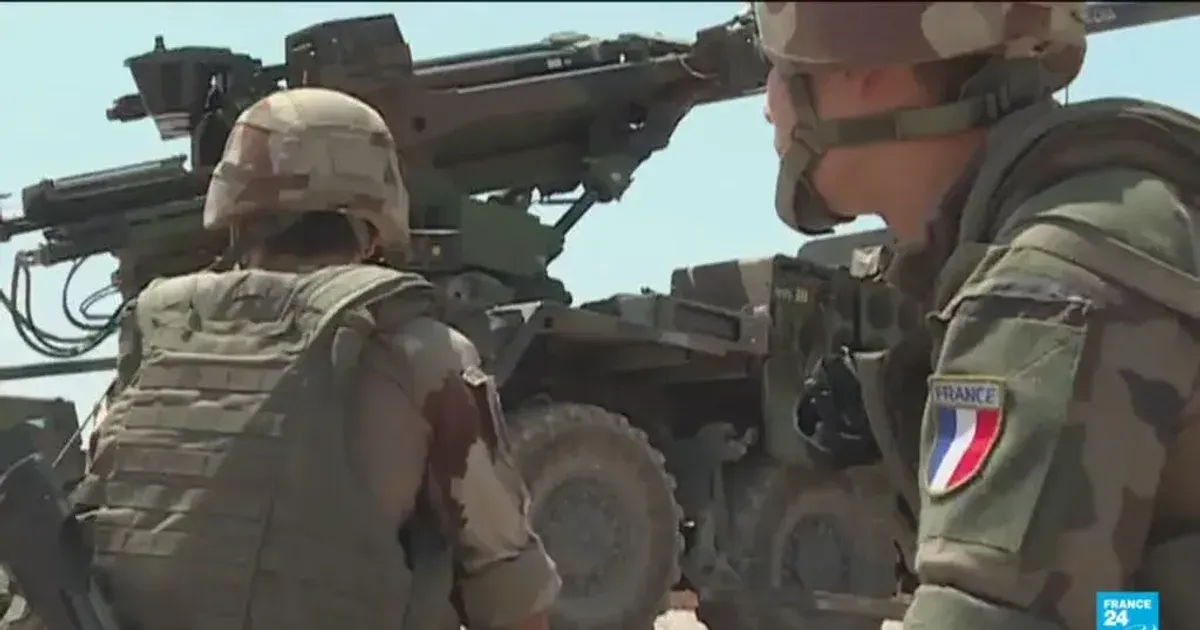
President Emmanuel Macron confirmed on Friday that a French officer died during a drone attack in the autonomous Kurdistan region of Iraq. News of the fatality reached Paris as the broader Middle East conflict entered its second month of active warfare between US-Israeli forces and Iranian proxies. Macron refrained from naming the specific groups responsible for the strike, though the death marks the first French military casualty since regional hostilities began in February 2026. The officer was stationed in Erbil as part of an international coalition ostensibly focused on anti-jihadist operations.
French officials confirmed the death on March 13, 2026, as coalition forces assessed the Erbil strike.
The Erbil Attack Raises the Stakes
Ashab Alkahf, a pro-Iranian militia operating within Iraq, issued a formal warning to French forces earlier this week. Leaders of the group stated that French interests in the region became legitimate targets the moment a French aircraft carrier entered the Mediterranean Sea. This specific militia has long opposed foreign military presence in Mesopotamia. Security analysts in Baghdad believe the group utilizes sophisticated drone technology supplied by regional allies to circumvent traditional air defenses. The warning explicitly linked the arrival of French naval assets to the escalation of kinetic operations against European personnel.
Violence in the region has reached a fever pitch.
Military commanders in the Erbil sector reported that the drone strike occurred during the early hours of Friday morning. Precision munitions struck a facility used by French advisors, suggesting the attackers possessed granular intelligence regarding coalition movements. While the French defense ministry has kept the identity of the officer confidential, officials confirmed the individual held a leadership rank within the Operation Chammal command structure. French troops have remained in Iraq to train local forces, but the shifting focus of the regional war has trapped them between local insurgencies and international power struggles. Local witnesses in Kurdistan reported hearing two distinct explosions followed by the sound of low-flying surveillance aircraft.
French Deployment Faces Scrutiny
Deployment of the Charles de Gaulle to the Mediterranean served as the primary catalyst for the recent threats. Paris intended the move as a show of force to protect maritime trade routes during the ongoing US-Israeli campaign against Iranian infrastructure. Ashab Alkahf viewed the naval presence as a direct intervention on behalf of the coalition striking Tehran. The militia declared that French neutrality was effectively voided by the carrier's proximity to the Levantine coast. This military footprint prompted a rapid reassessment of security protocols at French bases across Iraq and Syria. French naval intelligence confirmed the carrier reached its station on Wednesday.
Escalation remains the dominant theme across the Iraqi theater.
Since US-Israeli strikes on Iran last month triggered a wider regional conflagration, foreign military bases have come under frequent fire. Pro-Iranian factions frequently target locations where Western forces are integrated with local Kurdish or Iraqi units. France has attempted to maintain a distinct profile from the United States, yet the lines of distinction have blurred as the conflict expands. Iraqi Kurdistan, once considered a safe haven for international advisors, now faces the same volatility as the southern provinces. Macron's announcement on Friday did not include a timeline for a potential withdrawal or a shift in the current rules of engagement.
International forces find themselves in a precarious position as the anti-jihadist mission morphs into a proxy battle. French personnel originally deployed to combat the remnants of the Islamic State now find themselves targeted by groups that were once tactical allies in the fight against extremism. The shift began in earnest after the February air raids on Iranian soil. Those strikes eliminated several high-ranking Iranian officials, leading to a vow of vengeance that encompasses all Western allies. French diplomats in Baghdad have spent the last 48 hours attempting to de-escalate tensions with the Iraqi central government. Iraqi officials have expressed frustration that their territory continues to serve as a battlefield for foreign powers. Erbil is 50 miles from the strike zone.
Political pressure is mounting on the Elysee Palace to justify the continued presence of French soldiers in a war zone that lacks a clear exit strategy. Critics of the Macron administration argue that the aircraft carrier deployment was an unnecessary provocation that directly led to the death in Erbil. Defense officials counter that abandoning the region would leave a vacuum for radical groups to re-emerge. But the death of a high-ranking officer forces a confrontation with the reality of French involvement in the Middle East. Macron declined to specify the weapon system used in the assassination.
France's Regional Posture Draws Fire
Paris remains haunted by the ghost of de Gaulle, yet its current maneuvers in Mesopotamia suggest a much less independent reality. By sending an aircraft carrier into the Mediterranean while pretending to maintain a separate anti-jihadist mission in Iraq, the Macron administration has engaged in a dangerous form of geopolitical theater. You cannot park a nuclear-powered symbol of Western might off the coast of a burning region and then feign surprise when your ground troops are targeted as combatants. The pretense that French forces are merely in Erbil to train local police has been shattered by a single Iranian-made drone. This casualty is the inevitable tax paid for France's refusal to choose between genuine strategic autonomy and its legacy as a junior partner in the American security umbrella. If the Elysee Palace truly wished to avoid being dragged into the US-Israeli war with Iran, it would have kept its fleet in Toulon. Instead, it chose to posture, and an officer in Kurdistan paid the price for that vanity. The tragedy is not the attack itself, but the predictable nature of the outcome for a nation that continues to punch above its actual weight in a region that no longer respects European prestige.