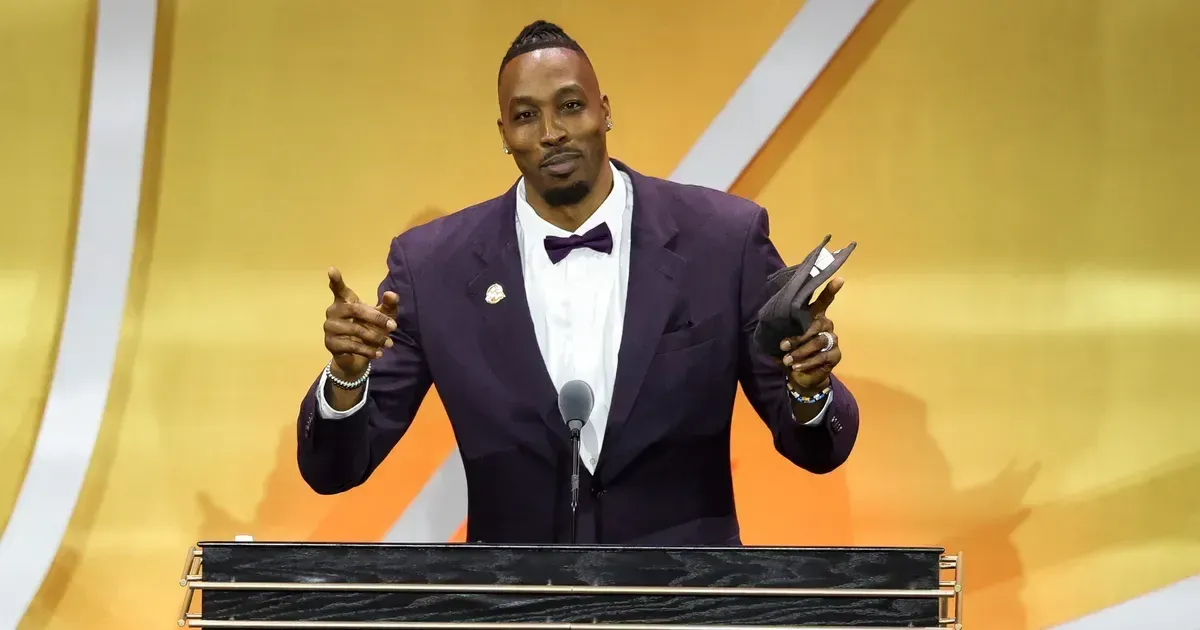
End of an Era for the Defensive Giant
Orlando's skyline once reflected the broad shoulders of a man who seemed destined to inherit the basketball earth from Shaquille O'Neal. Dwight Howard officially ended his professional basketball journey on March 12, 2026, closing a chapter that spanned nearly two decades of dominance, controversy, and a late-career transformation. Retirement comes at a complicated junction for the eight-time All-Star. While his induction into the Naismith Memorial Basketball Hall of Fame in 2025 cemented his athletic legacy, his personal life remains entangled in a contentious divorce that has spilled into the public record. News of his departure from the court surfaced first through league insiders before the veteran center confirmed he is stepping away from all professional play. He last appeared on an NBA roster in 2022, but his influence remained visible through a high-profile stint in Taiwan and a vocal campaign to return to the American stage. Howard eventually realized that the phone calls from NBA general managers had ceased. The physical toll of eighteen seasons of professional play coupled with a desire to resolve mounting personal legal issues prompted this final exit.
Eighteen seasons of play define a career of two halves. Howard entered the league directly from high school as the number one overall pick in 2004, a teenager possessing a frame that looked carved from granite. He spent his early years in Orlando transforming the Magic into a perennial contender, culminating in a 2009 Finals appearance where he battled Kobe Bryant and the Los Angeles Lakers. During those peak years, he secured three consecutive Defensive Player of the Year awards, a feat that no other player had achieved with such singular force at the time. He wasn't just a shot-blocker. He was an entire defensive system.
Critics often pointed to his jovial demeanor as a sign of a lack of competitive fire, a narrative that plagued him through stops in Houston, Atlanta, and Charlotte. This sentiment followed him as he bounced between teams, looking for the same synergy he once shared with Stan Van Gundy in Orlando. His reputation as a locker room presence often overshadowed his statistical output, which remained elite well into his thirties. By the time he reached his second and third stints with the Lakers, Howard had evolved into a specialist who understood the value of sacrifice.
Victory finally arrived in the 2020 NBA Bubble. Howard played a key role coming off the bench for Los Angeles, providing the physical interior presence necessary to secure his only championship ring. That title provided the validation he sought for over a decade, proving he could contribute to a winning culture despite the persistent labels attached to his character. He proved that a superstar could humble himself for the collective good. Yet, the sunset of his career took him far from the bright lights of Staples Center.
Basketball took him to Taiwan in 2022, where he signed with the Taoyuan Leopards. He became a cultural phenomenon in East Asia, drawing massive crowds and putting up video-game numbers that reminded fans of his younger self. His time abroad allowed him to rediscover a pure love for the game, free from the heavy expectations of the American media. He served as an ambassador for the sport, proving that his brand of basketball had a global shelf life. Such experiences abroad gave him a perspective that few of his contemporaries possessed.
Divorce proceedings now occupy the time once reserved for post-up drills and weight training. Reports from legal filings suggest an increasingly bitter separation that involves significant financial and custody disputes. Howard has spent much of the last year managing these private matters while maintaining a public-facing role as a basketball statesman. The timing of his retirement suggests a need to focus entirely on these domestic challenges, as the demands of professional travel no longer align with his legal obligations. Legal battles have a way of forcing a man to prioritize his presence at home over his presence in the paint.
Records show that Howard finished his NBA career with over 19,000 points and 14,000 rebounds. He ranks among the top ten in several all-time defensive categories, a proof of the longevity of his physical prime. Fans in Orlando may still harbor resentment over his departure in 2012, but time has softened the edges of that breakup. His Hall of Fame induction in 2025 saw him embrace his roots in Florida, acknowledging the city that made him a global icon. This choice to retire now ensures that his final professional memory remains one of success rather than a desperate hunt for a 10-day contract.
He remains one of the most polarizing figures in modern sports history.
Legacy is a fickle thing for a man who won almost everything but struggled to find a permanent home. Howard's career was a journey of seeking approval, from the fans in Orlando to the legends who preceded him. He often spoke of wanting to be loved as much as he was feared on the court. While he never quite achieved the universal adoration of a Magic Johnson or a LeBron James, he earned the respect of those who had to score against him. Scoring against Dwight Howard at his peak was an exercise in futility.
Springfield now holds his bronze likeness, but the reality of his retirement feels heavy. He exits the stage at age 40, a milestone that few centers reach with their health intact. His body eventually betrayed the explosive athleticism that made the Superman nickname a reality. This reality eventually catches up to every athlete, regardless of how many miles they have left in their legs. Howard seems at peace with the decision, even if the surrounding circumstances are less than tranquil.
Future generations of big men will study his tape to understand the art of the verticality rule. He mastered the ability to contest shots without fouling, a skill that has become increasingly rare in the modern, perimeter-oriented NBA. His departure leaves a void in the lineage of true back-to-the-basket defensive anchors. The game has changed, moving toward versatile forwards who can shoot the three, yet the value of a dominant rim protector remains undeniable. Howard was the last of a dying breed.
Final Whistle for a Complicated Giant
Howard leaves with a resume that should have made the verdict simple, yet his career never allowed simplicity. The blocks, rebounds and Finals run are permanent; so are the awkward exits and public conflicts. That tension is the real legacy. Basketball will miss the force, even if it never fully knew what to do with the personality attached to it.