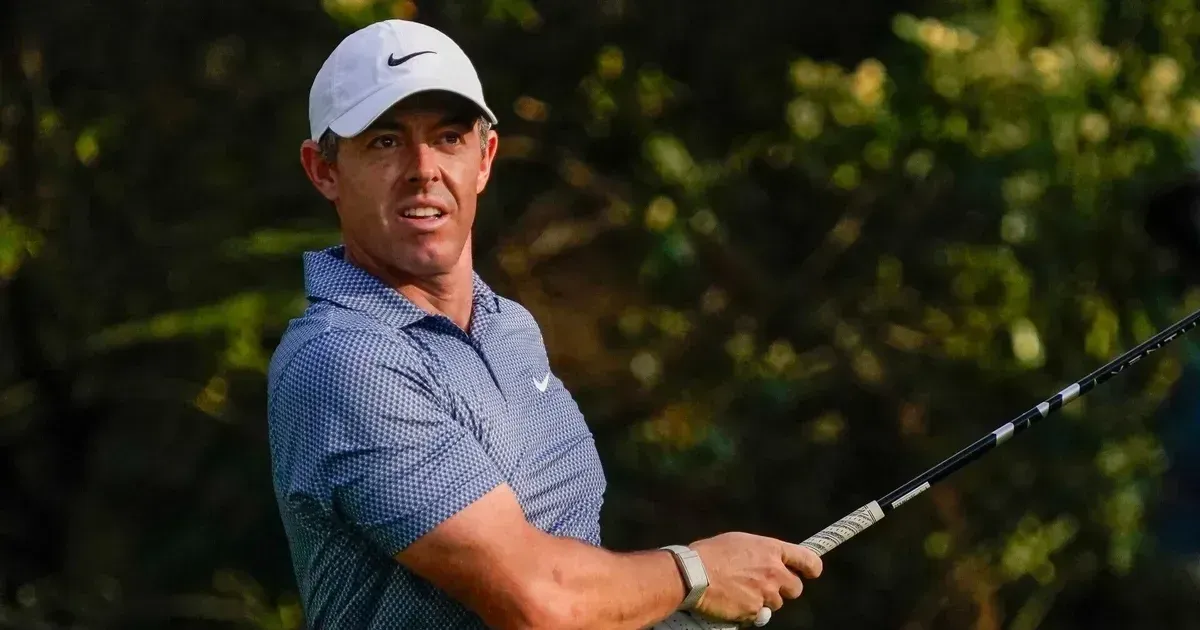
David Bearman confirmed on April 6, 2026, that his betting models for the Masters indicate a meaningful fade on Rory McIlroy at Augusta National. Analysis of market fluctuations suggests that the perennial favorite carries too much emotional weight in the betting public relative to his actual probability of securing the green jacket. Bearman, a known golf expert at SportsLine, issued these findings just three days before the opening round begins on the hallowed grounds of Georgia. Patterns in the data reveal that McIlroy has struggled with early-round consistency in recent major championship appearances.

Institutional bettors are shifting their capital toward mid-tier players who offer better mathematical value. Large volumes of money typically flood the market for McIlroy due to his pursuit of the career grand slam, but the underlying metrics for his 2026 season show a decline in proximity to the hole from 125 yards. Statistical models indicate this specific weakness often proves fatal at Augusta National. Markets reacted to these projections by widening the odds for the Northern Irishman as the week progressed. Professional handicappers often look for these discrepancies to avoid overvalued assets in high-variance events.

Augusta National Betting Markets Shift on Favorites

Experts are identifying specific technical hurdles that could derail the top names in the field. Sia Nejad focused his latest report on the risks associated with Bryson DeChambeau, whose power-based approach has historically yielded mixed results on the undulating terrain of the back nine. Nejad argues that the greens at Augusta require a level of touch that DeChambeau has lacked during the early months of 2026. Data from recent tournaments shows that the former US Open champion is losing strokes on the green at an alarming rate. Sharp bettors are using this information to hedge their positions against the heavy hitter.

Internal betting logs from major sportsbooks indicate a cooling of enthusiasm for the biggest names in golf. While the casual public continues to place small-unit wagers on stars, the heavy hitters in the gambling community are diversifying their portfolios. Professional syndicates are targeting longshots who have shown elite ball-striking capabilities on similar bentgrass surfaces. Probability charts suggest that the 2026 field is deeper than previous years, making a wire-to-wire victory for a favorite statistically less likely. Prices for top-five finishes are tightening for several European tour regulars who have arrived in Georgia early.

McIlroy faces a psychological barrier that models struggle to quantify, yet experts remain wary. History at Augusta National shows that players chasing the career grand slam often tighten up during the key Sunday afternoon stretch. Bearman noted that the pressure of the 2026 tournament is particularly high given the aging window of the current generation of superstars. Odds for McIlroy to miss the cut have actually seen a small uptick in activity among speculative bettors. Professional analysts cite his erratic driving accuracy in 2026 as a primary reason for concern on the narrow corridors of the front nine.

Mike McClure Identifies Masters One and Done Picks

Mike McClure finalized his top selections for the One and Done format on April 6, 2026, targeting sleepers who provide maximum leverage. Strategy in these pools requires saving the most dominant players for specific courses, and McClure suggests that using a top-five player this week might be a tactical error. His proprietary algorithm favors players with high scrambling percentages, a stat that traditionally correlates with success at the Masters. Longshots with histories of strong iron play are surfacing as the most efficient picks for those looking to climb their pool rankings. McClure pointed to three specific golfers currently priced outside the top twenty as his primary targets.

"Sia Nejad has revealed his Masters 2026 picks and PGA best bets for Augusta National, beginning Thursday, April 9," confirmed CBS Sports in an official dispatch.

Success in One and Done formats often hinges on avoiding the most popular selections to gain ground on the field. McClure analyzed the projected ownership percentages and found that nearly 25 percent of participants are expected to select Scottie Scheffler or Jon Rahm. Choosing a sleeper allows a bettor to vault past a heavy block of opponents if the favorite stumbles. Models developed for the 2026 season indicate that course conditions will favor players who can control their trajectory in swirling winds. Forecasts for the tournament weekend suggest a serious cold front could move through the area on Saturday.

Sia Nejad Forecasts Struggles for Bryson DeChambeau

Focusing on the physical requirements of the course, Sia Nejad argued that DeChambeau might find the layout punishing this year. Adjustments made to several tee boxes since 2024 have added length that neutralizes some of the advantage held by the longest hitters. Nejad noted that the 13th hole, in particular, now requires a level of precision that does not align with DeChambeau's current swing speed calibrations. Performance metrics from the last three months show that DeChambeau is struggling with his long-iron accuracy. Augusta National demands consistent performance from 200 yards out to keep pace with the leaders.

Bettors are looking at head-to-head matchups as a way to capitalize on the predicted decline of the favorites. Nejad identified several matchups where underdogs are favored to beat DeChambeau over 72 holes. Betting against a high-profile name allows savvy investors to profit even if the overall tournament winner is a surprise. Short-game specialists are currently the darling of the gambling community as they head toward the first tee on Thursday. Evidence from past tournaments suggests that putting consistency is the most reliable predictor of success during the Masters week. Nejad’s analysis puts a heavy emphasis on three-putt avoidance stats.

Market sentiment for DeChambeau is shifting as the sportsbooks adjust their risk exposure. Liability for the 2026 Masters is heavily concentrated on a few big names, leading books to offer more attractive lines on the rest of the field. Smart money has been flowing into the top-20 market for players with high GIR percentages. Statistics from the current PGA season indicate that DeChambeau is hitting fewer greens in regulation than his career average. The difficulty of the recovery shots at Augusta makes this a meaningful red flag for potential backers.

Mathematical Models Predict Volatile Leaderboard

Golf analysis has evolved into a war of data, where simulation models run thousands of scenarios before the first ball is struck. SportsLine experts used these simulations to conclude that the 2026 Masters will likely see one of the highest winning scores in recent memory. Course setup notes leaked to some analysts suggest the greens will be kept at a speed that punishes aggressive downhill putts. This development favors conservative veterans who are content with par on the most difficult stretches of the course. Models showed a high probability of a winner coming from the 40-1 to 60-1 odds range.

Probability distributions for the top ten finishers indicate a higher-than-normal churn on the leaderboard. Unlike previous years where a single player dominated the conversation, the 2026 data points toward a cluster of five or six players entering the final round within two strokes of each other. Bettors are reacting by placing more each-way bets rather than straight-to-win wagers. Uncertainty regarding the weather on Friday afternoon adds another layer of complexity to the betting landscape. Some experts suggest that the early-late tee time split could decide the tournament before the weekend even begins.

The Elite Tribune Strategic Analysis

Will the professional betting industry ever stop trying to manufacture a narrative around the inevitable disappointment of Rory McIlroy? Every spring, the same parade of algorithms and "insider" models descends upon Augusta to tell us why the most talented ball-striker of his generation is a bad investment. This year is no different, except the skeptics have traded their gut feelings for spreadsheet-driven pessimism. The experts are essentially betting against a ghost, convinced that the scars of 2011 and the weight of the career grand slam have finally turned McIlroy into a liability.

It is a convenient story for those who want to sell a "value" pick in the form of an unproven longshot who will likely be home by Saturday morning.

The collective effort to fade Bryson DeChambeau is equally transparent. Critics have long loathed his scientific, almost mechanical approach to a game that traditionalists prefer to view through a lens of artistic flair. By focusing on his putting stats and swing speed calibrations, the analyst class ignores the simple fact that brute force remains the most effective weapon at Augusta. They want to believe that the course has evolved past his style of play because it satisfies their aesthetic preference for the game. The data they cite is often a lagging indicator, ignoring the reality that elite athletes can recalibrate their approach in a single practice session on the range.

Betting on the Masters has become a race to see who can be the most contrarian. The influx of legalized gambling has turned every minor statistical dip into a reason for a "sharp" fade, creating a market that is more volatile than the players themselves. If the models are so certain about the failure of the favorites, one must wonder why the sportsbooks aren't more terrified. The truth is that the house thrives on this expert-driven uncertainty.

We are heading toward a weekend where the numbers will likely be rendered irrelevant by a single gust of wind on the 12th hole. The betting industry sells the illusion of control, but at Augusta, the only certainty is chaos. Hard pass on the experts.