Suburban Transaction Leads to Urban Terror Charges
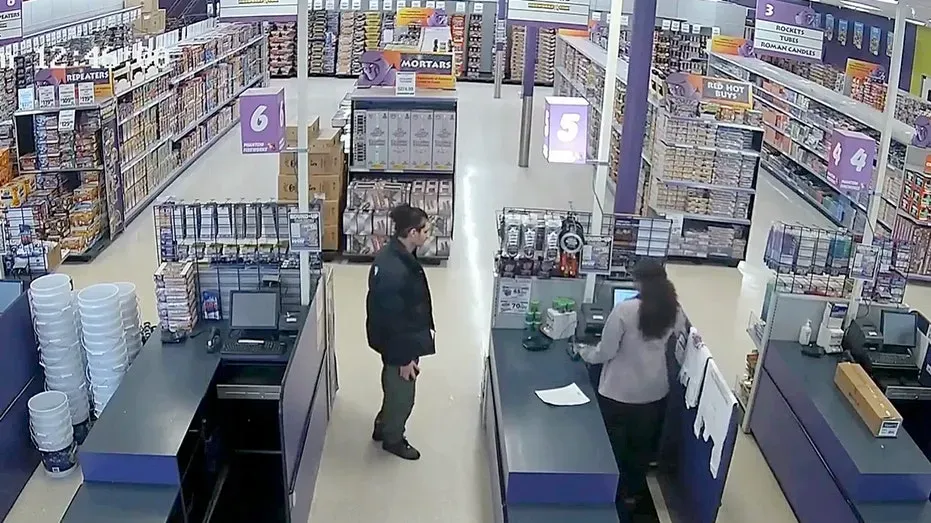
Emir Balat stepped into the Phantom Fireworks showroom in Penndel, Pennsylvania, with the mundane goal of a six-dollar purchase on March 2, 2026. Surveillance footage shows the 18-year-old Langhorne resident pulling into the parking lot and walking through the doors with the casual air of a typical customer. He moved briefly out of the camera's view before returning to the checkout counter with a 20-foot roll of consumer safety fuse. The transaction, totaling just $6.89 including tax, took only minutes to complete. The clerk who processed the sale could not have known the item would allegedly serve as a critical component in a homemade bomb five days later. This small transaction would later become a central piece of evidence for federal investigators tracking a domestic terror cell inspired by foreign extremist ideologies.
Ibrahim Kayumi, 19, of Newtown, joined Balat in what federal prosecutors describe as a calculated plot to bring violence to the steps of New York City's seat of power. The duo allegedly targeted a highly charged political demonstration outside Gracie Mansion, the official residence of Mayor Zohran Mamdani. At the time of the incident, the mayor's home had become a focal point for dueling factions debating the influence of religion on public life. One group, operating under the banner of stopping the Islamic takeover of New York, gathered roughly 20 participants. They were met by a sharply larger counter-protest of 125 people who aimed to stand against hate. The air was thick with verbal vitriol long before the first explosive device was thrown.
Federal agents from the FBI shifted their focus to a Pennsylvania storage facility on Tuesday as they looked for physical evidence of bomb-making activities. Their search proved fruitful when technicians discovered explosive residue within one of the units linked to the suspects. The discovery suggests that the teens were not merely acting on a whim but had established a makeshift laboratory to assemble their devices. Such a find elevates the case from a simple act of reckless endangerment to a coordinated domestic terrorism investigation. The residue matches the chemical signatures found at the scene of the Gracie Mansion attack, providing a direct link between the storage locker in the Pennsylvania suburbs and the scorched pavement of Upper Manhattan.
International events appeared to serve as a catalyst for the timing of the attack. Only two days before Balat purchased the fuse, the United States and Israel launched joint strikes on Iranian targets. Investigators believe the geopolitical escalation provided the necessary spark for the young men, who federal sources claim were inspired by ISIS propaganda. The rapid radicalization of suburban youth remains a primary concern for the Department of Homeland Security, as the transition from online consumption of extremist content to physical action can happen in a matter of weeks. The math of the situation is terrifyingly simple. A few dollars spent at a retail store and some online tutorials can result in a weapon capable of mass casualty events.
Violence erupted shortly before noon on March 7 when the peaceful, if loud, protest turned into a chaotic scramble for safety. Before the bombs were even thrown, a protester linked to the anti-Islamic group used pepper spray on the counter-protesters, according to NYPD Commissioner Jessica Tisch. Police officers attempted to maintain a thin line of separation between the two groups, but the layout of the streets near Gracie Mansion made total containment difficult. As the chemical spray dispersed, two live explosive devices were hurled into the crowd. The sound of the blasts sent protesters and bystanders diving for cover behind parked cars and stone walls. This tension exploded into a full-blown security crisis that paralyzed the neighborhood for several hours.
Mayor Zohran Mamdani, whose election was marked by intense debate over his background and policy positions, has been a frequent target of both far-right and far-left criticism. His presence in Gracie Mansion served as the symbolic backdrop for the attackers. The Mayor's office released a brief statement praising the NYPD for their rapid response but declined to comment on the specific motives of the Pennsylvania teens. Security experts note that targeting the residence of a major city official is a tactic designed to maximize media exposure and instill fear in the civilian population. The attack failed to cause fatalities, but the psychological impact on the city was immediate and profound.
Investigators are now scrutinizing the social media footprints of both Balat and Kayumi to determine if they were part of a larger network. While the FBI has used the term ISIS-inspired, they have yet to find evidence of direct command and control from overseas handlers. This distinction is critical for the legal strategy of the prosecution. If the government can prove the teens were acting as an extension of a foreign terrorist organization, they face sharply harsher sentencing guidelines under federal law. But if the defense can argue they were merely troubled youths acting without formal affiliation, the case may take a different path through the court system.
The safety fuse Balat purchased is a common item used for legal fireworks, making it difficult for retailers to flag suspicious buyers. William Weimer, Vice President of Phantom Fireworks, noted that the 20-foot length is a standard consumer product. Retailers are not currently required to report the sale of fuses to law enforcement, and there are no age restrictions beyond those applied to fireworks generally. The gap in the regulatory framework allows individuals to gather the necessary components for an IED without triggering any red flags in the national security database. The ease of access to such materials remains a hurdle for preventive policing.
Critics of the current administration's handling of domestic security argue that the focus has shifted too far away from monitoring radicalized individuals within the United States. They point to the strikes on Iran as a predictable trigger for domestic unrest that should have prompted higher alert levels in major cities. Still, the NYPD maintains that it had a significant presence at the protest and that the arrest of the individuals involved was a result of effective inter-agency cooperation. The tension between public safety and the privacy of suburban teenagers continues to define the boundaries of modern counter-terrorism efforts.
Legal experts expect a long and arduous trial as the government seeks to make an example of the two young men. The presence of explosive residue in the storage unit is a hurdle the defense will find difficult to overcome. Evidence of planning, such as the surveillance footage from the fireworks store, suggests a level of premeditation that contradicts any claims of a heat-of-the-moment decision. The prosecution will likely lean heavily on the ISIS connection to justify the terrorism charges, even if the link is purely ideological rather than organizational. New York City remains on high alert as the legal proceedings begin, with additional security measures visible around Gracie Mansion and other high-profile targets.
Security at Gracie Mansion has been permanently bolstered since the incident. Concrete barriers now line the approach to the residence, and drone surveillance is a constant presence in the skies over the East River. These changes represent the physical manifestation of the city's anxiety in a post-strike world. The residents of Newtown and Langhorne, meanwhile, are left to grapple with the reality that two of their own could plot such an act within the quiet confines of suburban Pennsylvania. The distance between the quiet streets of Bucks County and the volatile protests of Manhattan has never felt shorter.
The Elite Tribune Perspective
Western security agencies remain obsessed with foreign battlefields while the real threat metastasizes in the aisles of suburban strip malls. The arrest of Emir Balat and Ibrahim Kayumi should not be viewed as a success story for the FBI, but rather as a glaring indictment of a system that allows an eighteen-year-old to purchase the components of a bomb for less than the price of a deli sandwich. We spend billions on missile defense and international surveillance only to be caught off guard by a $6.89 roll of fireworks fuse. It is a pathetic display of priorities. The ideological rot that leads a teenager in Pennsylvania to mirror the tactics of a foreign death cult is not something that can be bombed out of existence in Iran. It requires a level of domestic vigilance that our current legal framework is too timid to enforce. If we continue to treat these incidents as isolated cases of wayward youth rather than the opening salvos of a persistent internal conflict, we deserve the instability that follows. The Mayor of New York was lucky this time, but luck is a poor substitute for a security apparatus that actually understands the nature of the modern threat. We are fighting a digital-age war with a bureaucratic mindset that still thinks terrorism requires a passport.