Federal administrators announced a series of draft regulations through the General Services Administration that could fundamentally reshape the financial landscape of American higher education. Washington officials proposed new strings for federal contracts that explicitly target diversity, equity, and inclusion programs. The draft regulations were announced on April 1, 2026. Institutions relying on federal research grants or service contracts now face a stark choice between maintaining internal social policies or preserving their bottom lines. Administrative oversight has expanded under a recent executive order that prioritizes ideological neutrality in government spending. Legal analysts suggest the move is a serious expansion of executive authority over private and public colleges alike. Budgetary implications for research-heavy institutions are immediate. These schools often depend on federal partnerships to sustain laboratories and graduate fellowships.
Education groups quickly denounced the proposal as an existential threat to campus autonomy. Faculty organizations and university presidents argue that tethering funding to specific social directives undermines the tradition of academic freedom. Opponents of the General Services Administration rules claim the federal government is overstepping its traditional role in institutional governance. Financial analysts observed that mid-tier research universities remain particularly vulnerable to these shifts. Unlike the wealthiest Ivy League schools, these institutions cannot easily replace lost federal revenue through private philanthropy. Research output may drop as administrators redirect resources toward compliance rather than innovation. Policy experts in Washington anticipate a lengthy legal battle over the constitutionality of such funding mandates.
Federal Rules and Administrative Oversight
Regulatory shifts within the federal bureaucracy often move slowly, yet the speed of the current draft rules has surprised seasoned observers. Presidential directives have empowered agencies to scrutinize how universities spend federal dollars beyond the direct costs of research. Bureaucrats now demand detailed reports on administrative staffing and diversity training programs as a condition for contract eligibility. University administrators view these requirements as a mechanism for political monitoring. Compliance costs alone could drain millions from academic departments. Small colleges with limited administrative staff face an even steeper climb.
Many of these institutions lack the legal infrastructure to navigate complex federal reporting mandates. Government officials insist the new rules simply ensure taxpayer dollars do not fund ideological agendas. Critics, however, argue the definition of ideological agenda is being weaponized to dismantle specific campus programs.
"The proposed GSA rules represent a meaningful intrusion into institutional autonomy that could prove potentially existential for certain diversity programs," according to a statement from a coalition of university groups.
Federal contractors in higher education must now certify their compliance with the new standards before the next fiscal year begins. Failure to do so could result in the immediate suspension of ongoing projects. Impacted programs include everything from medical research to cybersecurity training for government agencies. Legal scholars point to the 1984 Supreme Court case Grove City College v. Bell as a historical reference point for federal funding conditions. While that case focused on gender equity, the current administration uses similar legal logic to enforce different priorities. Public universities in Republican-led states find themselves caught between conflicting federal and state mandates. Confusion regarding which rules take precedence has led to a freeze in some departmental hiring.
Missouri State Cuts and Funding Realignment
Simultaneous with federal maneuvers, state legislatures are aggressively reworking their own higher education spending formulas. Missouri lawmakers recently proposed a radical new funding model that would reshuffle existing resources among public institutions. Legislative committees argued that current allocations do not reflect the workforce needs of the modern economy. Instead of across-the-board increases, the plan shifts funds toward schools that meet specific graduation and employment metrics. This model prioritizes larger state universities with established professional programs. Smaller regional colleges face the prospect of stagnant or shrinking budgets. Faculty members at several institutions have staged protests against the move.
Legislative leaders in Missouri remain committed to the overhaul. They argue that performance-based funding is the only way to ensure accountability for public dollars.
Regional economic impact studies show that many Missouri towns depend on local colleges for stability. Revenue losses at these institutions often ripple through the local business community. Lawmakers have ignored these concerns in favor of a centralized efficiency model. University of Missouri officials expressed cautious optimism about the potential for increased funding under the new plan. Institutions with lower graduation rates see the proposal as a death sentence. Competition for a dwindling pool of state tax dollars has turned university presidents against one another. Collaborative research projects between state schools have stalled as administrators prioritize their own survival.
Financial stability for the next decade depends on these legislative decisions. Rural campuses feel increasingly marginalized in these debates. Capital improvements and deferred maintenance projects are likely to be the first casualties of any budget reduction.
Impact on University Budgets for HBCUs
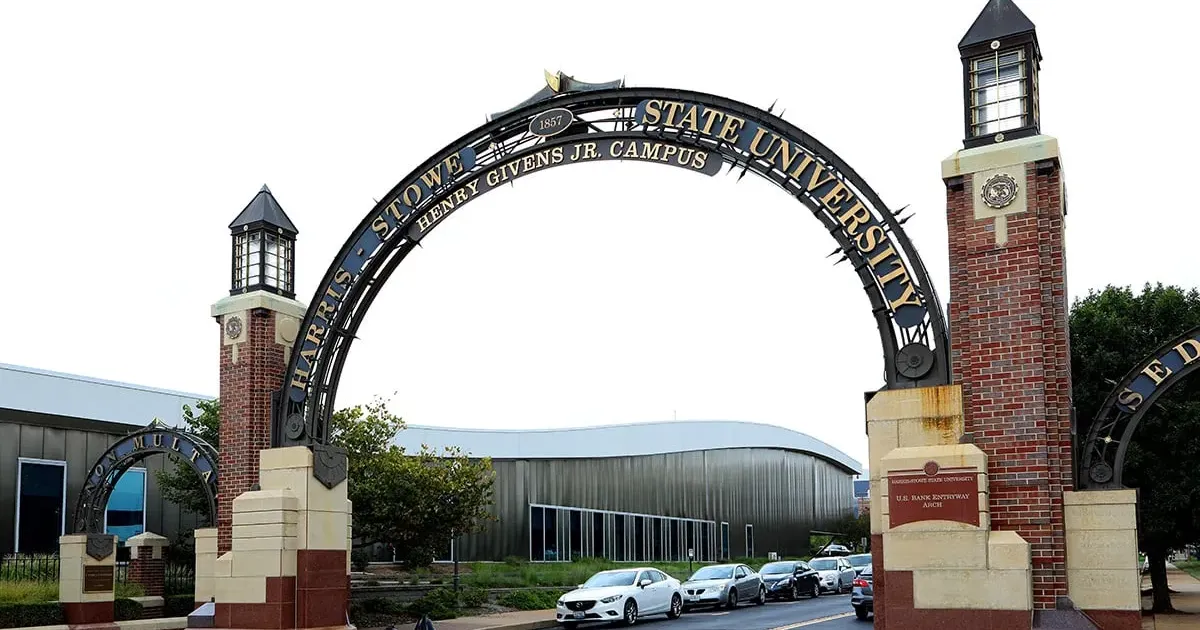
Historically Black colleges and universities in the Midwest face a unique set of challenges under the proposed Missouri model. Institutions such as Harris-Stowe State University in St. Louis and Lincoln University in Jefferson City have historically received less funding per student than their larger counterparts. Reshuffling existing funds instead of adding new revenue could worsen these enduring disparities. Leaders at these schools argue that performance metrics often fail to account for the unique missions of minority-serving institutions. Many students at these colleges are the first in their families to attend university.
Success for these students often requires more intensive support services that are expensive to maintain. Financial models that ignore these social realities put HBCUs at a distinct disadvantage. State officials claim the new formula is objective. Critics point out that the two schools expected to lose the most are the state’s only public HBCUs.
Harris-Stowe State University administrators reported that any further cuts would require the elimination of several degree programs. Student leaders have organized letter-writing campaigns to state representatives in Jefferson City. Similar concerns persist at Lincoln University, where a history of agricultural research is at risk. Historical underfunding has already left these institutions with smaller endowments than their peers. Recent federal attempts to bridge the gap have been inconsistent. State-level cuts would negate any progress made through federal grants. Private donors have expressed concern about the long-term viability of institutions facing such heavy legislative pressure. Institutional credit ratings could suffer if state support remains uncertain. Alumni associations are mobilizing to lobby against the reshuffling plan before the final vote.
Legislative targeting of campus autonomy is now a central concern for presidents, faculty groups and students.
Trends in state-level oversight suggest a broader movement to bring higher education under direct political control. Legislators in several states have introduced bills that would give political appointees more power over faculty tenure and curriculum. Funding is being used as the primary lever to enforce these changes. Universities that resist legislative priorities face the threat of targeted budget reductions. Academic leaders worry that this environment will drive talented faculty to seek positions in other countries. Global competition for researchers is fierce. Institutional reputation takes decades to build but can be destroyed in a few budget cycles.
International students are also reconsidering their options in the United States. Many cite the politicized environment of American campuses as a reason to look elsewhere. Tuition revenue from international students is a critical component of many university budgets. Losing this stream would further weaken the financial health of public institutions.
Missouri’s approach is being watched closely by lawmakers in other states. Success in Jefferson City could provide a template for similar overhauls across the country. Higher education has traditionally functioned as a semi-autonomous sector of American life. That status is rapidly eroding. Boards of curators are increasingly composed of political allies instead of educators. University presidents spend more time in state capitals than in their own lecture halls. Philanthropic organizations are struggling to keep up with the scale of the financial need. Private giving cannot compensate for a systemic withdrawal of public support.
Future generations of students may find a higher education system that is less diverse and more focused on vocational training than critical thinking. Access to quality education is becoming more dependent on geographic location and institutional wealth.