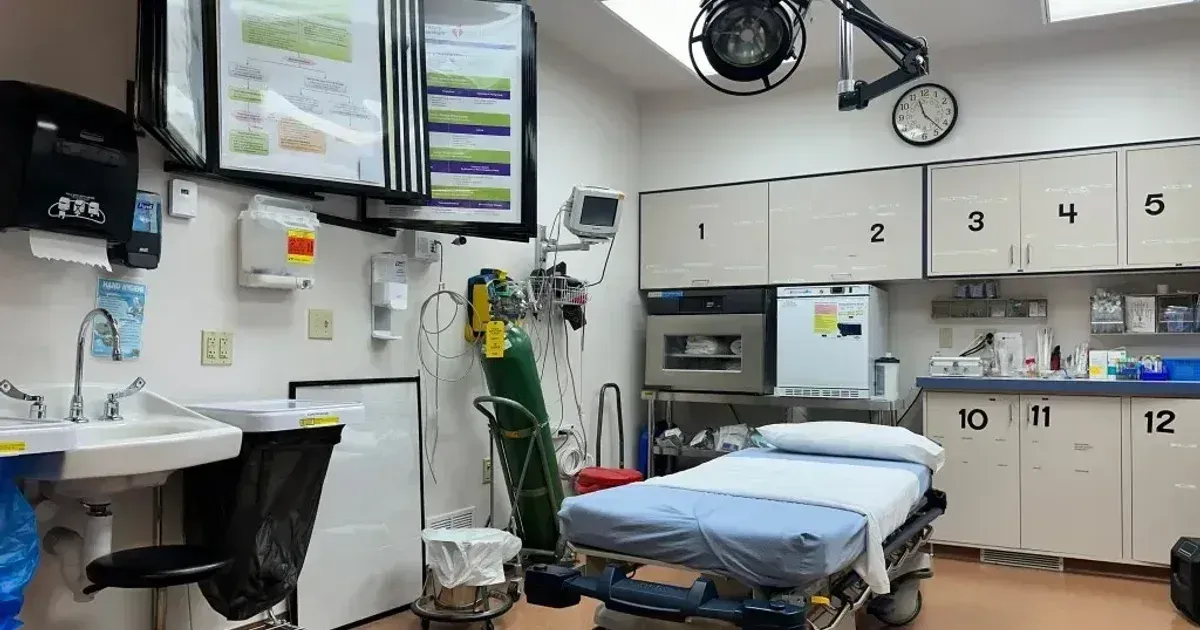
Federal rural health grants are intended to transform care, but some rural hospitals say the rules leave them unable to pay for the repairs they need most. The local budget effect is immediate, even when federal language sounds technical. Big Sandy Medical Center in Montana has become a clear example of the gap between innovation language and basic infrastructure reality.
The issue was highlighted on March 27, 2026, as Montana officials warned that grant restrictions could leave essential services exposed. The Rural Health Transformation Program offers billions of dollars, but the money is directed toward new models of care rather than deferred maintenance, payroll, or failing building systems.
The stakes are practical: emergency rooms, HVAC systems, Medicaid revenue, and whether rural care survives in places too small to absorb another closure.
Innovation Rules Miss Basic Needs
A rural hospital cannot deliver modern care if its physical plant is failing. Telehealth pilots and mobile programs may help access, but they do not replace a working emergency department, safe patient rooms, or reliable heating and ventilation.
Big Sandy's reported repair needs show the problem clearly. A grant program can look generous on paper while still being unusable for the most urgent local expense.
Medicaid Cuts Deepen the Strain
The same federal framework that created the grant program also reduces Medicaid spending over time. Rural hospitals depend heavily on Medicaid because their patient mix often includes older, poorer, and underinsured residents.
That means facilities are being asked to transform while their core reimbursement base weakens. The result may be more consolidation, fewer services, and longer travel times for emergency care.
Rural Access Depends on Fixed Facilities
Mobile units and digital tools can extend care, but they cannot always stabilize a heart attack, handle trauma from a farm accident, or provide overnight observation. In remote areas, the local hospital is not optional infrastructure. It is the first line of survival.
Federal officials can preserve the transformation goal while allowing a portion of funds for critical repairs. Without that flexibility, the program risks funding future-facing projects while the present-day hospital fails.
The grant design may reflect a real policy goal: avoiding endless subsidies for unsustainable facilities. But rural health does not become sustainable by ignoring urgent capital needs. A hospital with a failing HVAC system cannot become a platform for modern care until the physical risk is addressed. There is also an equity issue. Urban systems often have philanthropic networks, bond capacity, and larger patient volumes.
Small rural hospitals have fewer tools, so restrictions that look neutral on paper can hit them harder in practice. A better version of the program would separate transformation money from stabilization money. Hospitals could be required to show reform plans while still receiving limited support for repairs that protect emergency access and patient safety. The Big Sandy example is powerful because it makes policy language concrete.
A hospital does not need an abstract transformation plan when a heating system fails; it needs the money and permission to fix the heating system. Patients experience that distinction directly. Federal agencies should also consider administrative burden. Small hospitals often lack grant-writing teams and compliance departments. If accessing money requires complex pilot design and reporting, the facilities most in need may be least able to compete.
Rural communities often understand healthcare infrastructure in more concrete terms than federal grant language allows. They know which hospital has the nearest emergency bed, which road is passable in winter, and how long an ambulance takes to reach a city. A program that funds innovation but not a failing building can look generous from Washington and unusable from Montana. Effective rural policy has to begin with the lived geography of care. Program design should distinguish between transformation and triage. A rural hospital can invest in telehealth, workforce redesign, and regional partnerships only if it first keeps basic clinical space open. Treating repairs as backward-looking can misunderstand what access means in remote communities. Rural systems also lack redundancy. If an urban hospital closes a ward, patients may have another facility across town. If a rural hospital loses emergency capacity, the next realistic option may be an hour or more away, and winter roads can make that distance worse. Grant rules that ignore building failure therefore risk treating access as a planning concept rather than a matter of minutes. Workforce shortages then compound the damage because clinicians are harder to recruit to facilities that look financially and physically unstable. That makes repair funding part of care quality, not a cosmetic expense, and it should be evaluated with patient travel time in mind. The rural hospital debate should therefore be measured by access, not by the novelty of funded projects. If a grant creates an impressive pilot but a town loses emergency coverage, the policy has failed the people it was supposed to help. Rural patients need innovation that keeps doors open, staffed, and safe. The rural health grant problem is not that innovation is bad. It is that innovation has to start from a functioning building, paid staff, and emergency capacity. Rural hospitals need transformation, but they also need roofs, boilers, and beds that work.