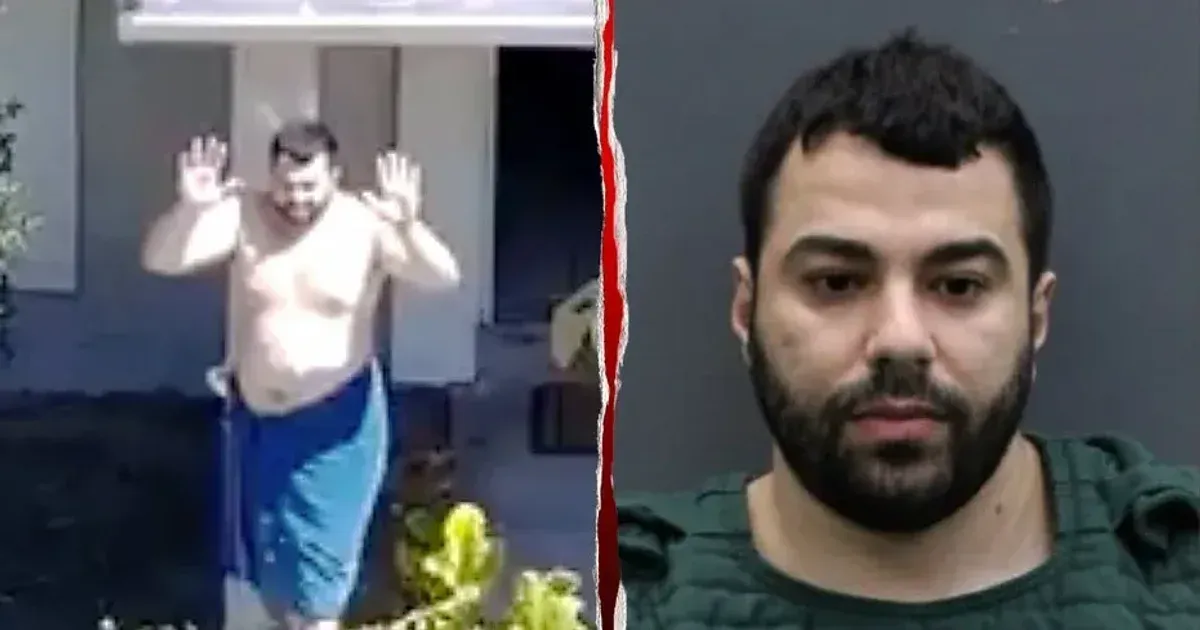
Hisham Abugharbieh, a 26-year-old doctoral student, stood before a judge on April 25, 2026, as the Hillsborough County Sheriff’s Office formally elevated his charges to two counts of first-degree premeditated murder. Prosecutors moved to upgrade the case from evidence tampering and false imprisonment following the discovery of human remains linked to a missing person investigation. Investigators identified the first victim as Zamil Limon, a fellow student at the University of South Florida who disappeared alongside another peer earlier in the week. The search for the second missing individual, Nahida Bristy, persists across multiple jurisdictions in the Tampa Bay region.
Hillsborough County deputies arrested Abugharbieh on Friday after a high-tension SWAT standoff at a residence near the university campus. Officers arrived to find the suspect barricaded inside the property, eventually forcing his surrender while he was wearing only a towel. Initial reports indicated that Abugharbieh faced charges of unlawfully moving a dead body and failing to report a death to a medical examiner with intent to conceal. Saturday morning brought a major escalation in the legal proceedings as detectives presented new forensic findings to the State Attorney’s Office. Premeditated murder charges now anchor the criminal complaint against the graduate student.
Hisham Abugharbieh Charged with Premeditated Murder
Court documents filed in Hillsborough County reveal a disturbing sequence of events leading to the arrest of Hisham Abugharbieh. Detectives initially focused on the suspect after Zamil Limon and Nahida Bristy were reported missing from their off-campus housing. Witness statements and digital footprints led law enforcement to the residence where Abugharbieh had reportedly barricaded himself to avoid questioning. The standoff lasted several hours, paralyzing the surrounding neighborhood as armored vehicles and tactical units converged on the scene. Police used flash-bang canisters and loud-hailer commands to secure his exit from the building.
"Hisham Abugharbieh, 26, is also facing two counts of murder in the first degree with a weapon (premeditated) in the deaths of Zamil Limon and Nahida Bristy," the Hillsborough County Sheriff’s Office said in a statement on Saturday.
Evidence gathered during the first 48 hours of the disappearance suggested a violent struggle occurred within the shared living space. Forensic teams spent Saturday processing the interior of the home for biological markers and physical indicators of a struggle. The addition of "with a weapon" to the murder counts implies that investigators recovered a specific instrument used in the killings. While the sheriff's office has not disclosed the nature of the weapon, legal experts suggest such a designation requires concrete physical evidence or a confession. The suspect remains in custody without bond at the Orient Road Jail.
Search for Nahida Bristy Intensifies Near Tampa
Marine units and dive teams shifted their operations on April 25, 2026, to the deeper waters surrounding the bay as the search for Nahida Bristy entered a critical phase. Search crews used sonar technology and aerial drones to scan the coastline for any sign of the missing doctoral candidate. Investigators believe Bristy was with Zamil Limon shortly before the fatal incident occurred at their residence. The lack of a second body has complicated the timeline of events for the State's Attorney’s Office. Deputies are currently vetting tips from the public regarding sightings of a vehicle associated with Abugharbieh in the hours following the reported disappearances.
Local authorities established a command post near the university to coordinate the various agencies involved in the recovery effort. Volunteers and classmates of the victims have organized vigils while keeping a distance from the active crime scenes. The emotional toll on the international student community at USF has been severe, with many expressing concern over the safety of off-campus housing arrangements. Nahida Bristy's family is reportedly working with the local consulate to stay informed on the progress of the recovery mission. Search operations will continue through the night using thermal imaging equipment.
Forensic Evidence at Howard Frankland Bridge
Investigators located the remains of Zamil Limon near the Howard Frankland Bridge, a major traffic artery connecting Tampa to St. Petersburg. Forensic specialists arrived at the site late Friday to process the area for tire tracks and discarded items. The bridge, known for its heavy traffic and high visibility, became a focal point after traffic cameras recorded a vehicle matching the suspect's description idling in an emergency lane. Medical examiners used dental records to confirm the identity of the remains within hours of the recovery. This discovery provided the necessary probable cause to upgrade the charges against Abugharbieh.
Technical analysts are now reviewing hours of footage from the Florida Department of Transportation to track the suspect's movements on the night of the killings. The Howard Frankland Bridge spans nearly six miles of open water, making it a difficult location for forensic recovery due to tidal currents and depth. Divers are expected to return to the area beneath the bridge spans on Sunday to search for the weapon mentioned in the court filings. Each piece of recovered debris undergoes a rigorous cataloging process to ensure the integrity of the upcoming trial. Prosecutors have indicated they will seek the maximum penalty allowed under Florida law.
University of South Florida Community Reactions
University officials released a brief statement on Saturday acknowledging the tragedy and offering counseling services to students and faculty. The graduate program where all three individuals were enrolled has suspended classes temporarily to allow for mourning and internal reviews. Campus security has increased patrols in areas populated by doctoral candidates who often work late hours in research laboratories. Many students noted that Abugharbieh appeared to be a dedicated scholar before the sudden reports of the SWAT standoff and subsequent murder charges. The disconnect between his academic persona and the allegations has left the campus in a state of disbelief.
Records show that the victims and the suspect were in good academic standing and had no prior history of conflict reported to the university. This lack of warning signs has prompted calls for stronger mental health screening for students in high-pressure graduate environments. Student government leaders are planning a town hall meeting to discuss safety protocols and the vetting process for roommate matching services. The investigation remains active as deputies attempt to piece together the motive behind the premeditated attacks. Hillsborough County Sheriff’s Office personnel have requested that anyone with information regarding the case come forward immediately.
USF Killings Expose a Dangerous Gap in Graduate Student Support
Does the pursuit of academic excellence serve as a mask for lethal instability? The University of South Florida double homicide case suggests that higher education institutions are fundamentally unprepared to monitor the internal dynamics of their graduate cohorts. The evidence points to a catastrophic failure of the social contract that governs shared student housing, where the perceived prestige of a doctoral candidate provides a shield against scrutiny. Hisham Abugharbieh was not a transient intruder but a peer embedded within the university's elite academic structure. This reality exposes a hollow core in campus safety strategies that focus almost exclusively on perimeter defense and external threats.
Institutions must stop treating graduate students as self-governing adults who require zero institutional oversight outside the classroom. The intense pressure and social isolation inherent in doctoral research create volatile environments that can explode without warning. When a university encourages an atmosphere of extreme competition and minimal social integration, it effectively builds a pressure cooker without a safety valve. Law enforcement and university administrators failed to identify the red flags that surely preceded a premeditated double murder. The case demands that universities implement aggressive psychological monitoring and housing vetting for all students in subsidized or university-affiliated living arrangements.
Academic pedigree is no substitute for human character. Passive observation is a policy of the past; active intervention is the only way forward. Failure to act is complicity.