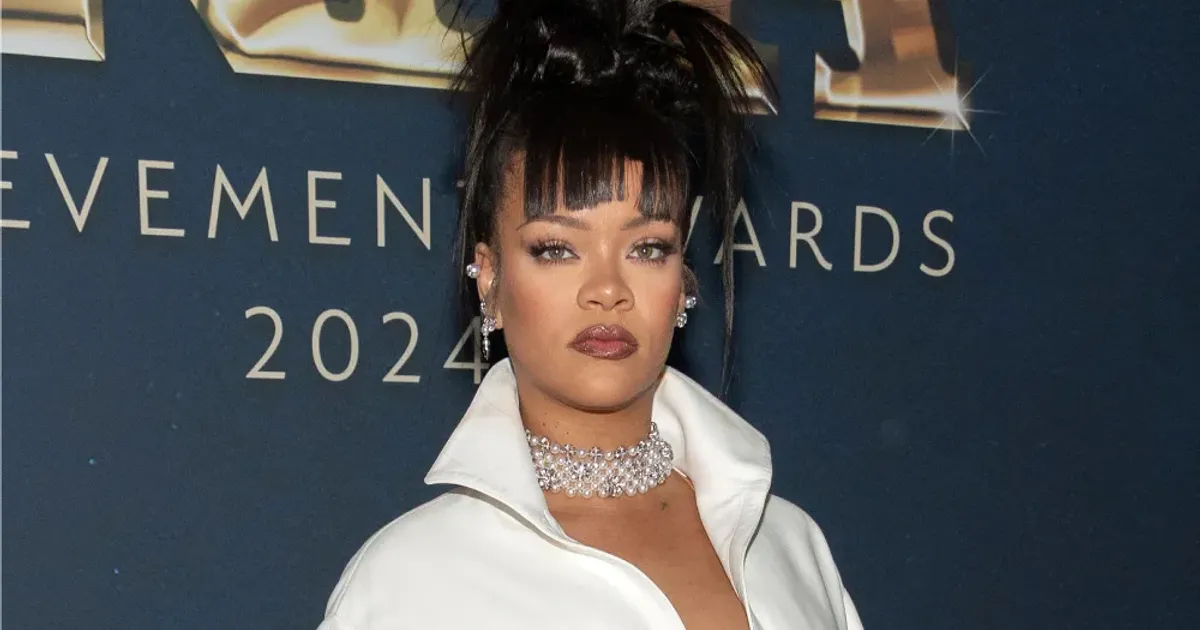
Ivana Lisette Ortiz traveled more than 2,000 miles from Florida to California with a semi-automatic weapon and a singular, violent purpose. Los Angeles prosecutors now say that purpose was the murder of Robyn Rihanna Fenty, the global music icon and billionaire entrepreneur. District Attorney Nathan Hochman announced a series of severe criminal charges on Tuesday against the 35-year-old Ortiz, who allegedly opened fire on Rihanna’s private estate this past Sunday. The legal filing includes one count of attempted murder, 10 counts of assault with a semi-automatic firearm, and three counts of shooting at an inhabited dwelling. These allegations paint a picture of a calculated attack that could have resulted in a mass casualty event at the singer’s residence. Police arrested Ortiz shortly after the gunfire ceased, ending a high-stakes standoff that drew heavy law enforcement presence to one of the most exclusive neighborhoods in the country. Still, the questions regarding how an individual could transport a semi-automatic rifle across state lines and approach such a high-security perimeter remain unanswered by officials. Investigators spent much of Monday processing the scene, where ballistic evidence suggests multiple rounds were discharged into the structure of the home. Public records indicate Ortiz has no known prior connection to the singer, leading authorities to categorize the incident as a case of extreme stalking or celebrity obsession. Criminal experts suggest the 10 counts of assault imply that several people, including possibly security staff or personal guests, were in the direct line of fire during the assault. DA Nathan Hochman emphasized the gravity of the situation during his press conference, noting that the prosecution intends to seek the maximum penalty allowed under California law. If convicted on all charges, Ortiz faces a sentence that would essentially ensure she spends the remainder of her life in state prison. Evidence gathered from Ortiz’s vehicle and digital footprint suggests she spent weeks planning the logistics of her arrival in Los Angeles. LAPD sources indicate that the suspect had been loitering in the hills surrounding the property for several hours before the first shots were heard. Security footage from neighbors and the estate itself captured a lone figure approaching the gates with a long rifle, a sight that triggered immediate panic among the household staff. Such an brazen act of violence against a public figure of Rihanna’s stature has reignited debates over the safety of prominent individuals in the digital age. Yet, the physical reality of a bullet through a window transcends the typical online harassment most celebrities face daily. Law enforcement officials have not yet confirmed if Rihanna was inside the home at the precise moment of the shooting, but the three counts of shooting at an inhabited dwelling confirm that individuals were present on the property. This reality makes the attempted murder charge particularly poignant, as it suggests a specific intent to kill rather than a mere desire for attention. Prosecutors are likely to focus on the semi-automatic nature of the weapon, which allowed Ortiz to discharge a high volume of lead in a matter of seconds. Most firearms of this caliber are strictly regulated in California, raising further questions about where and how the weapon was acquired. Florida’s relatively lenient gun laws compared to California’s stringent restrictions often create a pipeline for weapons into the state, a factor that Hochman’s office is reportedly investigating. Beyond the legal proceedings, the psychological state of Ivana Lisette Ortiz will undoubtedly become a central theme as the case moves toward trial. Mentally ill or obsessed individuals frequently target the wealthy and famous, viewing them not as people but as symbols or enemies in a distorted personal narrative. Rihanna has dealt with multiple security breaches in the past, including a 2018 incident where a man spent 12 hours inside her home while she was away. None of those previous encounters involved the level of lethal force seen on Sunday. High-profile victims often find themselves in a Catch-22 where increased security measures only seem to provoke more determined efforts from stalkers. Security consultants for the elite in Hollywood are already analyzing the failure of the perimeter at the Fenty estate. Even with state-of-the-art surveillance and armed guards, a person with a rifle and nothing to lose remains a terrifyingly difficult threat to neutralize before the first shot is fired. The 2026 calendar for the Los Angeles Superior Court is already crowded, but this case will likely be fast-tracked due to the public interest and the severity of the violence. Ortiz remains in custody with bail set at a level that makes her release highly unlikely before her next court appearance. Many legal observers expect her defense team to eventually raise questions about her competency to stand trial. But for now, the focus remains on the ballistic evidence and the harrowing testimony of those who were inside the home when the glass shattered. District attorneys in Los Angeles have become increasingly vocal about the need to protect residents from the surge in high-profile residential crimes. Hochman has positioned himself as a tough-on-crime prosecutor, and the Ortiz case is high-visibility platform to demonstrate that resolve. His office released a statement clarifying that the 10 counts of assault reflect the number of people who were placed in reasonable fear of their lives during the shooting. Such a high number of victims suggests the estate was bustling with activity, perhaps for a professional meeting or a social gathering. This prosecution will be a test of California’s ability to hold out-of-state offenders accountable for bringing violence into the state’s most prestigious enclaves. Prosecutors must prove not only that Ortiz fired the gun, but that she did so with the specific premeditated intent to end a life. Given the cross-country travel and the selection of a semi-automatic weapon, the state appears to have a strong foundation for that argument. The upcoming preliminary hearing will provide the first look at the evidence the LAPD recovered from the scene and Ortiz’s belongings. Until then, the music world and the city of Los Angeles remain on edge. Violence of this nature leaves a lasting impact on the collective sense of safety within the entertainment industry. It forces a re-evaluation of the boundaries between public life and private sanctuary.

The Elite Tribune Perspective

Does the public believe that fame should come with the risk of assassination? We have reached a point where the fascination with celebrity has morphed into a lethal pathology, fueled by a digital environment that makes stars seem both intimately close and impossibly distant. The case of Ivana Lisette Ortiz is not an isolated incident of madness, but rather the logical conclusion of a culture that treats human beings as interactive avatars for our own frustrations. We demand total access to the lives of the wealthy and then feign shock when an obsessed individual decides to bridge the gap with a rifle. DA Nathan Hochman may throw the book at Ortiz, but a life sentence does nothing to address the structural decay of privacy or the ease with which a motivated attacker can cross state lines to hunt a target. Security systems are merely illusions of safety in a society where high-powered weaponry is more accessible than mental health intervention. We must stop pretending that these incidents are unpredictable anomalies. They are the recurring tax on a society that prizes visibility over security and permits the tools of mass murder to be carried like luggage across the American map. Ortiz is a symptom of a deeper, more violent obsession that no courtroom can truly cure.