A Kennedy Romance Returns to Television
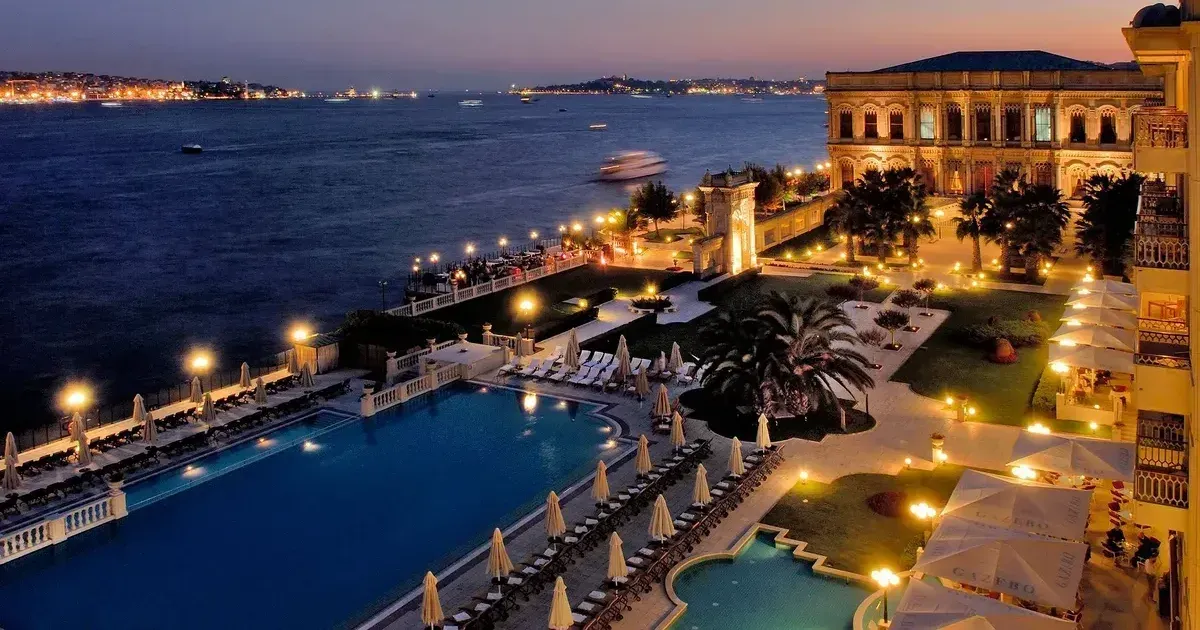
Istanbul's Ciragan Palace once served as the backdrop for a secret that the world spent decades trying to unpick. When John F. Kennedy Jr. and Carolyn Bessette arrived in Turkey in 1996, they sought a sanctuary from the flashbulbs that defined their Manhattan existence. FX’s recent docuseries, Love Story, brings these private moments back into the public eye, sparking a fresh wave of media scrutiny led by Vogue’s exhaustive coverage. The series suggests that even within the walls of a former Ottoman imperial palace, the couple found little respite from the expectations of the American public. By March 13, 2026, the series had renewed an old public attachment to the Kennedy-Bessette image. Privacy for the couple was a currency they could never quite afford to spend.
Documenting the minutiae of the honeymoon requires forensic detail; the search for privacy often led to extreme measures. Matching tattoos remain a detail that surprises even seasoned Kennedy historians. These permanent marks, reportedly small symbols on their feet, served as a quiet rebellion against the pristine image expected of Camelot’s heir. Vogue highlights the use of aliases, a common tactic for the son of a president, yet the decision to choose the names Mr. Miller speaks to a desire for a mundane anonymity that their real names strictly forbade.
Caroline Kennedy’s role in the narrative, as portrayed in the seventh episode of the series, introduces a friction point that resonates with modern audiences. Vogue writers suggest that Caroline treated Carolyn’s paparazzi magnetism with a level of unfairness. This perspective frames the conflict as one of style versus substance, where the polished Kennedy daughter struggled to reconcile her brother’s choice of a woman who seemed to inadvertently invite the very chaos the family claimed to loathe. It creates a narrative where being pretty and chic is treated as a liability by the established political elite.
Media outlets in 2026 are finding that the Bessette-Kennedy aesthetic remains a potent driver of digital traffic. Ryan Murphy’s production choices in Love Story emphasize the isolation felt by Bessette as she traversed the internal politics of the most famous family in America. Reporters at Vogue have responded with a mix of nostalgia and defensive advocacy for the late publicist. Their commentary shifts from analyzing the fashion choices of the 1990s to questioning the power dynamics within the Kennedy compound at Hyannis Port.
Every scene in the docuseries feels weighted with the knowledge of the tragedy to come, yet the current focus remains on the interpersonal microaggressions that defined Carolyn’s daily life. Precautionary measures during the Turkish getaway went beyond false names on hotel registers. The couple traversed the Bosphorus with a skeleton crew of protection, attempting to blend into the cosmopolitan crowd of Istanbul. Historical records from the palace staff suggest that despite the efforts to remain anonymous, the gravitational pull of their combined celebrity made true invisibility impossible.
Image Outlasts the Facts
They occupied the Sultan’s Suite, a space designed for royalty, which only emphasized their status as America's unofficial prince and princess. Glamour often acts as a cage when the bars are made of gold and camera lenses. Critics of the series point out that the dramatization of Episode 7 relies heavily on the tension between the two women in John’s life. While the show presents Caroline as a stoic guardian of the family legacy, the media critique leans into the idea that Carolyn was unfairly maligned for her natural ability to capture the lens.
The series portrays a woman who was essentially being punished for her own charisma. It suggests that the Kennedy family’s historical obsession with controlling their own image made them inherently suspicious of anyone they could not fully script. John’s own role in the dynamic remains a subject of intense debate among biographers and viewers of the FX series. He occupied a middle ground, trying to shield his wife while simultaneously inhabiting the public role he was born to play.
The docuseries suggests that his attempts at mediation were often clumsy, leaving Carolyn to face the brunt of his sister’s disapproval alone. His devotion to Carolyn is never in question, but his ability to protect her from the internal and external pressures of his name is presented as his greatest failure. Cultural critics argue that the resurgence of interest in the pair reveals a longing for a specific era of American celebrity. Unlike the curated social media presence of 2026 stars, the Kennedy-Bessette era was defined by grainy, unscripted shots that felt authentic even if they were intrusive.
Vogue captures this sentiment by focusing on the 72 thoughts generated by a single episode, reflecting a fragmented but deep engagement with the past. The public remains hungry for the details of a life that was both incredibly public and fundamentally unknowable. The series also shows how little new evidence is needed to restart an old fascination. Clothing, photographs and remembered gestures become clues because the couple’s private life remains difficult to separate from public mythology. That uncertainty is the commercial engine of the story. Viewers are not only revisiting a romance; they are watching how media keeps turning a limited record into fresh cultural material.