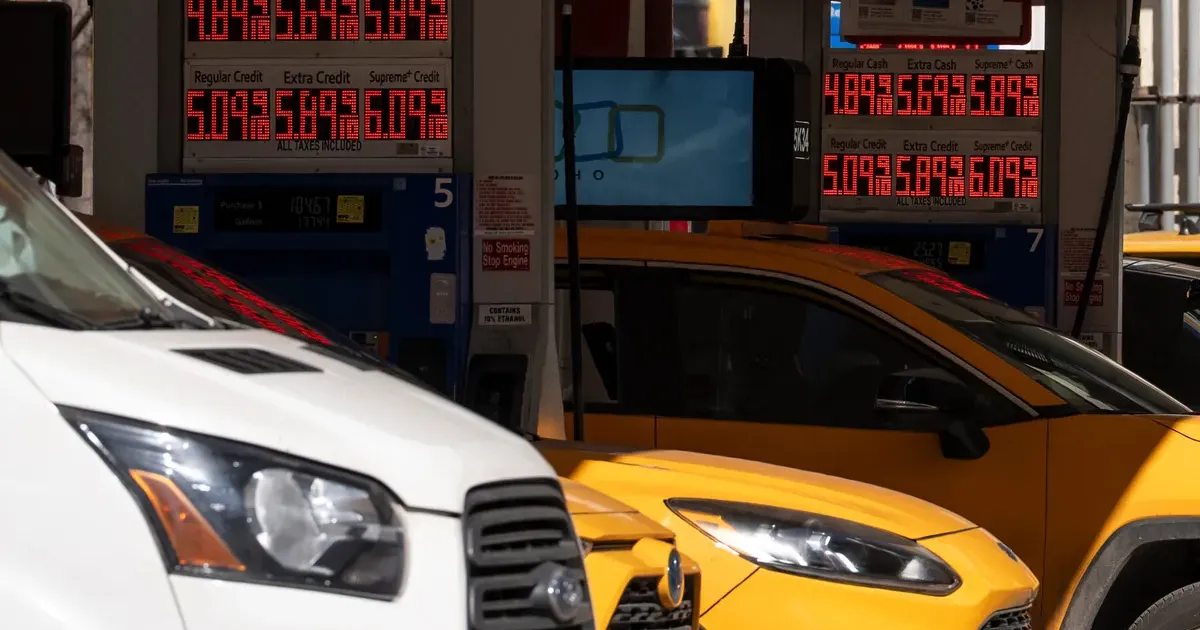
Rising gas prices tied to the Iran conflict threaten to pull the Federal Reserve’s inflation debate back toward energy costs.
Fuel Prices Hit the Inflation Story
March 11 brought a wave of anxiety to trading floors from London to New York. Investors waited for the Bureau of Labor Statistics to unveil the February Consumer Price Index, a figure that serves as the primary pulse check for the American economy. Early whispers suggest a stubborn resilience in core prices. The pressure became harder to ignore on March 11, 2026, as fuel markets moved faster than inflation models. Much of the tension stems from the escalating conflict in Iran, which has sent crude oil markets into a tailspin.
March 11 brought a wave of anxiety to trading floors from London to New York.
War has a way of rewriting economic forecasts overnight. Data collectors gathered the numbers for this latest report before the first missiles crossed the Persian Gulf. Such a timing gap creates a dangerous blind spot for policymakers at the Federal Reserve. They are essentially looking into a rearview mirror while driving toward a cliff. While the February data might show cooling in some sectors, it fails to capture the sudden spike in energy costs that followed the outbreak of hostilities.
Crude prices surged past $110 a barrel last week. Gas stations across the United States have already begun adjusting their signage. Retail prices for regular unleaded jumped fifteen cents in many regions within forty-eight hours of the initial strikes. Market analysts note that gasoline costs rarely track crude in real time. Instead, they trail market shifts by several days.
The Fed Faces a Policy Trap
This lag means the full weight of the energy crisis remains absent from the current CPI report. Drivers feel the pinch at the pump long before the government records the damage. Federal Reserve officials face a grueling choice during their next meeting. Raising interest rates remains the traditional weapon against rising prices. But higher borrowing costs could stifle an economy already reeling from supply chain disruptions caused by the war.
Jerome Powell and his colleagues must decide if the current inflationary pressure is a temporary shock or a structural shift. Historical precedents from the 1970s oil embargoes weigh heavily on their minds. Household budgets are straining under the dual pressure of housing costs and fuel. Average families in the Midwest spend nearly 12% of their take-home pay on transportation. When gas prices climb, discretionary spending in other areas like dining or retail inevitably falls.
Retailers are bracing for a dismal spring quarter. Consumer sentiment reached a three-year low in preliminary surveys conducted this morning. Stability has become a luxury few can afford. Global energy markets remain fixated on the Strait of Hormuz.
Energy Costs Move Through the Economy
Roughly twenty percent of the world's liquid petroleum passes through this narrow waterway daily. Any prolonged closure would send shockwaves through the global shipping industry. Insurance premiums for tankers have tripled since the conflict began. These costs eventually trickle down to every product moved by truck, ship, or plane. Food prices, which had started to stabilize in early 2026, are now expected to climb again.
Economists at Goldman Sachs revised their year-end inflation targets upward following the news of the Iranian naval mobilization. They now expect headline inflation to remain above 4% through the summer. Such a projection contradicts earlier hopes that 2026 would be the year of the soft landing. Instead, the specter of stagflation, stagnant growth combined with high inflation, is back on the table. Domestic oil production offers some cushion, but it cannot fully insulate the American consumer.
US shale companies have been hesitant to ramp up drilling despite the high prices. Many executives prefer to return capital to shareholders rather than chase volatile growth.
Why Cheap Optimism Looks Premature
History proves that the Bureau of Labor Statistics is usually the last to know when a disaster has truly begun. Relying on central bankers to fix geopolitical chaos is like asking a carpenter to perform heart surgery with a hammer. Such a reliance on outdated data models ignores the reality that energy is not just a volatile component of a spreadsheet but the foundational cost of civilization. We are watching the total failure of the soft landing narrative in real time. The Federal Reserve spent months patting itself on the back for taming inflation, only to be blindsided by a predictable military explosion in the world's most sensitive oil artery.
Bureaucrats will spend the coming weeks debating basis points while the average worker watches their purchasing power burn in the fires of a Persian Gulf war. If the government truly wants to stabilize the dollar, it needs to stop pretending that interest rates can compensate for a broken global energy strategy. The current crisis is not a statistical anomaly. It is the inevitable result of an economy that remains hopelessly tethered to one of the most unstable regions on the planet. Expecting the March CPI report to bring good news is a fool's errand.