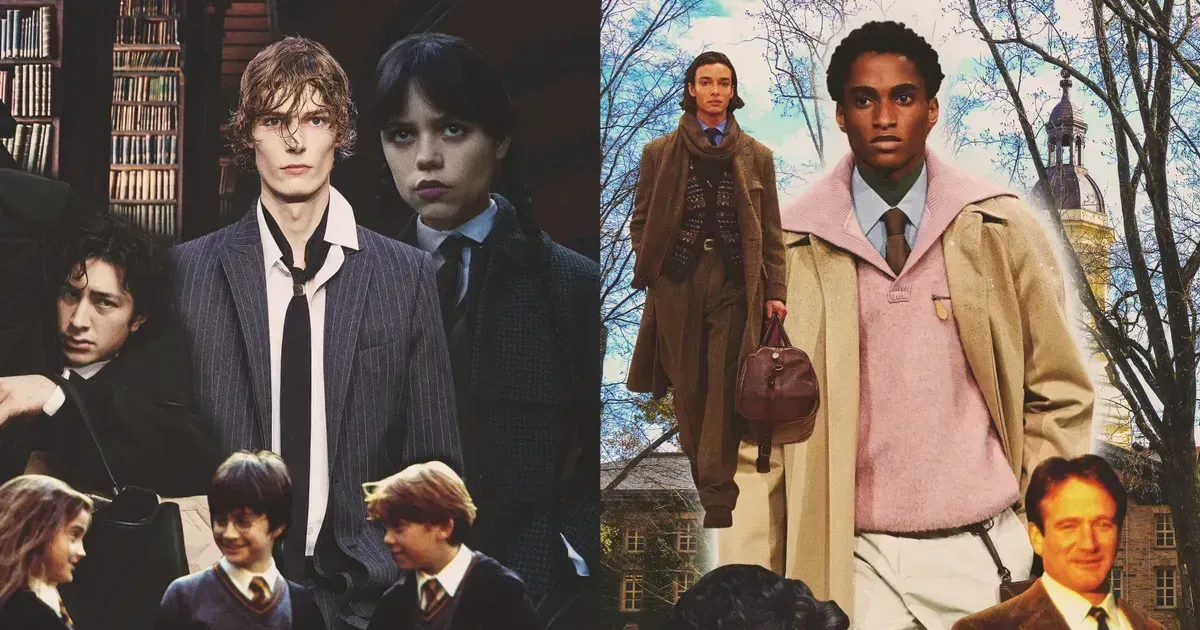
Oxford-style wool blazers and dog-eared copies of Donna Tartt novels define the visual vocabulary of millions of digital natives. These young adults spend hours curating digital mood boards that celebrate the aesthetic of elite education. While their parents might have viewed a library as a place of study, this generation views it as a stage for performance art. The style shift was reported on March 13, 2026, as academic aesthetics continued moving from campuses into social feeds. Dark Academia and its lighter counterpart have moved beyond niche internet forums to dominate the fashion choices of university students across the globe. Vast archives of imagery on Tumblr and Pinterest showcase a world of candlelit desks, fountain pens, and crumbling stone architecture. Users share photos of espresso cups resting on Greek philosophy textbooks. Most of these participants are not enrolled in prestigious Ivy League institutions or ancient European universities. In fact, many are high school students or graduates facing a precarious job market that devalues the very humanities they romanticize.
Academic Style Becomes Identity
Dark Academia draws its primary inspiration from 19th-century gothic fiction and the campus novels of the late 20th century. Practitioners favor a palette of charcoal, forest green, and burgundy. They cite The Secret History by Donna Tartt as the movement's foundational text. The plot involves a group of eccentric classics students at a Vermont college who commit a murder. Still, the aesthetic focuses less on the violence and more on the exclusivity of their intellectual pursuit. Clothing serves as the most visible entry point into this world. Enthusiasts seek out vintage wool coats, pleated trousers, and leather satchels to emulate a mid-century prep school look. They value items that appear lived-in or inherited. By contrast, fast fashion replicas of these styles often fail to capture the heavy textures required for a convincing ensemble. The goal is to look like one has just stepped out of a drafty library in 1940s England. This preoccupation with the visual markers of scholarship allows individuals to claim an intellectual identity regardless of their actual academic standing.
I think it's about the feeling of belonging to a tradition that doesn't really exist for us anymore in the way it did for previous generations.
And yet, the darkness in the name refers to more than the color palette. It hints at the morbid curiosity and existential dread that permeates the subculture. Participants often post about staying awake until dawn to read poetry or the aesthetic appeal of a rain-streaked window. These rituals prioritize the emotional experience of learning over the attainment of a degree. To that end, the aesthetic functions as a form of escapism from the digitized, utilitarian nature of modern life.
Why the Look Travels Online
Light Academia provides a sunnier alternative to the brooding nature of its predecessor.
Critics often point out the Eurocentric nature of these subcultures. Most of the inspiration comes from British boarding schools and the Greco-Roman canon. Separately, some creators have begun to introduce "Global Academia" to include non-Western literature and histories. They argue that the desire for intellectual belonging is universal. Still, the core of the aesthetic remains tied to a very specific, wealthy Western past. The high cost of quality vintage clothing also creates a barrier to entry that mimics the exclusivity of the institutions being emulated.
TikTok and Instagram algorithms reward visual cohesion and niche categorization. When a user interacts with a post about Dark Academia, the platform provides a steady stream of similar content. It creates an echo chamber where a specific way of dressing becomes a complete identity. For instance, a person might not just like books; they become a "Dark Academic." The platform's structure forces complex human interests into marketable categories. So the aesthetic becomes a brand that can be sold back to the consumer through targeted advertisements for blazers and journals.
The rapid cycle of internet trends means that these aesthetics evolve quickly. What started as a small group of literature fans on Tumblr has become a mainstream fashion category. Retailers now use these terms in their search engine optimization to attract Gen Z shoppers. The movement has become a significant driver of the vintage and resale market. Depop and Etsy sellers frequently tag items with "Academia" to justify higher price points for basic brown blazers.
Digital communities provide a sense of belonging for those who feel alienated by mainstream culture. In fact, many participants report finding lifelong friends through shared aesthetic interests. They exchange letters and physical books through the mail, reviving the art of correspondence. But the pressure to maintain a perfect digital facade remains high. A single post that deviates from the established color scheme can result in a loss of followers or engagement.
Aesthetic Intelligence Has Limits
Will future historians look back at these filters as a digital obituary for the humanities? The rise of Dark and Light Academia is not a resurgence of intellectualism but a fetishization of its corpse. Gen Z is dressing for a funeral for the liberal arts, mourning an era of contemplative study that has been replaced by the ruthless efficiency of the modern corporate university. There is a profound sadness in watching a generation spend $1.7 trillion on degrees they can only enjoy by pretending they are characters in a 1920s novel.
We are seeing the total commodification of the intellectual life, where the leather binding of the book matters infinitely more than the text inside. If the humanities were actually valued, these students would be reading in affordable, well-funded public libraries rather than staging photoshoots in them for social media clout. The aesthetic obsession is a symptom of a culture that has lost the ability to value anything that cannot be photographed and uploaded. We have traded the pursuit of truth for the pursuit of the perfect sepia-toned profile picture.
It is not a love of learning; it is a love of the costume of learning, worn by those who know the real thing is now a luxury they can never truly afford.