Giorgia Meloni’s condemnation of an Iranian school massacre has sharpened Europe’s moral language around the war. The statement landed on March 12, 2026.
Meloni Puts Moral Language First
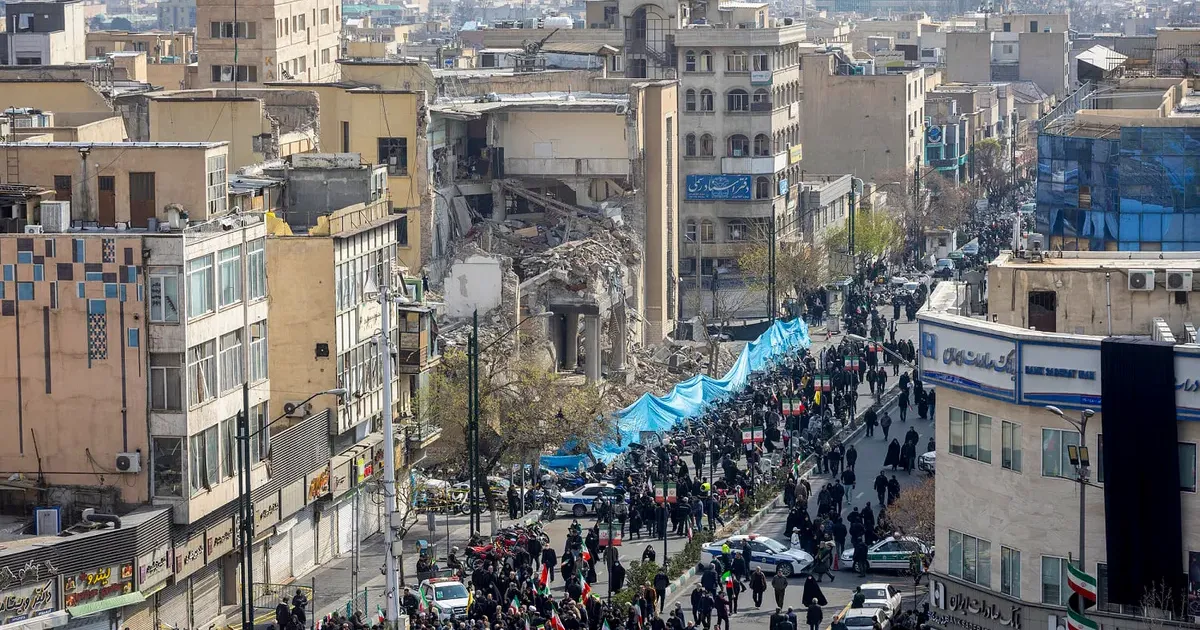
Giorgia Meloni stood before the Italian Parliament on Wednesday to deliver a speech that effectively severed the unified front of Western support for the ongoing military campaign in Iran. Her voice carried through the chamber as she described the recent strikes on an Iranian elementary school not as collateral damage, but as a massacre. This condemnation marks a significant departure from the European consensus that has largely supported U.S.-Israeli operations since they began earlier this year. Meloni told legislators that the attack fell outside the scope of international law, demanding an immediate reevaluation of the rules of engagement being used across the Iranian plateau. Italian officials have grown increasingly restless as the conflict enters its third month without a clear exit strategy. Prime Minister Meloni expressed firm condemnation for the strike, which reportedly leveled a primary school in a densely populated district of Tehran. While Washington maintains that the facility was being used by military commanders as a human shield, Rome has rejected that explanation. Meloni insisted that no military objective can justify the slaughter of children in their classrooms. Her rhetoric suggests that the political cost of the alliance is becoming too high for European domestic audiences to bear. Rome has finally reached its breaking point. Political fallout from the school strike spread quickly across the continent.
School Deaths Change the Diplomatic Tone
Several other European leaders began echoing Meloni's concerns by late Wednesday afternoon, though none were as explicit in their legal condemnation. The Italian Prime Minister's decision to use the phrase outside international law puts the U.S. and Israel in a difficult diplomatic position, as it mirrors the language often used by the United Nations to describe war crimes. Diplomatic sources in Brussels indicate that the European Union is now considering a formal resolution to restrict further logistical support for the bombardment if civilian protection protocols are not tightened immediately, as civilian casualties pushed Europe toward sharper language on the war. Tehran continues to prove that a besieged nation can still disrupt the pulse of global commerce. Despite the intense U.S. bombardment of its command centers, Iran has successfully deployed a series of asymmetric economic measures that have sent tremors through international markets. Investors watched in horror as Brent crude futures spiked by 14 percent in a single trading session.
This volatility stems from credible threats to the Strait of Hormuz, where Iranian naval drones have begun shadowing commercial tankers with increasing frequency. Insurance premiums for shipping in the Persian Gulf have tripled since Monday, making the cost of transport prohibitive for many independent operators. Energy markets reacted with predictable violence.
Europe Faces a Consistency Test
Financial analysts in London and New York have noted that Iran is not relying solely on physical blockades. Cyberattacks originating from the Islamic Republic have targeted several major European banking systems, causing temporary outages that hindered high-frequency trading. While Bloomberg suggests that these disruptions are minor and manageable, reports from Reuters indicate that the depth of the penetration into financial clearinghouses is far more extensive than governments are willing to admit publicly. The regime in Tehran is effectively using its remaining digital and maritime assets to ensure that the civilian population in the West feels the same insecurity being felt on the ground in Iran.
Casualty counts from the elementary school strike remain disputed by the various factions involved. Local medical personnel in Tehran reported that at least 45 children perished when the roof of the building collapsed under the force of a precision-guided munition. Images of the wreckage have flooded social media, bypassing the regime's internet filters and fueling global outrage. Military analysts suggest that the strike may have been the result of faulty intelligence regarding the location of mobile missile launchers.
Still, the U.S. Department of Defense has not issued a formal apology, instead reiterating its stance that Iran places military assets in residential neighborhoods to manipulate international opinion. Washington faces a narrowing path to victory if its closest allies continue to defect.
Condemnation Needs Consequences
Meloni's speech was not just about humanitarian concern; it also reflected the economic anxiety of an Italy heavily dependent on Mediterranean stability. But Washington remains committed to the current course, arguing that a premature halt to the bombardment would allow the Iranian regime to reconstitute its nuclear capabilities. This policy has created a vacuum where diplomacy used to exist, leaving only the sound of air raid sirens and the fluctuating numbers on stock exchange tickers. Market stability remains a distant dream while the conflict persists.
Brent crude hit a three-year high of $128 per barrel by the close of business on Wednesday. Global supply chains, already strained by years of geopolitical tension, are now facing a total breakdown in the transport of petroleum-based products and plastic precursors. Manufacturing sectors in Germany and Japan have reported a slowdown in production due to the lack of affordable energy. The economic rattling promised by Tehran is no longer a threat, it has become a daily reality for billions of people who have never set foot in the Middle East.
Outrage Without Policy Is Not Enough
Giorgia Meloni denounced an Iranian school massacre and described the war as illegal. The statement sharpened the moral framing around civilian harm and international law. European governments now face pressure to match condemnation with policy. Civilian children killed in conflict can shift diplomatic language and increase pressure for accountability. European leaders can pursue sanctions, investigations, humanitarian aid and coordinated diplomatic pressure, but condemning a school massacre is the easy part.
The harder test is whether European leaders attach policy, aid, accountability and diplomatic cost to the words they use when cameras are on. If the language of international law is only activated after especially horrifying images, then the framework is being used as a press strategy rather than a governing standard.