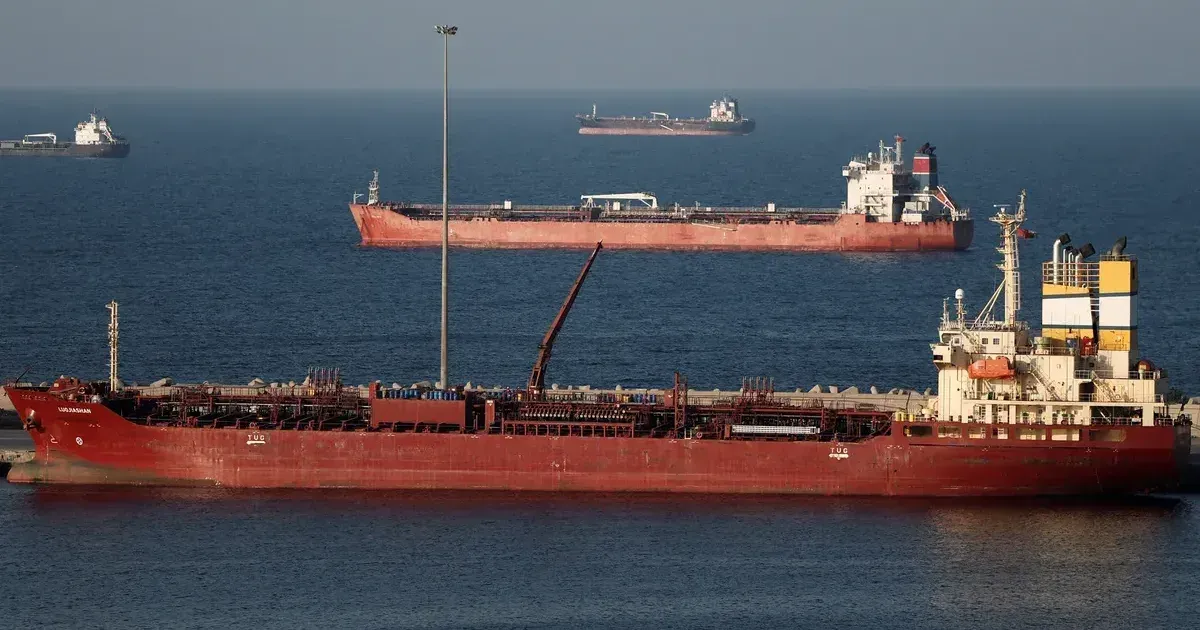
Oil traders are now modeling extreme price scenarios as the Iran conflict raises fears of Gulf shipping disruption.
Global markets are preparing for two hundred dollar oil scenarios as the Iran conflict raises fears of Gulf shipping disruption.
Oil Shock Scenarios Move Into Trading Desks
Terry Duffy, chairman of CME Group, spoke before a congressional panel yesterday with a warning that chilled the room. Government intervention in the oil futures market would create a biblical disaster, Duffy argued. He cautioned that any attempt by the administration to artificially lower prices through the derivatives market would erode global confidence. The Global Markets Bracing for Two Hundred Dollar Oil report carried a March 12, 2026 time marker for readers following the latest account.
Such a move risks breaking the pricing mechanisms that global trade relies upon for stability. Duffy believes the integrity of the exchange must remain paramount even as political pressure mounts to provide relief at the pump. This intervention would strip the last vestiges of trust from the global financial system. Markets operate on transparency and the cold logic of supply and demand, not the whims of federal regulators seeking a quick electoral win.
Energy Secretary Chris Wright appeared to downplay the severity of the situation earlier this week. Wright told reporters that he views a catastrophic price spike as unlikely. He maintained that the administration possesses enough tools to manage the volatility. However, his optimism finds little support among the analysts watching the escalating conflict in the Middle East. While Wright projects a sense of control, the numbers coming out of the shipping lanes suggest a far more volatile trajectory. Traders are increasingly ignoring official statements in favor of tracking satellite imagery and tanker movements. Olivier Blanchard, formerly the chief economist at the International Monetary Fund, believes the situation is far worse than the current price reflects. Blanchard outlined a scenario where oil prices reach 200 dollars a barrel. He noted that fully protecting ships in the Strait of Hormuz has become virtually impossible. Iran has no reason to stop threatening transit through the bottleneck.
Hormuz Risk Changes the Inflation Math
This reality forces a re-evaluation of every shipping insurance policy on the planet. For years, Wall Street relied on what they called the TACO trade, an acronym suggesting the president always chickens out when market volatility threatens his poll numbers. Investors assumed the administration would eventually pivot or back down from policies that upset the markets. That safety net has vanished. Marko Kolanovic, the former quant chief at JPMorgan, recently echoed these concerns. Kolanovic warned that no policy pivot can fix the physical reality of a closed shipping lane. Iran appears committed to its strategy regardless of declarations from Washington. Markets can no longer count on the executive branch to simply dial back the tension when the economic heat becomes uncomfortable.
The conflict has moved beyond the point where a single diplomatic gesture can restore the status quo. JPMorgan analysts estimate a staggering 16 million barrel per day shortfall from the ongoing shipping disruption. Most of this volume passes through the Strait of Hormuz, a critical bottleneck point for global trade. If these shipments remain stalled, the global economy faces a supply shock that dwarfs the crises of the 1970s.
Producers in other regions cannot simply turn on a tap to replace 16 million barrels. Infrastructure has limits. Refining capacity has limits. Time is the enemy of every supply chain, and time is currently running out for major importers in Europe and Asia. The supply arithmetic is unforgiving. Ships that do attempt the passage face astronomical insurance premiums.
Markets Price a Wider Conflict
Some vessel owners are refusing to enter the region at any price. This trend suggests a permanent decoupling of energy prices from consumer expectations. If tankers cannot move, the oil effectively does not exist for the global market. Pipelines are already operating at peak capacity, leaving no alternative route for the vast majority of the trapped crude.
Economists worry that the longer this disruption lasts, the more likely it becomes that we see a global recession by the end of the year. Duffy continues to hammer home the danger of government meddling in the CME. Derivatives are not a toy for politicians, he told the committee. If the government tries to force prices down by changing margin requirements or imposing position limits, liquidity will evaporate.
Professional traders will leave the market. Prices would then become even more volatile, not less. History suggests otherwise when it comes to the efficacy of price controls. Every previous attempt to legislate market prices has resulted in shortages and black markets.
The exchange is a mirror of reality, and breaking the mirror does not change the face looking back at it. Energy prices are currently reflecting a world at war. Attempting to hide that war behind regulatory maneuvers is a recipe for a systemic collapse. Investors need to know that their hedges will hold when they need them most.
If the rules change because the president is unhappy with the cost of gasoline, the entire foundation of the futures market crumbles. Confidence is a fragile resource.
Free markets are a convenient fiction when the gasoline pumps start bleeding the middle class dry. We are currently witnessing a collision between the cold arithmetic of energy logistics and the desperate theater of election year politics. Stop pretending that a diplomatic solution remains on the table for the Strait of Hormuz while the actual infrastructure of global trade is being dismantled in real time. The administration wants to believe in a soft landing, but 200 dollar oil is a brick wall that no amount of rhetorical cushioning will soften. Terry Duffy is right to fear federal intervention, not because the government is incompetent, but because it is desperate. Desperate leaders make choices that prioritize the next six months over the next six years. They will break the futures market to save a point in the polls, leaving the rest of us to deal with the wreckage of a destroyed pricing mechanism. If the TACO trade is dead, it is because the era of cheap, guaranteed energy is dead with it. Prepare for a world where the price of a gallon is set by a drone operator in a distant desert rather than a trader in Chicago.