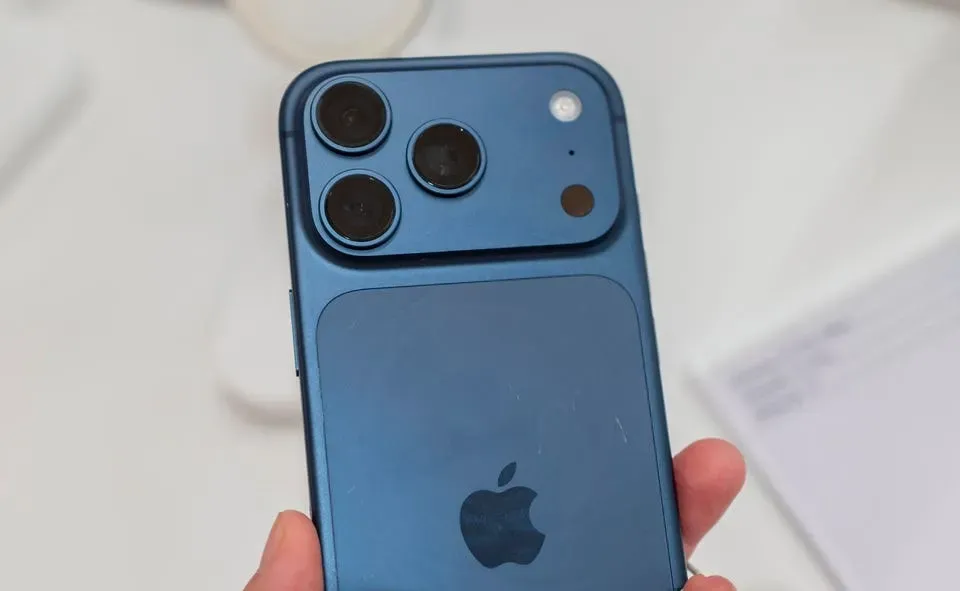
Google’s next foldable leak suggests a company trying to avoid Samsung’s shadow and make the Pixel line feel less derivative.
Google Needs a Foldable Identity
The design leak is a significant milestone for mobile hardware enthusiasts as leaked schematics of the Google Pixel 11 Pro Fold suggest a radical departure from industry standards. Engineering teams in Mountain View appear to have abandoned the pursuit of the razor-thin profile that defined the previous three generations of folding devices. While Samsung remains committed to a narrow, remote-control aspect ratio for its Z Fold series, Google is reportedly pivoting toward a wider, more ergonomic footprint that prioritizes one-handed utility over sheer screen real estate. The design leak circulated on March 12, 2026, and it framed Google's next foldable as a test of independence from Samsung. Internal sources suggest that the Pixel 11 Pro Fold will feature a primary display with a 21:9 ratio, moving away from the squarer dimensions that have frustrated users trying to type on external screens. This strategy relies on the belief that consumers value a phone that feels like a phone before it feels like a tablet. Hardware leaks indicate that the camera housing will undergo another evolution, ditching the horizontal bar for a circular 'porthole' design that mimics professional optics. Such a change is more than cosmetic.
The design leak is a significant milestone for mobile hardware enthusiasts as leaked schematics of the Google Pixel 11 Pro Fold suggest a radical departure from industry standards.
Larger sensors require deeper physical space, and Google engineers believe a centralized circular bump allows for better weight distribution during folded use. Forbes reports that this design path runs counter to the path taken by Apple, which continues to favor asymmetrical corner modules. By centering the mass, Google seeks to eliminate the 'wobble' that occurs when a foldable device rests on a flat surface.
Design Differences Carry Market Risk
Industry analysts at Bloomberg have noted that Google is essentially building a dedicated photography rig that happens to fold, whereas competitors are building tablets that happen to have cameras. Market dynamics are shifting just as the $599 iPhone 17e reaches retail shelves this week. Apple is testing the waters of the mid-tier market with a device that uses older aluminum chassis components paired with the latest A19 processing architecture. It is a calculated gamble to capture the shrinking middle class of smartphone buyers who are priced out of the flagship experience.
Early sales figures from London and New York indicate strong demand, yet the shadow of the upcoming iPhone 18 Pro looms large over these budget-conscious successes. Reports concerning the iPhone 18 Pro price point suggest a sharp incline in the cost of ownership. Analysts expect the base model to start at $1,299, a $100 increase over the current flagship. Much of this price hike stems from the transition to TSMC's 2nm fabrication process.
Production yields for these next-generation chips remain lower than expected, forcing Apple to pass the research and development costs directly to the consumer. Still, the promise of a 30% increase in power efficiency might justify the cost for professional users who rely on local AI processing.
Software Still Decides the Device
The math doesn't add up for everyone. Inflationary pressures in the global supply chain contribute to these skyrocketing MSRPs. Sourcing rare earth minerals for the haptic engines and the high-density batteries has become 15% more expensive over the last twelve months. Apple intends to offset these costs by introducing a new titanium-carbide alloy for the iPhone 18 Pro frame, marketing it as the most durable consumer electronics device ever made.
Conversely, Google appears to be sticking with recycled aluminum for the Pixel 11 Pro Fold to keep the price under the $1,800 psychological barrier. This decision highlights a fundamental disagreement between the two giants: Apple believes people will pay any price for luxury, while Google believes the foldable market is still too fragile to withstand another price hike. Leaked CAD files for the Pixel 11 Pro Fold reveal a hinge mechanism that uses ceramic ball bearings instead of stainless steel gears. This choice reduces the 'crunch' sound often associated with folding displays after long-term use.
Google wants the act of opening the phone to feel silent and fluid.
Copying Samsung Would Be the Weakest Move
Technology firms have stopped pretending they care about your wallet. We are entering an era where a flagship smartphone costs as much as a used car, yet we accept this extortion because we have outsourced our entire lives to these glass rectangles. Apple's decision to leak a $1,299 starting price for the iPhone 18 Pro while simultaneously patting itself on the back for the 'affordable' iPhone 17e is a masterstroke of psychological manipulation. It creates a false sense of choice.
You can either be a second-class citizen with last year's recycled aluminum or pay a king's ransom for the privilege of 2nm transistors you will never actually push to their limit. Meanwhile, Google's obsession with widening the Pixel Fold is a desperate attempt to find a 'third way' in a market that is clearly cooling. They are betting that a circular camera bump and ceramic bearings will distract you from the fact that foldable screens are still a solution looking for a problem. The industry is stagnant, and these hardware leaks prove that the only thing truly 'pro' about these devices is the professional way they extract money from your bank account.
Stop falling for the titanium hype. The shiny new hinge won't make your life more meaningful, but it will certainly make you poorer.