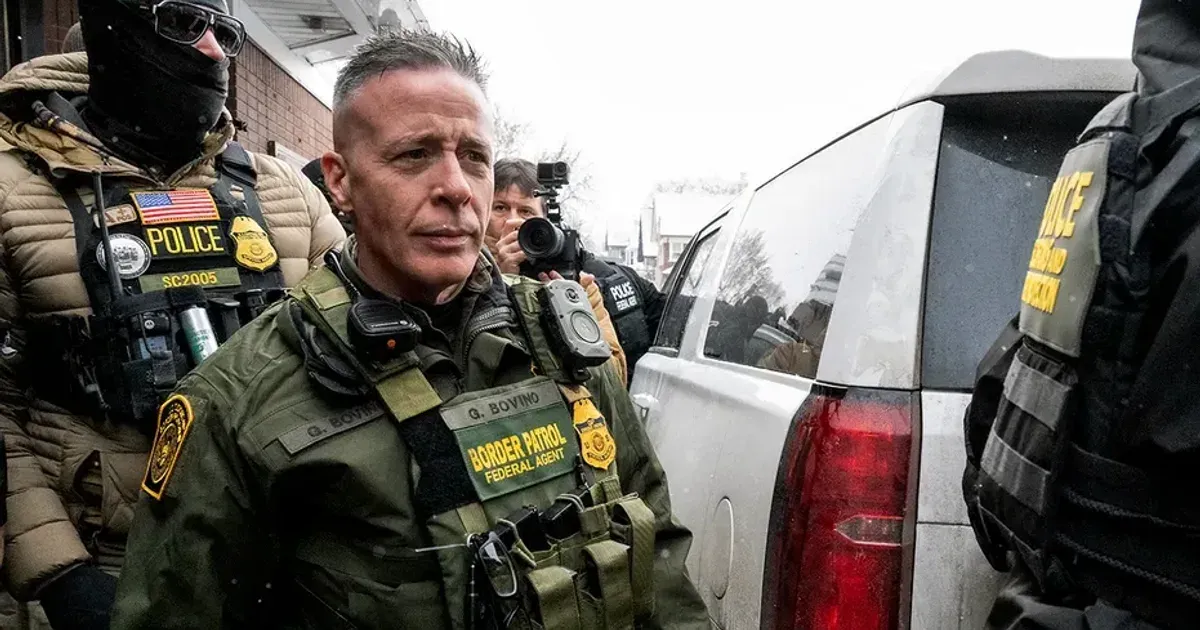
Gregory Bovino confirmed his plan to leave the U. S. Border Patrol on March 16 during a digital interview with Breitbart News. This announcement marks the conclusion of a career recently defined by intense scrutiny and federal reassignment. Gregory Bovino will officially step away from his post at the end of March, concluding a term that saw him rise to a national command role before returning to a regional sector following operational failures.

Customs and Border Protection officials confirmed the timeline for his departure to multiple news outlets on Monday morning. Bovino previously served as the CBP commander at large, a position created to centralize the management of high intensity immigration enforcement across the interior of the United States. His tenure in that role became a flashpoint for critics who argued the agency overstepped its traditional mandate. Reports from within the agency suggest the decision to retire was made internally several weeks ago.

This decision follows a tumultuous period in Minneapolis where federal operations resulted in the deaths of two American citizens. Still, Bovino defended the conduct of his agents in his final public statements as a federal employee. He characterized the environment as uniquely dangerous for law enforcement personnel.

"The greatest honor of my entire life was to work alongside Border Patrol agents on the border and in the interior of the United States in some of the most challenging conditions the agency has ever faced," Bovino told the outlet. "Watching these agents out there giving it their all in some of the most dangerous of environments we have ever faced was humbling."

In fact, the operational shift toward interior enforcement began long before the events in Minnesota. Bovino led a series of high profile actions in major metropolitan areas throughout 2025. These deployments aimed to locate and arrest criminal illegal immigrants, but they frequently drew the ire of local municipal leaders who claimed the federal government was infringing on local sovereignty.

Bovino Leads High Profile Operations in Los Angeles

Los Angeles became the first major testing ground for Bovino's expanded command in June 2025. Federal agents under his direction conducted a series of sweeps that targeted specific neighborhoods known for high concentrations of undocumented residents. Mayor Karen Bass personally confronted Bovino during these operations, citing concerns over public safety and the psychological impact on immigrant communities. City officials claimed the raids were indiscriminate and failed to distinguish between violent offenders and peaceful residents.

When Mayor Bass challenged the legality of these actions, Bovino maintained that his teams were operating within the scope of federal law. Yet, the friction in Los Angeles set the stage for even more aggressive tactics in the Midwest. Separately, the Department of Homeland Security began a review of the protocols used during these urban deployments. No immediate changes were implemented at that time.

Controversy followed his every move during the summer of 2025.

By contrast, Bovino argued that his teams were strictly pursuing individuals with existing criminal records. He insisted that the presence of federal agents in the interior was necessary due to the lack of cooperation from sanctuary cities. Evidence from the operations showed that hundreds of arrests were made during the initial two week push in Southern California.

Fatal Encounters During Minneapolis Enforcement Actions

Minnesota Governor Tim Walz became one of Bovino's most vocal opponents after a January operation turned deadly. Federal agents fatally shot two U. S. citizens, Renee Good and Alex Pretti, in separate incidents during an enforcement surge in the Twin Cities. Renee Good was killed by an agent as she reportedly drove her vehicle toward law enforcement personnel. Details regarding the shooting of Alex Pretti remain under investigation by the Office of Professional Responsibility.

In turn, the deaths sparked widespread protests at the Minnesota State Capitol. Agitators swarmed the office of Governor Walz to demand immediate justice and the removal of federal agents from the state. Walz publicly demanded that the federal government pay for what he described as a broken system. He argued that the presence of the Border Patrol in the interior was an overreach that directly led to the loss of civilian life.

According to the Department of Homeland Security, the agents involved were followed by groups of civilians who attempted to impede their official duties. These civilian observers documented the operations and occasionally stood in the path of federal vehicles. This environment of high tension contributed to the chaotic nature of the January raids. Investigators are currently reviewing body camera footage from the scenes of both fatalities.

Even so, the fallout from the Minneapolis shootings led to Bovino's immediate removal as commander at large. He was reassigned to his previous role as the sector chief in El Centro, California. The demotion was widely viewed as an attempt by the administration to distance itself from the controversial tactics used in Minnesota. Bovino spent the last two months of his career back in the desert region he had previously commanded.

Political Friction and the El Centro Reassignment

For instance, the El Centro sector covers a vast stretch of the Imperial Valley and the Salton Sea, focusing primarily on border security rather than interior enforcement. Bovino had established a reputation for strict enforcement in this region prior to his national appointment. His return to the sector was marked by a significant decrease in public appearances and media interactions. Local agents in California expressed support for Bovino, citing his long history within the agency's ranks.

To that end, the transition back to California did not stop the ongoing federal inquiries. The fatal shootings in Minneapolis triggered a series of congressional hearings where lawmakers questioned the training and oversight provided to interior enforcement teams. Some members of the House Judiciary Committee called for a total moratorium on Border Patrol operations away from the immediate border line. Bovino was not called to testify before the committee prior to his retirement announcement.

State leaders expressed little sympathy for the departing official.

Bovino chose to announce his departure via a friendly media outlet rather than through a formal agency press release. The move allowed him to frame his legacy as one of service and commitment to the mission of the Border Patrol. He avoided discussing the specific legal ramifications of the Minneapolis deaths during the interview. His focus remained on the bravery of the agents who served under his command.

Legislative Fallout and the Future of Border Patrol

Legislative analysts expect Bovino's retirement to embolden those seeking to limit the agency's reach. The $11 billion annual budget for Customs and Border Protection is currently under review, with several amendments aimed at restricting interior enforcement funds. Critics argue that the agency lacks the necessary training for urban policing and should remain focused on the physical border. Supporters of the current strategy claim that Bovino was a necessary leader during a period of record setting migration.

Every agent in the field is now operating under a cloud of uncertainty as leadership changes at the top. The departure of a high profile figure like Bovino leaves a vacuum in the interior enforcement strategy. It remains unclear if the commander at large position will be filled by a new appointee or if the role will be eliminated entirely. The upcoming budget cycle will likely provide the answer to these structural questions.

Records from the first quarter of 2026 indicate a slight decrease in interior arrests following Bovino's reassignment. The trend suggests that the agency may be pulling back from the aggressive tactics that characterized the Minneapolis campaign. Bovino returned to the El Centro sector immediately following his removal from the national post.

The Elite Tribune Perspective

Why do federal officials often find a quiet exit the moment legal scrutiny reaches a fever pitch? Gregory Bovino is not simply a retiring bureaucrat but a man whose tactical decisions directly preceded the deaths of American citizens on American soil. His retirement is a convenient escape from the administrative and legal accountability that should follow such catastrophic operational failures. The Border Patrol was never designed to be an interior police force, yet Bovino embraced that role with a zeal that ignored the obvious risks of deploying border-trained agents into dense urban environments.

Allowing him to walk away with his pension intact while families in Minneapolis mourn is a failure of the federal disciplinary system. The pattern of shuffling controversial leaders back to regional outposts before letting them fade into private life protects the institution at the expense of justice. If the agency is serious about reform, it must stop treating these exits as honorable conclusions to a career. Bovino's legacy is not defined by his years in El Centro, but by the blood spilled under his watch in Minnesota.

The federal government must ensure that retirement does not grant immunity from the investigations still pending in the Office of Professional Responsibility.