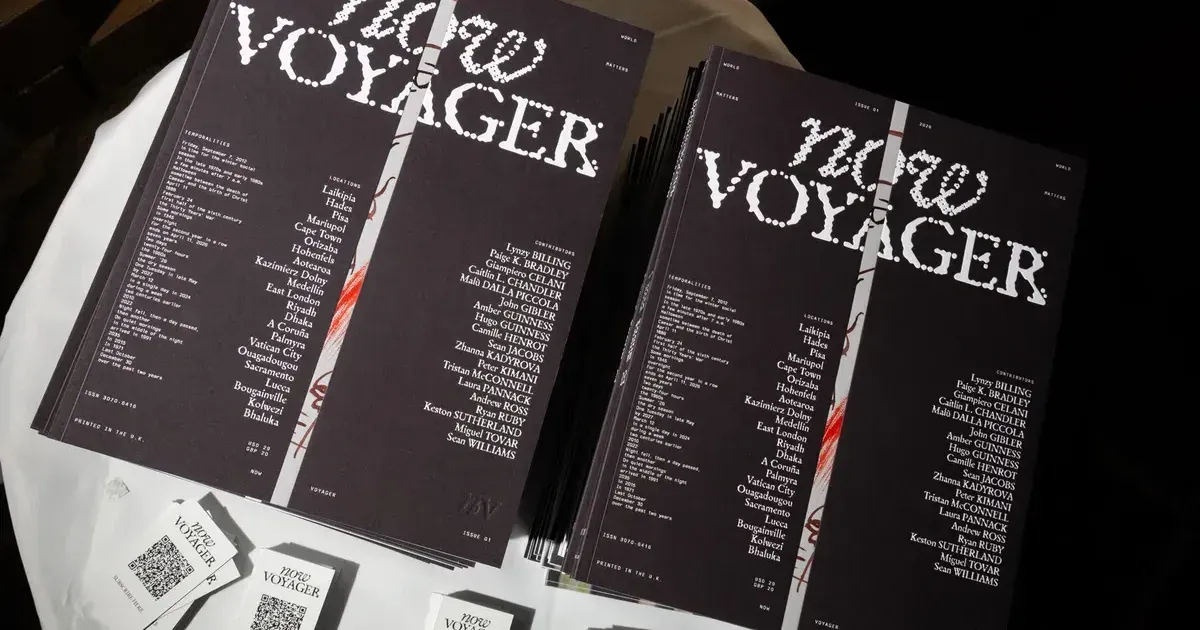
Harlem streets echoed with the hum of a media industry trying to reinvent its physical footprint on a damp Tuesday night in March. Inside a narrow, refurbished brownstone, the scent of fresh ink and expensive hors d'oeuvres filled the air as dozens of writers, photographers, and venture capitalists gathered. They were there to celebrate the birth of Now Voyager, a publication that defies every contemporary logic of the digital-first era. Subscription models for digital news have hit a ceiling in early 2026, leaving a vacuum for tactile, high-end media. Guests at the event clutched the inaugural issue, a heavy object with a matte finish that felt more like a coffee table book than a weekly periodical. The cover features a sharp, high-contrast photograph of a Mongolian steppe, signaling the magazine's focus on long-form international reporting. Founders of the venture moved through the crowd, avoiding the usual talk of click-through rates and search engine optimization. In fact, the business plan for this project relies on a strictly limited print run and a premium $45 cover price. This pricing strategy targets a specific demographic of wealthy readers who have abandoned social media feeds for what the editors call slow journalism. One guest noted that the paper stock alone likely costs five times as much as a standard glossy magazine. Production costs for such a high-quality physical product are rising as global paper supply chains remain volatile. Now Voyager has reportedly secured two years of funding from a private equity group interested in niche luxury goods. They are not looking for the scale of a mass-market conglomerate, according to insiders at the party. Instead, the focus remains on building a loyal, elite subscriber base that values exclusivity over instant accessibility.
Now Voyager Arrives in Harlem
Harlem was chosen for the launch to evoke the neighborhood's deep history of independent publishing and intellectual ferment. The venue, located just blocks from the Schomburg Center, served as a backdrop for a roster of speakers who championed the return of the global dispatch. By contrast, most major newsrooms have spent the last three years shuttering their foreign bureaus to save on operational costs. Editors at the party confirmed that the magazine has already dispatched contributors to six continents. These reporters are tasked with staying in one location for months at a time, a luxury that has largely vanished from modern journalism. For instance, the first issue contains a 15,000-word investigation into lithium mining in the Andes Mountains. The piece includes hand-drawn maps and film photography, elements that are intentionally difficult to replicate on a mobile screen.
We are betting on the idea that people are exhausted by the ephemeral nature of the internet and want something they can hold and keep on their shelves for a decade.
Success for this model depends on a high conversion rate of its initial 25,000 copies. Still, the distribution strategy avoids traditional newsstands in favor of independent bookstores and boutique hotels in cities like London, Tokyo, and New York. This creates an aura of scarcity that the founders hope will drive early ad placements from luxury watchmakers and fashion houses.
Magazine Launches Need a Clear Voice
Direct-to-consumer shipping costs for a heavy, high-page-count magazine pose a significant hurdle for any startup in 2026.
Skepticism remains regarding the long-term viability of a magazine that ignores the viral nature of the modern web. There is no plan for a mobile app, and the website serves only as a portal for subscriptions. Meanwhile, the founders insist that this digital minimalism is their greatest strength. They believe that by removing the distractions of comments and shares, they allow the journalism to stand on its own merit.
Private equity involvement in the magazine suggests a shift in how investors view media assets. Rather than seeking a quick exit through an acquisition by a larger conglomerate, the backers of Now Voyager are looking for steady, high-margin returns from a loyal audience. This reflects a broader trend where $100 million funds are being diverted into small, specialized brands that dominate a specific interest group. Total investment for the launch phase is estimated at $8.5 billion across the parent company's portfolio of niche lifestyle products. The capital allows the magazine to remain ad-light, with only ten full-page advertisements in its 180 pages. For one, the lack of clutter makes each advertisement more impactful for the brand. It also keeps the focus on the photography and prose that define the brand's identity.
Harlem's night air eventually cooled as the party wound down and the last of the magazines were tucked under arms. The real test begins when these copies reach the homes of subscribers who have been promised a different kind of window into the world. In fact, the survival of Now Voyager will be determined by whether the desire for physical substance can outweigh the convenience of the digital void.
Cultural Debuts Need Substance After Style
Ask any media analyst about the future of paper and they will likely point you toward a recycling bin. The launch of a high-gloss, high-cost print magazine like Now Voyager is either an act of supreme confidence or a case of terminal nostalgia. While the editors talk about slow journalism and the sanctity of the physical page, the reality is that they are building a walled garden for the global elite. There is something inherently exclusionary about a $45 magazine that prides itself on dispatches from parts of the world where that sum is a month's wages. It is not the salvation of journalism; it is the transformation of information into a luxury collectible, akin to a rare vinyl record or a bottle of vintage wine. If the only way to fund deep international reporting is to package it as an accessory for the wealthy, we must admit that the democratic promise of the internet has failed. The irony is that the very people who can afford to buy this magazine are the ones whose companies often contribute to the digital noise they are trying to escape.
The venture will likely succeed, but it will do so by becoming a status symbol rather than a primary source of news for the masses.