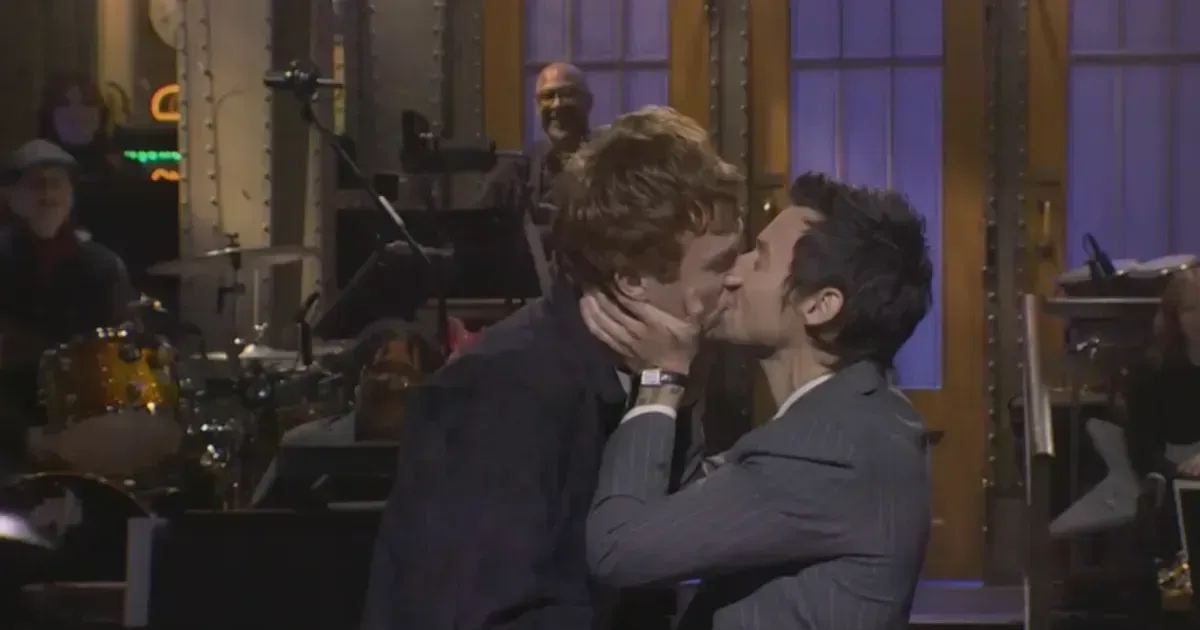
The singer used his opening monologue to directly confront accusations of queerbaiting, a term that has followed his career since his transition from boy band member to solo provocateur. Critics have long argued that Styles adopts the visual language of the LGBTQ+ community without explicitly claiming a non-heterosexual identity. Styles referenced his previous hosting stint in 2019 and the conclusion of his last world tour in 2023. He noted that public attention often focused on his clothing choices rather than his musical output or philanthropic efforts. This intense focus on his wardrobe has fueled a decade of debate among fans and cultural commentators alike. Harry Styles began the segment by reminiscing about the shifting field of celebrity accountability. He acknowledged that the internet remains obsessed with the labels he chooses or refuses to adopt. But the tone of the monologue shifted from nostalgic to assertive as he neared the conclusion of his set.
Styles Turns Criticism Into a Joke
Pop stars often use the SNL stage to perform a familiar kind of reputation management. Styles chose to lean into the controversy rather than shy away from it. He spoke about the expectations placed on modern artists to provide total transparency regarding their private lives. He suggested that the demand for a public coming-out can often feel like a different form of cultural pressure. The singer had already made headlines a week prior by crashing the monologue of Ryan Gosling during the March 7 broadcast. That brief appearance served as a precursor to his own hosting duties. It signaled a more aggressive approach to his public image during the promotional cycle for his latest project, Aperture. Observers noted that Styles seemed more comfortable engaging with his detractors than in previous years. He joked about the various theories regarding his sexuality that circulate on social media platforms. Yet he maintained a level of poise that prevented the monologue from feeling overly defensive.
Queerbaiting Debate Returns to Pop
Queerbaiting is defined as a marketing technique where creators hint at, but do not depict, same-sex romance or LGBTQ+ identity. In the context of music, it refers to artists who use queer aesthetics to appeal to a defined demographic without taking on the social risks associated with being out. Styles has been the primary target of this criticism since he began wearing Gucci dresses and painting his nails. While Variety reported that the criticism has been extensive, Styles has rarely addressed it with such bluntness. He previously told journalists that he does not feel the need to clarify his identity to satisfy public curiosity. His SNL appearance was a departure from his usual strategy of silence. The tension between artistic expression and identity politics has become a central theme of his career. Some activists argue that his silence is a privilege not afforded to those who are visibly queer. Meanwhile, others contend that no one should be forced to label themselves for the sake of consumer clarity. The debate has reached a fever pitch as Styles enters the $100 million marketing phase of his current era. Styles reached the climax of his monologue by bringing cast member Ben Marshall onto the stage. The two engaged in a brief, staged conversation before Styles pulled Marshall into a lingering kiss. The move was clearly rehearsed and designed for maximum social media impact. "Now that's queerbaiting!" The punchline followed the kiss immediately, drawing a roar from the live audience. By using the very word his critics use against him, Styles attempted to reclaim the story. It was a moment of self-aware satire that mocked the industry's fixation on his personal life. Some viewers felt the joke trivialized a serious conversation about representation.
Music industry analysts believe this performance is part of a larger strategy to rebrand Styles as a more confrontational figure. The upcoming album, Aperture, is rumored to feature more personal lyrics than his previous work. His team has been working to distance him from the soft-rock image of the Harry's House era.
Data from social media monitoring tools showed a sharp spike in mentions of the term queerbaiting immediately after the broadcast. Most of the sentiment was divided between those who found the joke hilarious and those who viewed it as a deflection. In particular, the LGBTQ+ community on Twitter and TikTok remained split on whether the kiss was a gesture of solidarity or a mocking stunt.
The singer's team has not released any further statements regarding the monologue. This silence is typical for the Styles camp, which prefers to let the performances speak for themselves. This suggests that the SNL appearance was intended to be the final word on the matter for the foreseeable future.
Industry experts suggest that the controversy will only help the sales of his new record. Controversy has always been a potent tool in the pop music toolkit. Styles has proven himself a master of using cultural tension to keep his name at the top of the charts.
Celebrity Image Is Now a Debate Stage
History suggests that when a pop star begins to joke about their own exploitation, the era of their cultural dominance is nearing its sunset. Styles is now managing a risky middle ground where he wants the benefits of being an iconoclast without the burden of being a spokesperson. The SNL kiss was not a breakthrough or a revelation; it was a cynical deployment of identity as a marketing gimmick. By turning a decade of genuine criticism into a scripted punchline, he effectively told his audience that their concerns about representation are just a joke to him.
It is the ultimate luxury of the straight-passing superstar who can put on and take off queer identity like a sequined jumpsuit. While fans scream about his bravery, the reality is far more calculated and corporate. Styles is not breaking barriers; he is monetizing the space between them. If he truly wanted to address the queerbaiting claims, he would offer honesty rather than a choreographed stunt. Instead, he chose to perform a caricature of the very thing he is accused of, proving that in the modern music industry, being talked about is always more important than being understood.
The brand of meta-commentary is a shield, and Styles is hiding behind it with practiced ease.