Hawaii is facing a dual hazard as a Kona storm and volcanic activity put flooding, ash and emergency planning on the same timeline.
Storm and Volcano Risks Converge
A rare and dangerous alignment of geological and atmospheric forces arrived across the Hawaiian archipelago. Molten rock and torrential rain now collide in a test of state infrastructure. Governor Josh Green took the preemptive step of declaring a state of emergency on Monday. Hawaii prepares for a convergence of natural events that few modern residents have witnessed simultaneously. The dual threat intensified on March 11, 2026, as state officials tracked weather alerts and volcanic activity together.
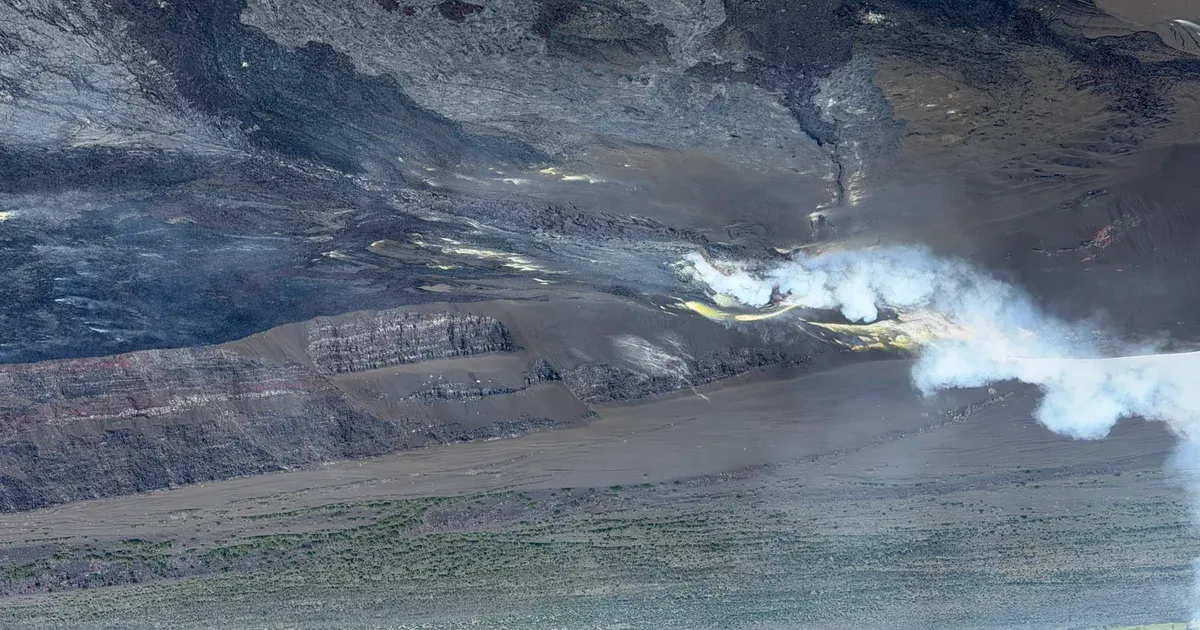
While volcanic activity remains a constant feature of the Big Island, the synchronization with a powerful Kona storm creates a complex safety crisis for emergency responders. Lava fountains from the Kilauea volcano are currently surging 1,000 feet into the air, lighting up the sky over the Halemaumau crater. CBS News US reports that the height of these eruptions has necessitated the closure of large sections of Hawaii Volcanoes National Park. Scientists at the Hawaiian Volcano Observatory noted that the intensity of the current vent activity is sharply higher than previous cycles. Such fountains create spectacular visuals, but they also generate hazardous debris.
Falling glassy volcanic fragments, including ash and Pele's hair, now blanket the surrounding terrain. National Park Service officials and local police shut down a significant portion of a primary highway because of these falling fragments. Sharp, needle-like glass strands can cause respiratory issues and damage vehicle engines. Visibility near the eruption site has dropped to near zero in some areas. These closures have restricted movement for thousands of residents and tourists alike.
Authorities warned that the combination of volcanic ash and coming rainfall could create a heavy, cement-like sludge on road surfaces, making travel nearly impossible. Simultaneously, a potent Kona storm is descending upon the islands from the west. Kona storms differ from typical trade-wind weather patterns because they originate from low-pressure systems that pull moisture from the south. Guardian US reports that these systems are notorious for bringing intense winds and thunderstorms.
Big Island Communities Face Overlapping Hazards
Unlike localized rain showers, these storms often result in significant flooding across multiple islands. Low-lying areas on the Big Island and Maui are currently under high-alert flood watches. Meteorologists predict that some regions could see up to ten inches of rain within a forty-eight-hour period. Governor Josh Green confirmed that the emergency proclamation issued on Monday will allow the state to deploy additional resources to the most vulnerable communities. That decision was based on the projected severity of the winds, which could reach speeds of 60 miles per hour in higher elevations.
State officials are particularly concerned about the stability of the power grid. Heavy winds often uproot non-native vegetation, leading to downed lines and prolonged outages. Emergency shelters are opening their doors in Hilo and Kailua-Kona to accommodate residents fleeing potential flood zones. Nature is not negotiating with the tourism board this week. Airborne hazards from Kilauea are being redirected by the shifting storm winds.
Instead of the usual trade winds blowing volcanic gas out to sea, the Kona storm's southerly flow is pushing vog, or volcanic smog, toward the northern islands of Oahu and Kauai. Health department officials advised individuals with asthma or other respiratory conditions to remain indoors. While Reuters suggests the sulfur dioxide levels are within historical norms, local air quality monitors show localized spikes near the eruption site. The presence of volcanic glass in the air further complicates the health risks for those in the path of the storm winds. Previous events of this magnitude have shown how quickly the islands can be cut off from essential services.
The Department of Transportation is monitoring bridges and culverts that are prone to debris blockages. High-altitude regions on the Big Island may even experience rare snow or ice, adding a layer of danger to mountain access roads.
Why Preparedness Cannot Be Seasonal
Stop pretending that these islands are a playground designed for human comfort. The current crisis in Hawaii is a brutal reminder that the archipelago is a living, violent laboratory of earth and sky. We build multi-million-dollar estates on the flanks of active shield volcanoes and then act surprised when the insurance premiums skyrocket or the magma arrives in the living room. Governor Josh Green's emergency proclamation is a necessary bureaucratic shield, but it cannot hide the reality of a state that is perpetually one bad week away from total infrastructure collapse. The irony of a Kona storm drenching a volcanic eruption is not lost on those who understand the precarious nature of island life.
We have spent decades prioritizing the aesthetic of paradise over the cold mechanics of resilience. When 1,000-foot lava fountains meet flood-level rainfall, the limits of our engineering become painfully clear. Hawaii should serve as a global case study in the folly of high-density development in high-risk zones. The state must move beyond reactive emergency orders and begin the difficult process of managed retreat from the most volatile topographies. Nature is not a backdrop for luxury; it is a landlord that occasionally decides to evict the tenants without notice.