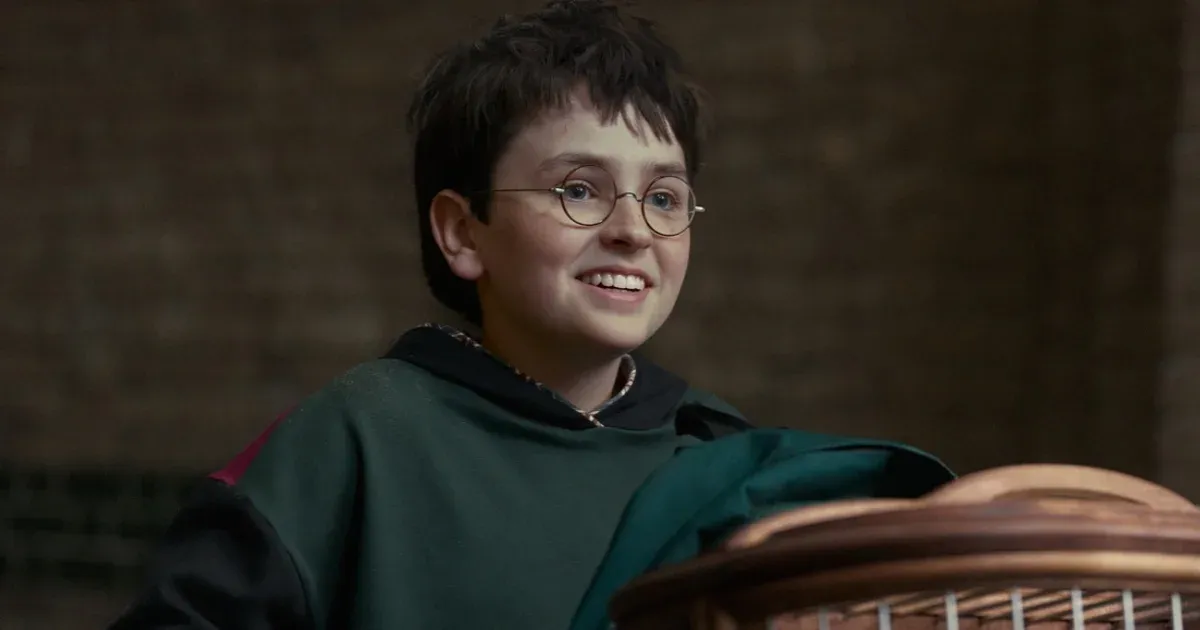
HBO's Harry Potter teaser has given Warner Bros. Discovery the kind of franchise signal every streaming company wants. The trailer drew 277 million organic views across platforms in its first 48 hours, making it the most-watched trailer in HBO and HBO Max history. The number turns nostalgia, casting curiosity and platform strategy into one measurable launch event.
The teaser for Harry Potter and the Philosopher's Stone arrived as the company prepares a Christmas 2026 premiere for the new television adaptation. HBO's pitch is straightforward: one book, one season, more room for character, world-building and plot details the films had to compress. That promise is designed for fans who want familiarity with more depth, not a radical reinvention.
The record also shows how much dormant power remains in the Wizarding World. A trailer can reach hundreds of millions of views because the franchise is already embedded across books, films, theme parks, games and family viewing habits. HBO is not launching a new world. It is reopening one of the most valuable ones in entertainment.
Wizarding World Expansion and Narrative Depth
The television format gives HBO an obvious advantage over the original films: time. The movies had to move quickly through school years, mysteries, friendships and world rules. A season-length adaptation can slow down, restore secondary characters and give key relationships more room to breathe. That is the creative argument for revisiting a story that many viewers already know.
Casting is central to whether that argument works. A new generation of actors must inhabit roles permanently associated with the original film trio. If the performances feel like imitation, the show will look redundant. If they feel specific and alive, HBO can make the familiar feel newly watchable.
Production scale will also matter. Hogwarts, Diagon Alley, the Forbidden Forest and the wider magical world have to feel cinematic without merely copying the film design. The audience is not coming in blank. It has a memory of how these places should feel, and it will judge every corridor, creature and classroom against that memory.
Marketing Analytics and Global Reach
The 277 million-view figure is valuable because it measures more than casual curiosity. Organic trailer performance shows that fans were willing to share, replay and debate the footage without a traditional television campaign carrying the entire burden. That kind of attention is rare in a fragmented streaming market.
The stories from each of the Harry Potter books will become a decade-long series produced with the same epic craft, love and care this global franchise is known for, according to David Zaslav, the chief executive of Warner Bros. Discovery.
Moving the series under the HBO banner also sends a message. Warner Bros. Discovery wants the project to be treated as prestige franchise television rather than simple nostalgia content. That matters for subscribers, investors and fans who worry that a reboot could feel like a cash grab. The HBO label raises expectations and reduces excuses.
The global release strategy is just as important. A synchronized premiere can reduce piracy, concentrate online conversation and turn the first episode into an event. In the streaming economy, event status is the prize. Shows that arrive quietly disappear quickly. Shows that feel unavoidable can hold subscribers across months and seasons.
Franchise Economics Behind the Reboot
The business logic is obvious. Streaming companies need durable intellectual property that can support subscriptions for years, not weeks. Harry Potter offers a built-in audience, merchandise potential, international recognition and a seven-book structure that can be mapped into a long-running release plan.
That reliability is also the creative problem. Rebooting a film series that ended relatively recently can look like an admission that studios no longer trust new ideas. The safer the bet, the narrower the imagination. Harry Potter may deliver enormous viewership, but its success will strengthen the industry's belief that the best future is a more expensive version of the past.
Fans are split for that reason. Some want a faithful adaptation that corrects omissions from the films. Others want new stories in the same universe or a clean break from constant franchise recycling. HBO's trailer record suggests the faithful-retelling camp is large enough to dominate the commercial argument.
The Franchise Reliability Test
Does the world truly need another visit to a school it has already memorized? The 277 million views suggest that, commercially, the answer is yes. We are watching the late stage of the original-content era as major studios retreat into the safety of established properties. Rebuilding a film series that ended not long ago is a move born of financial calculation more than artistic necessity.
This strategy treats the audience as a predictable data pool rather than a community to be challenged. The production quality may be high, and the adaptation may even be good. But the creative cost is the further erosion of risk-taking in prestige television. Warner Bros. Discovery is not only selling a story. It is selling the comfort of the familiar to a global audience that seems increasingly unwilling to explore new worlds. The trailer's success confirms that intellectual property is the dominant currency in a saturated market. Reliability is the new gold standard, and magic is now another line item on a balance sheet.