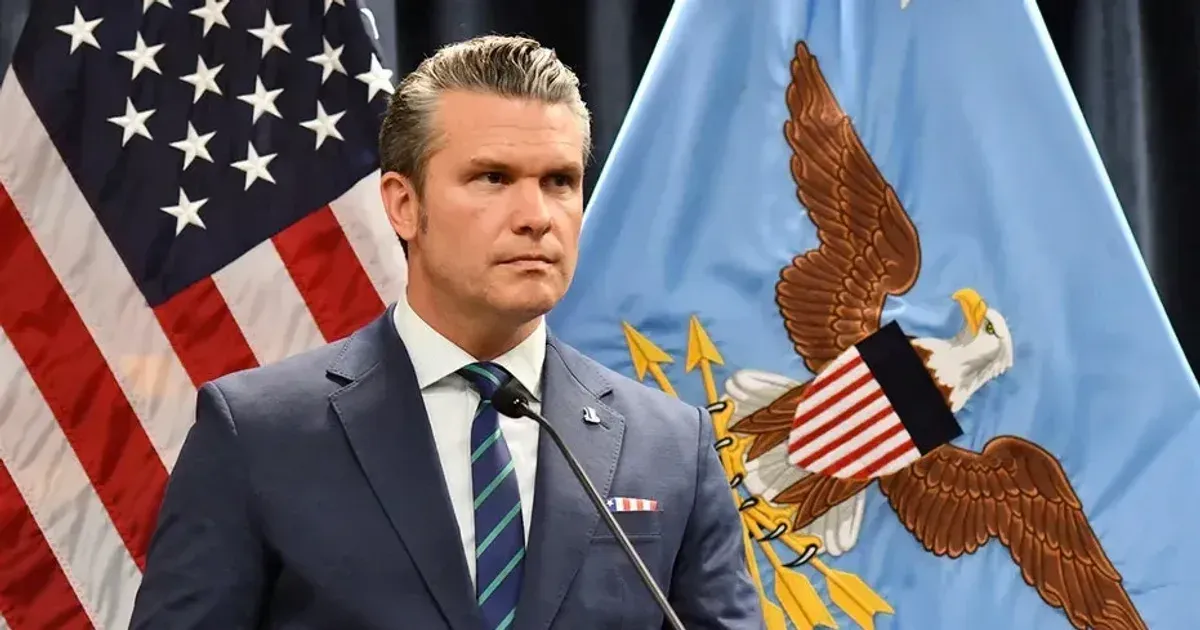
Defense Secretary Pete Hegseth informed reporters Friday morning that the recently appointed Iranian supreme leader suffered significant injuries during the opening stages of the current conflict. Hegseth described Mojtaba Khamenei as wounded and likely disfigured. These remarks represent the first public assessment from the Pentagon regarding the physical condition of the man who succeeded his father, Ali Khamenei. The elder Khamenei was killed shortly after hostilities commenced between the United States and the Islamic Republic earlier this year. The remarks were reported on March 13, 2026, as Washington assessed Iran's succession crisis after the strikes. Intelligence reports suggest the Iranian high command has retreated to fortified subterranean locations to avoid ongoing aerial strikes. Hegseth categorized this move as a desperate attempt to survive while the U.S. military continues to dismantle the regime's infrastructure. In fact, the Defense Secretary used harsh rhetoric to describe the situation, comparing the Iranian leadership to rats cowering underground. He noted that the transition of power occurred under extreme duress without the traditional ceremonies associated with the office.
Washington officials have been monitoring the lack of visual evidence regarding the new leader's presence. Since taking the title, Mojtaba Khamenei has not appeared in any video broadcasts or photographs released by state media. But a written statement attributed to him was issued on Thursday, vowing revenge against the United States and Israel for the ongoing campaign. Hegseth explicitly pointed to the absence of audio or video as proof that the leader is physically incapable of presenting himself to the public.
Hegseth Turns Intelligence Into Politics
Military analysts in Washington believe the injuries occurred during a targeted strike on a command-and-control center in Tehran. While the Pentagon did not confirm the exact weapon system used, the damage to the facility was extensive enough to suggest high-value personnel were caught in the blast. Separately, Pete Hegseth told the press briefing that Iran possesses ample supplies of cameras and recording equipment. He argued that the reliance on a text-only statement indicates a severe physical or psychological impairment that the regime is desperate to hide. Still, the lack of a visible figurehead creates a logistical nightmare for any potential diplomatic outreach. President Trump recently spoke with G7 leaders in a virtual meeting to discuss the volatility of the situation. According to sources familiar with the call, Trump expressed doubt about the stability of the Iranian chain of command. He told the international partners that nobody truly knows who is in charge of the country right now.
Iran's leadership is in no better shape, desperate and hiding. They've gone underground, cowering. That's what rats do. We know the new so-called not-so-supreme leader is wounded and likely disfigured.
White House officials suggested that the current vacuum of leadership makes it nearly impossible to negotiate terms. If the supreme leader cannot be seen or heard, the military commanders on the ground may be operating without a unified strategy. To that end, the Pentagon continues to move forward with a plan to disable all meaningful military capabilities across the region. Hegseth insisted the pace of the destruction is unlike anything the world has seen in previous modern conflicts.
Succession Uncertainty Deepens in Tehran
Destruction of the Iranian defense industrial base remains the primary objective of the current American air campaign. Hegseth outlined a checklist of targets that have already been engaged or are scheduled for imminent strikes. These include missile production facilities, long-range launchers, and the headquarters of the Islamic Revolutionary Guard Corps. In particular, the U.S. Navy has moved to deny Iran any ability to operate in the Persian Gulf or the Strait of Hormuz. By contrast, the Iranian response has been limited to decentralized proxy attacks and sporadic missile fire that has largely been intercepted. The loss of Ali Khamenei stripped the regime of its most potent unifying symbol, leaving Mojtaba to inherit a collapsing state. For one, the younger Khamenei lacks the revolutionary credentials of his father. His legitimacy was already under fire within Tehran political circles before the first bombs fell on the capital.
And the military pressure is only expected to increase. Hegseth stated that all Iranian defense companies will eventually be destroyed to ensure the regime cannot reconstitute its forces. This assessment matches private briefings given to Congressional leaders regarding the total neutralization of Iran's nuclear ambitions. Planners are currently focusing on the hardened sites that house enrichment centrifuges and research laboratories deep within mountain ranges.
Pentagon Costs Enter the Argument
Tehran is currently a city of whispers and conflicting orders. Separately, rumors of sleeper cells operating in North America and Europe have kept domestic security agencies on high alert. The Trump administration warned that regime operators might attempt to launch retaliatory strikes against civilian targets to compensate for their battlefield losses. Canada has faced specific accusations from Washington regarding its role in harboring individuals with ties to the Iranian intelligence apparatus. Even so, the primary focus remains the kinetic operations inside Iran itself.
Iranian state television continues to play patriotic music and archival footage of the late Ali Khamenei to maintain a facade of continuity. Yet the public is increasingly aware of the discrepancies between the official narrative and the reality of the war. For instance, the absence of any live address from Mojtaba has led to widespread speculation among the Iranian populace regarding his survival. The regime is fighting a two-front war against external military might and internal psychological erosion.
Costs for the military intervention have surged during the first week of active combat. A report provided during a closed-door Congressional hearing estimated the price tag at $11.3 billion for the first six days alone. This figure includes the expenditure of high-precision munitions, fuel for carrier-based aircraft, and the deployment of additional carrier strike groups to the region. To that end, the Pentagon has requested emergency funding to maintain the current operational tempo. Fiscal conservatives in Washington have raised questions about the long-term sustainability of such a high-intensity conflict. But the administration maintains that a swift, overwhelming victory will be less expensive than a protracted standoff with a nuclear-armed adversary. Hegseth argued that the investment is necessary to achieve the military objectives laid out on day one of the war. These objectives include the total denial of nuclear weapons and the destruction of the Iranian navy.
This vacuum of visible power in Tehran serves the U.S. narrative that the regime is on the verge of collapse. If the leader is indeed disfigured, he cannot serve as the face of the resistance the regime hoped to inspire. Military planners believe that by removing the visual and auditory presence of the supreme leader, they have effectively decapitated the ideological head of the state. The war continues at a pace that suggests the final industrial targets will be neutralized within weeks.
War Claims Need Evidence
Decapitation strikes are a messy business that rarely result in the clean surgical finish promised by defense contractors. By wounding Mojtaba Khamenei and leaving him in a state described as disfigured, the United States may have inadvertently created a ghost-leader who is more dangerous than a living one. A leader who cannot be seen or heard is a leader who cannot be forced to sign a surrender document. Washington is currently patting itself on the back for a high-tech demolition of Tehran's infrastructure, yet it ignores the reality that a faceless enemy is impossible to negotiate with.
We are essentially bombing a country into a state of permanent anarchy while bragging about the budget-to-destruction ratio. Hegseth's rhetoric about rats and cowering underground is intended for a domestic audience hungry for a show of strength, but it does nothing to address the long-term security of the region. If the goal was to stop a nuclear program, total destruction of the industrial base might work, but it leaves behind a vacuum that will be filled by something far more radical than a wounded cleric.
Such a war is being treated like a live-fire exercise for our missile tech rather than a strategic geopolitical move.