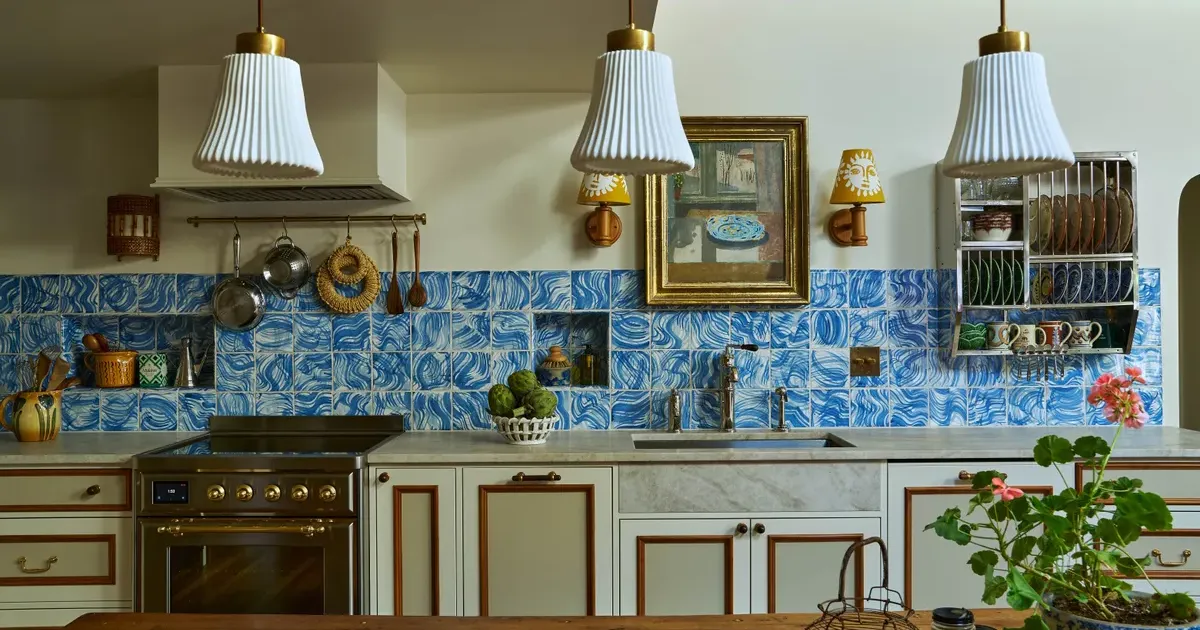
Homeowners are moving away from catalog-neutral interiors and toward architecture that carries personal history and spatial memory. The renovation trend stood out on March 11, 2026.
Homes Become Personal Infrastructure
Seattle streets often mirror the national struggle for space where families must choose between suburban sprawl and urban confinement. Charlotte and Adam Aljets bought their 1908 craftsman in 2013 for just over $400,000, fully aware that their growing family would eventually outpace the square footage. Instead of moving to a larger lot, they invested $605,000 into a surgical expansion that nearly doubled their initial purchase price. Money alone did not drive this decision. Proximity to coffee shops, the local library, and a water taxi commute for Adam made the West Seattle location indispensable. Their realtor originally doubted the house made sense for a large family, yet the couple saw a vision for a long-term residence that could evolve alongside their children.
Homeowners kept choosing story and stability over generic resale logic, turning renovation into a way to preserve memory as much as square footage.
Architects at Wittman Estes managed the transformation by adding a two-story volume to the small lot. Four children, Elias, Henry, Noel, and Elsie, had outgrown the backyard and the single upstairs bathroom. Remote work forced Adam into a corner of the bedroom, creating an environment where the family felt squeezed. To regain the home's original dignity, the design team reinstated historical features like brackets under the eaves and used Hardie-Lap siding. They selected Oxford White and Tricorn Black paints to replicate the 1908 aesthetic while modernizing the interior flow. A large bay window now opens to a refreshed backyard, allowing the children space for whiffle ball and tag.
The math of the modern renovation rarely favors the faint of heart. Investing over half a million dollars into a century-old cottage highlights a growing trend in 2026. Families are prioritizing stability and community over the speculative gains of rapid property flipping. Such projects require a meticulous balance of preservation and innovation.
Aging in Place Gets a Warmer Blueprint
By focusing on the lost character of the front facade, the Aljets family preserved the neighborhood's visual history while carving out a private sanctuary for six people. Ghent offers a different perspective on the longevity of the home. In Belgium, FELT Architecture and Design recently completed a single-story residence specifically for a retired couple. The goal was aging in place with autonomy and spatial comfort. Rather than following traditional residential layouts, the plan organizes around alternating served and servant spaces. These modules support everyday routines while anticipating future care needs.
The design avoids the clinical atmosphere of most elderly housing, focusing instead on material richness and warmth. Exposed Cross Laminated Timber (CLT) clusters frame the gable residence and organize the floor plan. These towering wooden structures do more than provide support. They act as sculptural chimneys that pull light into the depth of the home from various orientations. Materiality plays a central role in the experience of moving through the space, where the rhythm of the timber frames creates a sense of order. A sleeping loft for visiting grandchildren is nestled into the volume, ensuring the house remains a multi-generational hub rather than a static retirement pod.
Wood becomes the silent witness to the family's change and growth. Belgium's approach to CLT demonstrates how modern materials can enable dignified aging. Unlike the Seattle project, which focused on expansion for density, the Ghent home focuses on the efficiency of movement. Accessible thresholds and wide corridors ensure that the homeowners can remain in their community even as their mobility changes.
Antiques Push Back Against Disposable Design
Architects are currently peddling the delusion that we can build our way out of mortality. While these high-concept renovations in Seattle and Ghent are aesthetically pleasing, they mask a deeper anxiety about the collapse of the traditional social safety net. We are spending hundreds of thousands of dollars to turn our private homes into fortresses of self-sufficiency because we no longer trust public institutions to care for our elderly or provide affordable housing for our families. The Aljets family spent $605,000 to stay in a neighborhood they love, a sum that would have bought an entire mansion in many parts of the country two decades ago. This is not just a lifestyle choice. It is a desperate bid for permanence in an increasingly volatile real estate market.
We celebrate the beauty of CLT timber and the charm of a confessional pantry, but we ignore the fact that these are luxury solutions to systemic problems. Narrative architecture is the new status symbol for the upper-middle class, a way to signal that one has the resources to ignore the outside world. If the only way to age with dignity is to build a custom CLT light-well, then the future of housing is a bleak, privatized wasteland for everyone else.