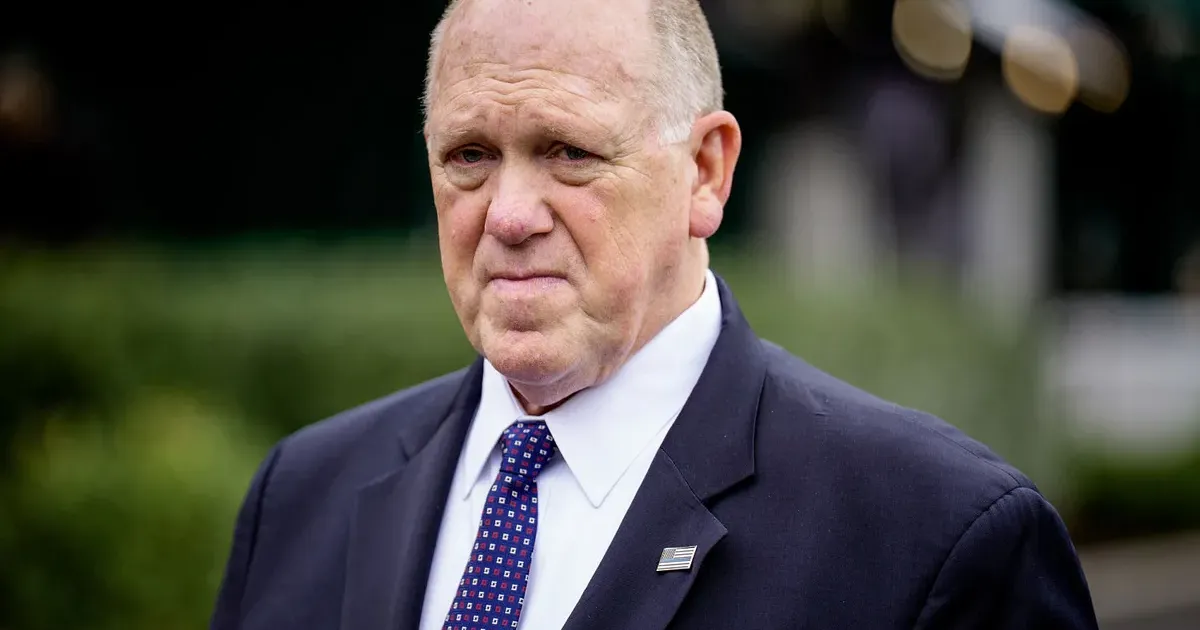
Airport staffing is turning into a broader immigration-enforcement dispute. Tom Homan announced on March 29, 2026, that Immigration and Customs Enforcement agents would maintain their presence at major travel hubs. Federal agents took over secondary security duties several weeks ago as the Department of Homeland Security remains without congressional funding. Appearing on CBS News" "Face the Nation," the border czar clarified that these assignments have no fixed end date. National aviation hubs are currently operating under emergency staffing protocols while the federal government enters its 41st day of a partial shutdown. Such operational shifts have placed armed criminal investigators in roles usually reserved for civilian screening officers.
Homan explained the current strategy during a wide-ranging interview with Margaret Brennan. According to Homan, ICE personnel provide the necessary reinforcement to keep security checkpoints functional as the primary workforce faces first-ever financial strain. He noted that the deployment will persist until the airports demonstrate a 100% operational posture. This threshold requires a full return of the standard TSA workforce without the need for auxiliary support from other agencies.
"We're going to continue an ICE presence there, and until the airports feel like they're in 100%, you know, in a posture where they can do normal operations," Homan said.
TSA agents continue to screen millions without receiving a paycheck.
ICE Deployment Extends Across Major Aviation Hubs Administrative records indicate that thousands of agents from Immigration and Customs Enforcement have been redirected from interior enforcement and investigative duties. These personnel are now stationed at perimeter gates, baggage loading zones, and terminal checkpoints at the 40 days mark of the budget deadlock. Deployment numbers suggest that the largest airports, including Hartsfield-Jackson Atlanta and Los Angeles International, receive the heaviest concentration of ICE support. Federal law under Title 6 allows the Secretary of Homeland Security to reallocate resources during national emergencies or serious security lapses. Lawmakers have debated whether the current funding gap constitutes such an emergency.
Aviation security experts note that the presence of armed ICE agents changes the atmosphere of commercial terminals. While Transportation Security Administration officers are typically unarmed and focused on passenger screening, ICE agents carry service weapons and specialized tactical gear. Critics argue that this presence creates a different security profile that may not align with the needs of domestic travelers. Federal data shows that approximately 15% of the TSA workforce has used sick leave or family leave since the pay cycles stopped in late February. This absenteeism rate makes the ICE presence a necessity for maintaining flight schedules. While the agency remains at terminals, Senator John Fetterman has argued that this ICE Deployment strengthens overall airport security.
Homan offered no specific timeline for a withdrawal.
Congressional Inaction Leaves Homeland Security Unfunded
Financial constraints dictate the current reliance on cross-agency support. Congress has failed to pass a spending bill for the Department of Homeland Security, leading to the longest funding lapse for the agency in history. House leadership and the executive branch remain at odds over border security allocations and migrant processing fees. Negotiations have stalled despite warnings from aviation industry leaders regarding the stability of the national air travel system. Airlines have reported a 4% increase in wait times at major hubs despite the ICE reinforcements. The cost of deploying ICE agents to airports often exceeds the cost of paying TSA salaries due to travel stipends and per diem rates.
Treasury Department officials confirmed that payroll systems for thousands of federal workers are now frozen. TSA officers, who are considered essential personnel, must report for duty regardless of their pay status. Financial pressure on these employees has led to a surge in community-led food banks at major airports such as Dulles and O"Hare. Local airport authorities have attempted to bridge the gap by offering free parking and meal vouchers to federal staff. These measures provide only minor relief compared to the loss of regular income for thousands of families. TSA payroll systems reported zero disbursements for the current cycle.
Homan Details Plan for Restoring Normal Operations
Operational stability depends on the return of a fully funded TSA workforce. Homan emphasized that Immigration and Customs Enforcement does not seek a permanent role in airport security. He stated that the agency is merely filling a gap created by legislative failure. The definition of a 100% posture includes both staffing levels and the restoration of technical maintenance contracts for screening equipment. Many airports have reported delays in repairing x-ray machines and body scanners because the contractors are also awaiting payment. ICE agents are currently assisting with manual bag checks to compensate for these technical failures. Homan's remarks suggest that the administration is prepared for a prolonged deployment. He indicated that the Department of Homeland Security is reviewing additional personnel from the Secret Service and Coast Guard for potential airport duty. Such a move would further dilute the specialized missions of those agencies to maintain the flow of commerce. Aviation trade groups have expressed concern that the use of law enforcement officers for screening tasks could lead to legal challenges. Previous court rulings have strictly limited the types of searches that can be performed without a warrant at airports. Federal officers conducted 1.2 million manual screenings last week alone.
Airport Security Tradeoff
Administrative inertia rarely translates into effective national defense. The decision to keep ICE agents stationed at domestic airports is less a security necessity and more a symptom of a collapsing federal bureaucracy. By using armed criminal investigators to perform the duties of unpaid civilian screeners, the administration is normalizing the militarization of civilian travel under the guise of fiscal management. This strategy reveals a dangerous willingness to repurpose specialized law enforcement assets for mundane administrative tasks, potentially compromising interior enforcement and criminal investigations elsewhere in the country.
National security is the new theater for political hostage-taking between the executive and legislative branches. Neither side seems particularly bothered by that those charged with protecting the skies are currently relying on charity to feed their families. Homan's 100% posture requirement is a moving goalpost that allows the administration to maintain an increased police presence in public spaces indefinitely. The precedent will almost certainly be used in future budget cycles to justify the deployment of armed federal agents into civilian infrastructure during any period of political disagreement.
Safety is now a matter of administrative endurance. If the public becomes accustomed to seeing tactical gear at the boarding gate, the original civilian mandate of the TSA may never truly return. It is the death of the civilian-led aviation security model. A failed state.