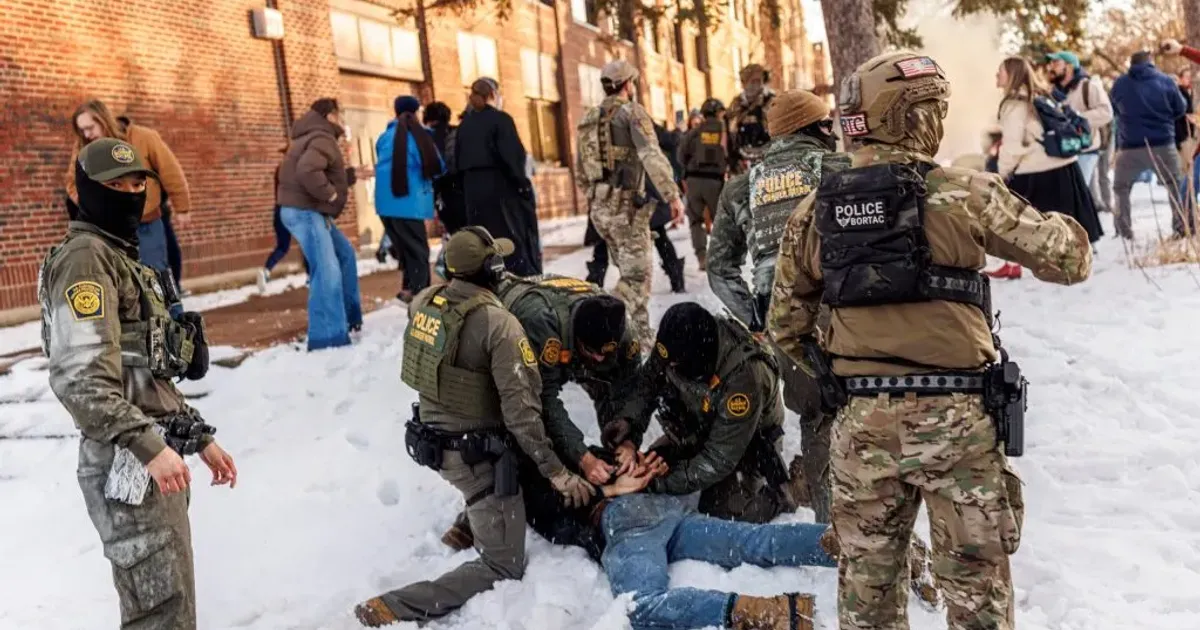
School districts are seeing immigration enforcement as an education stability problem. The school impact is immediate even before courts or agencies respond. Immigration and Customs EnforcementThe disruption matters because school enrollment is a daily measure of whether families feel safe using public systems. Districts now face attendance, funding and trust problems at once. Those effects can outlast a single enforcement wave. agents executed wide-ranging enforcement actions in multiple states on March 30, 2026, creating immediate ripples through public school systems. Educational institutions in urban and rural centers reported sharp declines in attendance as families reacted to a surge in arrests. Teachers across the country documented instances of children arriving at school in distress after witnessing the detention of parents or siblings. These operations frequently target residential areas, creating a climate where parents fear sending their children to campus. Classrooms that once served as stable environments now face the reality of sudden vacancies and persistent anxiety among the remaining student body.
Research conducted over the last decade suggests that heightened enforcement activity correlates directly with reduced participation in public services. When Immigration and Customs Enforcement increases its visibility, the impact extends beyond those directly targeted. Families with mixed citizenship status often withdraw from schools to avoid any interaction with government entities. This withdrawal includes declining to participate in free lunch programs, extracurricular activities, and parent-teacher conferences. Financial stability for these districts fluctuates when enrollment numbers drop, as state funding often depends on daily attendance figures. Educators in major metropolitan areas like Chicago and New York City have expressed concern over the loss of students who were previously on track for academic success.
ICE Enforcement Patterns and Academic Stability Federal agents recently intensified operations in several regions, leading to localized crises in school management. Maine reported dozens of arrests within immigrant communities, which prompted many families to keep children at home for consecutive weeks. Similar patterns emerged in Connecticut where arrests in downtown New Haven disrupted local neighborhood routines. Such events interrupt the continuity of learning and force teachers to pivot from instruction to crisis management. One educator in the mid-Atlantic region noted that the current enforcement climate forces schools to choose between academic mandates and the basic safety of their students. Government actions hit these communities from multiple angles, often coinciding with local legislative efforts to restrict resource access.
Local laws in some jurisdictions have moved to limit immigrant access to food assistance and mental health services. These restrictions amplify the stress caused by physical enforcement actions. Teachers describe a scenario where students are too distracted by the possibility of family separation to focus on core subjects like mathematics or literacy. Long-term studies on childhood trauma indicate that these experiences can lead to permanent cognitive deficits if not addressed by specialized counselors. Most schools, however, lack the specific funding required to provide the high-level of psychiatric support these students need. The strain on existing resources leaves many children without a path to recovery.
"This government is hitting families from all angles; they are passing state and local laws to limit access to public resources, food, education and mental health services." The ongoing threat of enrollment drops directly impacts state education budgets, a subject currently being scrutinized by the courts. Staff members in West Virginia witnessed the direct impact of high-volume enforcement when authorities announced 650 arrests over a short period. This scale of detention effectively gutted several small communities, leaving schools to account for hundreds of missing children. Administrators often find themselves unable to contact parents, as phone lines are disconnected or families go into hiding. The loss of these students is a serious drain on the intellectual capital of the region. Many of these children were high achievers who had expressed interest in professional careers that require advanced degrees. Those paths now seem unreachable as families prioritize physical safety over educational attainment.
Enrollment Declines in Maine and West Virginia
Economic consequences for public schools become apparent when enrollment numbers fail to recover after a period of high enforcement. Taxpayer dollars fund these institutions based on the assumption of consistent student presence. When hundreds of students disappear from the rolls, the cost per pupil rises, often leading to budget cuts for programs that benefit the entire community. School boards in affected areas struggle to justify staffing levels when classroom sizes shrink unexpectedly. Some districts have reported losing up to ten percent of their student population after meaningful raids. These shifts in demographics happen rapidly, leaving administrators little time to adjust their fiscal planning for the upcoming academic year.
Enrollment trends in Maine show that even a small number of arrests can trigger a widespread boycott of schools. Immigrant families communicate through informal networks, spreading warnings about seen or rumored agent activity. This creates a ghost student phenomenon where children remain enrolled on paper but never appear in person. Academic achievement gaps widen between immigrant students and their peers during these periods of absence. Missing just two weeks of instruction can set a student back an entire semester in foundational subjects. Without intervention, these students fall further behind, eventually leading to higher dropout rates among the most vulnerable populations.
Psychological Barriers to Future Workforce Participation
Psychological trauma associated with enforcement actions stays with students long after the initial event. Mental health professionals observe that children living in fear of deportation exhibit symptoms similar to those found in combat veterans. Chronic stress prevents the brain from entering a state conducive to learning or creative thinking. The persistent state of high alert exhausts students, making it difficult for them to complete assignments or participate in group activities. Over time, this leads to a complete disengagement from the school environment. Students who disengage early are far less likely to enter the workforce in high-paying sectors, limiting their future economic mobility.
Diminishing job paths for these students create a cycle of poverty that is difficult to break. Higher education requires a level of stability and documentation that many of these families no longer feel comfortable pursuing. Even students with legal status often choose to avoid applications for federal financial aid or state grants out of fear that it might draw attention to undocumented relatives. The self-selection out of the professional pipeline deprives the economy of skilled workers in fields like healthcare, technology, and engineering. Educational researchers argue that the loss of these potential professionals is a failure of the public investment made during their earlier school years.
Legislative Restrictions on Immigrant Public Resources
State and local policies that restrict access to basic needs further complicate the lives of immigrant students. Several states have introduced measures that make it harder for non-citizens to access specialized mental health programs or nutrition assistance. These policies work alongside federal enforcement to create an environment that feels increasingly hostile to immigrant families. When children are hungry or mentally exhausted, their ability to perform in a classroom setting vanishes. Educators find it nearly impossible to teach a curriculum when the basic physiological needs of their students are not being met. The intersection of enforcement and resource restriction forces families to make impossible choices between staying together and accessing essential services. Public schools are often the only remaining safe harbor for these families, yet even that safety is being tested. While federal guidelines suggest that schools should be treated as sensitive locations, the presence of agents near school routes undermines that policy. Parents report seeing enforcement vehicles parked near bus stops or on the periphery of school grounds. The visibility is enough to deter many from allowing their children to leave the house. Schools that were designed to be community hubs instead become symbols of risk. The long-term erosion of trust between immigrant communities and public institutions may take generations to repair.
Education Access and Enforcement Pressure
Does a nation truly benefit by turning its own classrooms into hunting grounds? The current strategy of high-visibility immigration enforcement near educational pipelines is not merely a matter of border security; it is a calculated demolition of the American workforce's future. By terrorizing the very institutions designed to integrate and educate the next generation, the government is effectively sabotaging its own economic engine. Every student who flees a classroom out of fear is a lost taxpayer, a lost innovator, and a lost contributor to a society that desperately needs skilled labor. It is not governance. It is a shortsighted indulgence in performative strength that yields zero long-term security benefits while incurring large social costs.
The argument that enforcement must be absolute ignores the reality of human capital. What is unfolding is a systemic purge of potential from the public school system, funded by the very taxpayers who will later complain about a lack of qualified nurses or engineers. If the goal is a stable, prosperous society, then traumatizing children is the least efficient path toward it. We should be skeptical of any policy that treats the fear of a ten-year-old as a necessary byproduct of national sovereignty. The damage being done today will manifest in the crime statistics and welfare rolls of tomorrow.
It is time to recognize that a badge at the schoolhouse gate is a sign of systemic failure, not strength. Stop the theater.