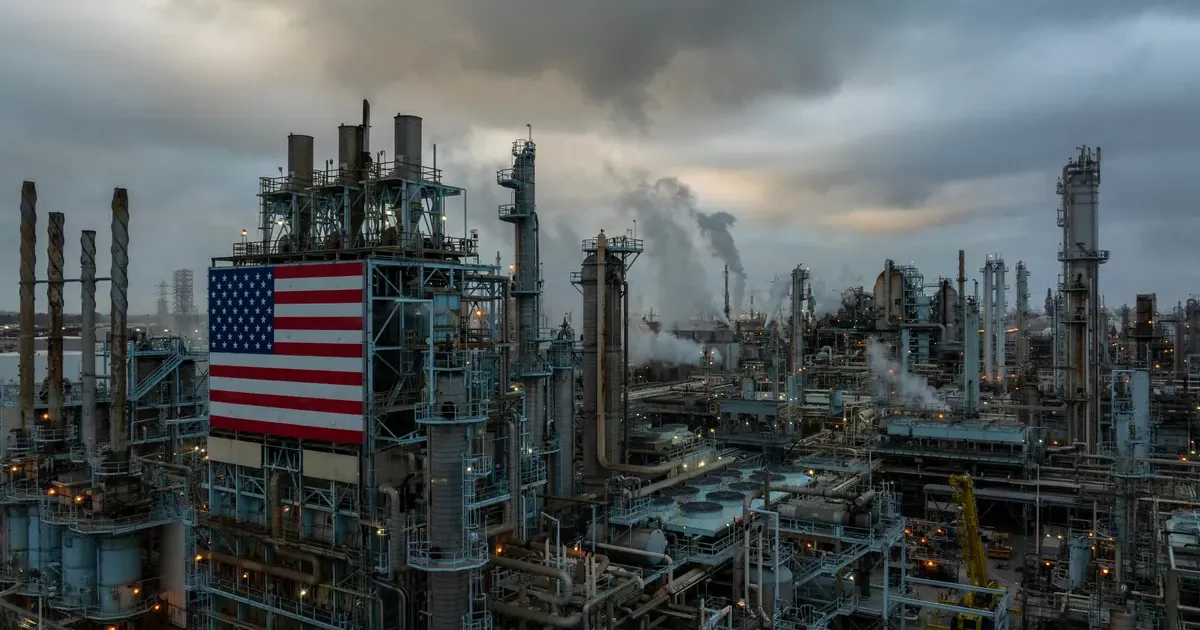
The IEA’s record oil release is meant to calm prices, but traders are still asking whether reserves can replace secure shipping lanes.
IEA Plays Its Biggest Reserve Card
Paris officials authorized a massive dump of crude oil into global markets Wednesday morning. Fatih Birol, executive director of the International Energy Agency, stood before cameras to confirm 400 million barrels will flow from strategic stockpiles. The release was approved on March 11, 2026, as governments tried to slow the inflationary shock from the Iran war. It is a desperate attempt to stabilize a global economy reeling from conflict in the Middle East. Birol noted that the scale of current challenges necessitated an emergency response of unprecedented magnitude. Member countries across the 31-nation bloc agreed to the measure with rare speed. While the headline number sounds significant, traders remain unconvinced that flooding the market with physical crude released from government reserves will solve the underlying supply vacuum created by the Iran war. Brent crude prices reacted with characteristic volatility. Instead of dropping on news of the record release, the global benchmark climbed back above $90 per barrel. Investors seem more focused on the physical reality of the Strait of Hormuz than the theoretical buffer of government reserves. That narrow waterway facilitates 20% of the world's daily oil consumption. With Iranian forces threatening to choke off traffic, a one-time release of 400 million barrels offers only temporary relief. Energy analysts at Goldman Sachs and Morgan Stanley suggest the market requires a permanent restoration of supply routes rather than a tap into emergency savings accounts. Speculators are betting that the IEA is playing its final card too early in a conflict that shows no signs of a quick resolution. The math simply does not add up. Four hundred million barrels represents the largest collective action in the history of the IEA. Yet, when compared to the 20 million barrels that traverse the Persian Gulf daily, the math feels precarious. If the blockade persists for more than three weeks, the entire 400-million-barrel release would be consumed just to fill the gap. This release is a calculated gamble by Western powers to prevent a global recession. But the gamble relies on the assumption that the war in Iran will be short-lived.
Markets Doubt the Release Can Hold
If the conflict stretches into the summer of 2026, the strategic reserves of major economies like the United States, Japan, and Germany will reach dangerously low levels. Depleting these reserves now leaves the West vulnerable to a secondary shock later in the year. Domestic politics in Washington likely influenced the timing of this announcement. Gasoline prices creeping toward $6 a gallon in several swing states have turned the reserve release into an immediate political test for President Trump. High energy costs are a traditional killer of incumbent approval ratings.
President Trump faces mounting pressure as gasoline prices creep toward $6 a gallon in several swing states.
Marko Kolanovic, the former quant chief at JPMorgan, observed in a recent post that the IEA move appears more like a favor to the White House than a genuine solution for the consumer. Kolanovic argues that reserve releases only delay the inevitable price discovery required to balance the market. By artificially suppressing prices today, the IEA might be discouraging the very demand destruction or production increases needed for long-term stability. This strategy assumes that the market will return to normalcy before the new supply runs dry. Member nations will release the crude according to their individual national circumstances.
In the United States, this means tapping into the Strategic Petroleum Reserve caverns in Louisiana and Texas. These facilities have already seen significant drawdowns over the past four years. Some technical experts worry about the physical integrity of the salt caverns if they are cycled too frequently. Beyond the US, Japan and South Korea are expected to release significant volumes from their coastal tank farms. Logistics remain a significant hurdle.
Moving 400 million barrels of oil into a global refining system that is already running at near-maximum capacity takes time. It is not as simple as turning on a faucet; the crude must be auctioned, transported, and refined into gasoline and diesel. Stability remains an expensive fantasy. Historical precedents for such massive interventions are mixed.
Logistics Limit the Price Relief
During the 1991 Gulf War and the 2022 invasion of Ukraine, similar releases provided only momentary price dips. In both cases, the market eventually realized that government reserves are finite. Once those reserves are spent, the floor underneath oil prices often falls away. Current market data suggests that traders are looking past the headline number and focusing on the depletion of global spare capacity. Without new drilling or a cessation of hostilities in the Middle East, the structural deficit remains.
Financial institutions are warning clients that the risk of a move toward $120 per barrel persists despite the IEA's intervention. This tension between government policy and market physics creates a dangerous environment for global trade. Europe feels the pressure more acutely than North America. Most European economies depend heavily on imported crude and have less domestic production to fall back on. In Berlin and London, the focus is on preventing an industrial slowdown.
High energy prices drive up the cost of manufacturing and shipping, fueling an inflationary spiral that central banks are struggling to contain. The IEA action is intended to signal unity among Western allies. If even one major member country had objected, the plan could have collapsed, revealing cracks in the coalition against Iranian aggression. Birol emphasized that the collective response demonstrates a shared commitment to global energy security. But diplomatic unity does not always translate into lower prices at the pump.
Traders in London and New York are also monitoring the reaction from OPEC+. The cartel, led by Saudi Arabia and Russia, has so far refused to increase production to offset the Iranian disruption.
Why Reserves Cannot Replace Security
Energy security is a polite euphemism for political survival. The IEA's decision to dump 400 million barrels of crude into a burning market is less an act of economic stewardship and more an act of pure desperation. We are watching the architects of the global energy order realize they have no useful levers left. By depleting the world's primary insurance policy against a total energy collapse, Fatih Birol and his colleagues are leaving the global economy naked for whatever comes next. If the Strait of Hormuz remains a graveyard for tankers, no amount of salt-cavern crude will save the suburban commuter or the trans-Atlantic shipping line.
It is a political band-aid applied to a sucking chest wound. The public should be outraged that their long-term security is being sacrificed for a temporary, and likely futile, attempt to manage a news cycle. We should stop pretending that these bureaucratic maneuvers can override the hard reality of a supply chain broken by war. If the West wants lower oil prices, it needs a strategy to end the conflict or secure the waterways, not a fire sale of its emergency pantry. Anything else is a dangerous delusion that will only make the eventual reckoning more painful for everyone involved.