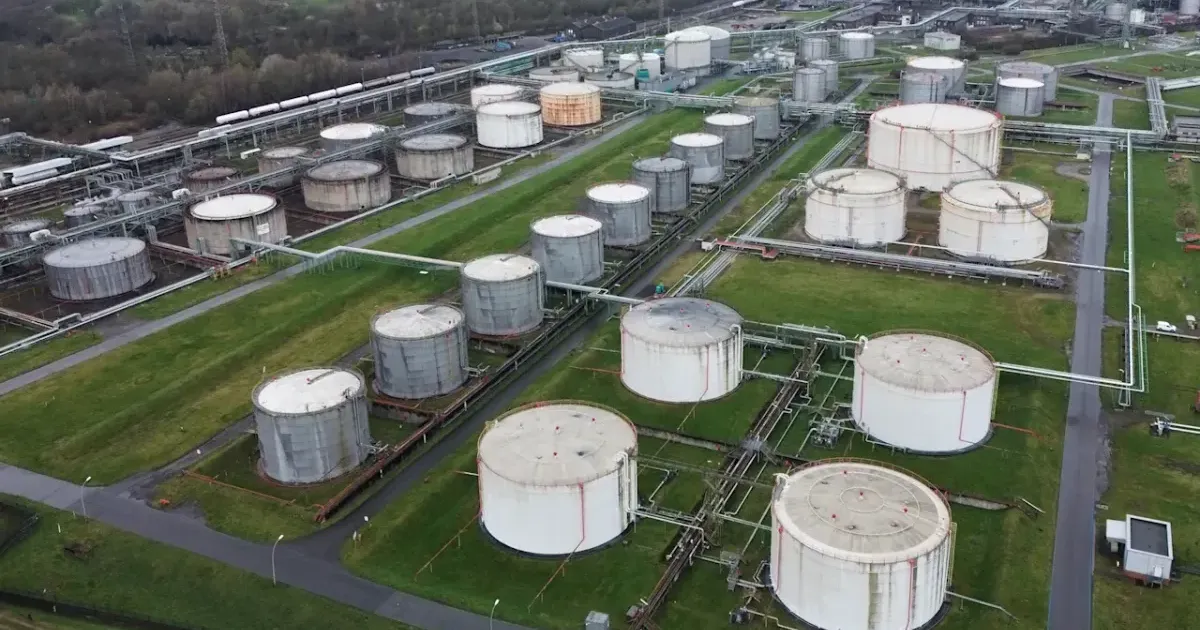
The IEA’s planned reserve release shows how quickly the Iran oil shock has moved from market stress to a global emergency lever. The timeline was current as of March 11, 2026.
The IEA’s planned 400 million-barrel release shows how quickly the Iran oil shock has become a global emergency lever.
Emergency Barrels Target the Price Shock
A disruption around the world's most important energy artery has pushed global markets into a crisis that eclipses the supply disruptions of the previous decade. Ships remain anchored outside the Persian Gulf, fearful of Iranian missile strikes that have already gutted export volumes to less than a tenth of their prewar capacity. International Energy Agency officials announced Wednesday they will flood the market with 400 million barrels of crude. Fatih Birol, the agency's executive director, called it a major action to blunt the immediate trauma of a 20% reduction in global energy supply. Washington and Jerusalem continued their exchange of fire with Iranian forces, a conflict that has transformed the Strait of Hormuz from a transit point into a graveyard for commercial shipping. About a fifth of all global oil once passed through this narrow passage. Now, that flow has slowed to a trickle. Iran is not just defending its borders but actively hunting tankers and striking refineries in neighboring Gulf Arab states. This strategy seeks to squeeze the global economy until the political cost of supporting military action against Tehran becomes unbearable for Western leaders. Markets are reacting with a mixture of desperation and skepticism. Member countries of the IEA agreed to the largest reserve release in the organization's history, doubling the volume of the 2022 intervention during the invasion of Ukraine. While 400 million barrels sounds like an insurmountable wall of oil, it is a temporary bandage on a deep structural wound. Birol warned that the most important factor for stability remains the resumption of transit through the Strait of Hormuz.
Hormuz Risk Is a Logistics Problem
Without that opening, no amount of stockpiled oil can permanently stabilize a global economy designed for continuous flow. Natural gas markets face even more dire constraints. Asian nations find themselves at the end of a broken supply chain, unable to secure liquefied natural gas cargoes from Qatar or the United Arab Emirates. There are few options to replace these missing shipments.
Global energy supply has plummeted by a fifth, leaving manufacturers in Japan and South Korea facing rolling blackouts and surging operational costs. The IEA action focuses on crude, yet the gas shortage may prove to be the more intractable problem for the global North. The logic of energy security is shifting daily. Nathan Sheets, global chief economist at Citi Research, views the situation through a lens of persistent inflationary pressure.
Headline inflation in the United States could climb by half a percentage point in the coming months solely because of energy costs. Such a jump threatens to derail central bank efforts to achieve a soft landing for the economy. Sheets noted that while core inflation might remain insulated for a brief window, the sheer weight of gasoline and heating costs eventually bleeds into every sector of the consumer economy. American families already feel the strain at the pump.
High energy prices act as a regressive tax, hitting low-income households with the greatest force.
Inflation Pressure Moves Beyond Energy
This assumes the geopolitical friction does not escalate further, a gamble that many analysts are unwilling to take. If the Strait remains closed through the summer, the half point rise in inflation predicted by Citi might be an optimistic floor rather than a ceiling. Angie Gildea, the global head of oil and gas at KPMG, argues that releasing barrels is only a temporary fix. She believes we are in a period where traditional market mechanics are failing to account for the physical impossibility of moving product.
Releasing reserves works when there is a short-term dip in production, but it cannot compensate for the total closure of the world's most significant maritime choke point. Options are narrowing for policymakers as the conflict enters its second month. Latin American producers see a rare, if grim, opportunity in the current chaos. High oil prices historically benefit nations like Brazil, Guyana, and Mexico, which are far removed from the direct theater of war.
These countries are stepping in to fill the vacuum left by the Persian Gulf. Revenue from state-owned oil companies in the region is expected to swell, providing a fiscal cushion that was absent during the low price cycles of the early 2020s. Juan Pablo Spinetto, a Bloomberg Opinion columnist, points out that this oil shock is not universally catastrophic for emerging markets. Guyana, in particular, has seen its production capacity grow at a rate that allows it to capture significant market share.
Reserve Releases Buy Time, Not Security
Can a hundred million barrels of oil win a war or stop a missile? The answer, clearly, is no. The IEA's decision to drain its emergency tanks is a confession of strategic impotence, not a display of strength. We have built a global civilization on the delusion of frictionless energy, ignoring the fact that the entire system depends on a handful of miles of water that Tehran can turn into a kill zone at any moment. This massive infusion of crude will satisfy the spreadsheets for a few weeks, but it does nothing to address the reality that Western energy security is a house of cards.
Policymakers continue to treat this as a pricing problem when it is actually a physical logistics catastrophe. They are obsessed with the half percentage point on a CPI report while the Persian Gulf turns into a no-go zone. If the United States and its allies cannot secure the Strait of Hormuz, then the 400 million barrels are just a very expensive way to delay the inevitable. This is the end of an era where energy was a given. Such a conflict proves that unless you can protect the route, you do not own the resource. The coming economic contraction will be the price paid for decades of geopolitical complacency and the naive belief that global trade is a natural law rather than a military privilege.