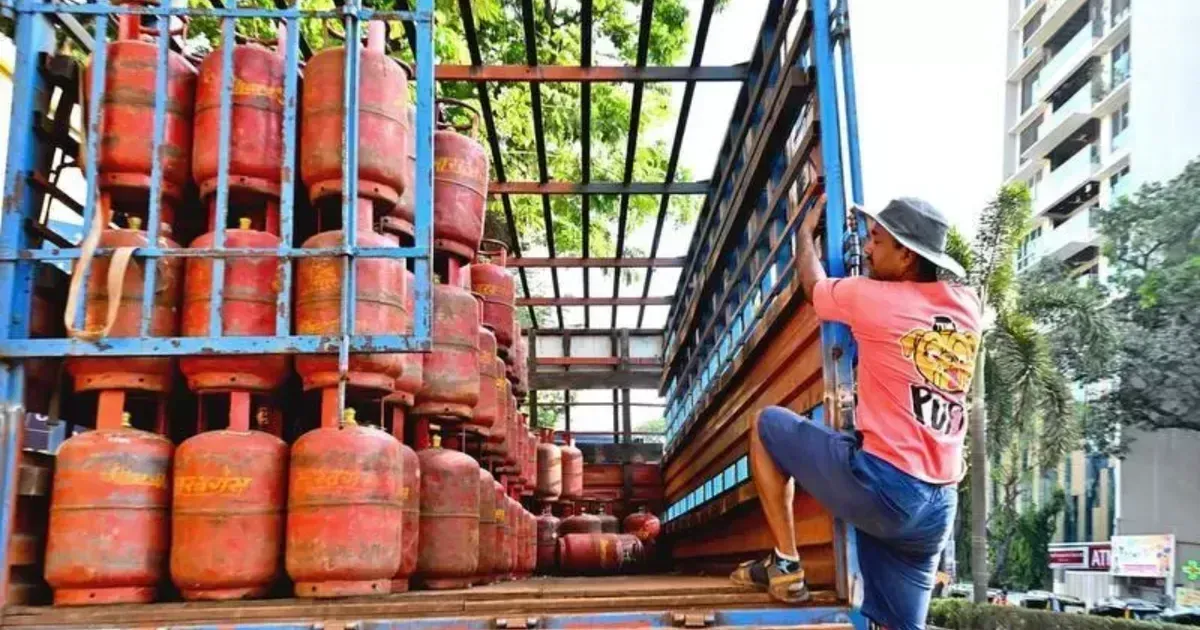
LPG Shortage Hits Indian Cities
Bengaluru’s sprawling tech parks usually hum with the sound of thousands of coders descending upon food courts at noon. Today, the aroma of tempering spices and the roar of industrial burners are noticeably absent. Infosys and HCLTech, two pillars of India’s outsourcing empire, issued urgent advisories this week to staff across major hubs as a nationwide tightening of liquefied petroleum gas (LPG) supplies paralyzed industrial kitchens. While the tech giants grapple with cafeteria logistics, the crisis has already reached the very bottom of the urban economic ladder, where Mumbai’s street vendors are being forced to shutter their stalls or risk ruin in the black market. By March 13, 2026, the LPG disruption had moved from household inconvenience into a wider urban supply-chain issue.
Infosys executives recently communicated significant changes to operations at their campuses in Bengaluru, Pune, and Chennai. Management opted to alter food court menus to favor items that require less heat or alternative preparation methods. Standard hot meals, once a staple of the high-performance work culture, are being swapped for simpler fare. This disruption comes at a time when major Indian firms are aggressively pushing for a return to the physical office, making the sudden inability to provide basic infrastructure like cooked food a logistical embarrassment for HR departments.
HCLTech has taken more drastic measures in Chennai. Cafeteria vendors there informed the company that they could no longer guarantee consistent meal service due to the scarcity of commercial LPG cylinders. HCLTech responded by advising its employees to work from home, reversing months of corporate strategy focused on office-based collaboration. It is a rare admission that the physical constraints of the energy market can still dictate the terms of the digital economy.
Industrial kitchens in India’s IT hubs rely heavily on 19kg and 47.5kg commercial LPG cylinders. Unlike domestic users who receive subsidized gas, these businesses pay market rates and are the first to feel the squeeze when supply chains buckle. The current bottleneck appears to stem from a combination of refinery maintenance cycles and a sudden spike in global demand for liquefied natural gas alternatives.
Logistics providers in South India report that lead times for commercial refills have stretched from 24 hours to over 10 days. Varying food court menus is only a partial solution for a company the size of Infosys. Their campuses house tens of thousands of workers, and the shift to cold or microwave-ready meals puts immense pressure on a different part of the supply chain. Vendors must now source pre-cooked or processed foods, which carry higher costs and lower profit margins.
Restaurants and Tech Hubs Feel the Strain
Such a move protects the immediate needs of the staff, yet it exposes the fragility of the support systems that allow these tech citadels to function in isolation from the surrounding city. Mumbai tells a different, grittier story of the same energy deficit. In the financial capital, the vada pav and the samosa are not just snacks; they are the primary fuel for millions of commuters. Small-scale vendors who operate out of tiny stalls or carts lack the corporate safety net of an HCLTech or an Infosys.
They depend on daily turnover to survive. Reports from Dadar and Colaba indicate that many of these beloved institutions are disappearing from the streets. Some vendors have posted handwritten signs apologizing for the lack of fried goods, citing the lack of gas as the primary cause. Desperation has driven many small business owners toward the black market.
Illegal traders are reportedly selling commercial cylinders at a 40% premium over the official rate. Vendors face a grim choice: pay the ransom and raise prices for a working-class clientele that cannot afford it, or close their doors indefinitely. One vendor near Chhatrapati Shivaji Maharaj Terminus noted that his profit margins, already razor-thin due to general inflation, have completely evaporated. He now spends his mornings hunting for gas instead of prepping dough.
Illegal hoarding has exacerbated the situation. Authorities in Maharashtra have conducted raids on warehouses suspected of diverting domestic cylinders for commercial use, a practice that is both illegal and dangerous. This policy failure has created a shadow economy where energy goes to the highest bidder rather than where it is most needed for public stability. India’s dependence on energy imports remains a structural vulnerability that no amount of digital growth can mask.
About 90% of the nation's LPG consumption is met through imports, primarily from the Middle East. When global shipping routes face tension or when regional production dips, the ripple effect is felt almost instantly in the streets of Mumbai and the boardrooms of Bengaluru. The timing of this shortage is particularly difficult, coinciding with a period of high domestic demand for cooling and power generation as temperatures rise across the subcontinent. Government officials have been slow to offer a concrete timeline for when supplies will normalize.
Energy Logistics Become an Urban Risk
Petroleum ministry spokespersons have pointed to a temporary mismatch between procurement and distribution, but the scale of the disruption suggests a deeper systemic issue. Public oil marketing companies have yet to release a detailed plan for prioritizing essential services or small-scale industries. This silence has left the private sector to manage the fallout on its own, leading to the disparate responses seen at Infosys and HCLTech.
Retailers are now warning that if the shortage continues for another two weeks, the impact on the food processing industry could lead to broader price hikes. It is not just the immediate meal that is at risk. The entire supply chain, from the farms that provide the potatoes for Mumbai’s samosas to the logistics firms that deliver them, is linked to the availability of affordable energy.
When the cost of a basic necessity like gas becomes unpredictable, every other variable in the economy follows suit. The crisis is especially disruptive because LPG sits inside everyday urban systems. Restaurants, delivery kitchens, apartment blocks and small factories all depend on predictable cylinder supply. Technology hubs feel the effect indirectly when food services, transport and worker households absorb higher costs. A fuel shortage can therefore become a productivity problem before it appears in software output.