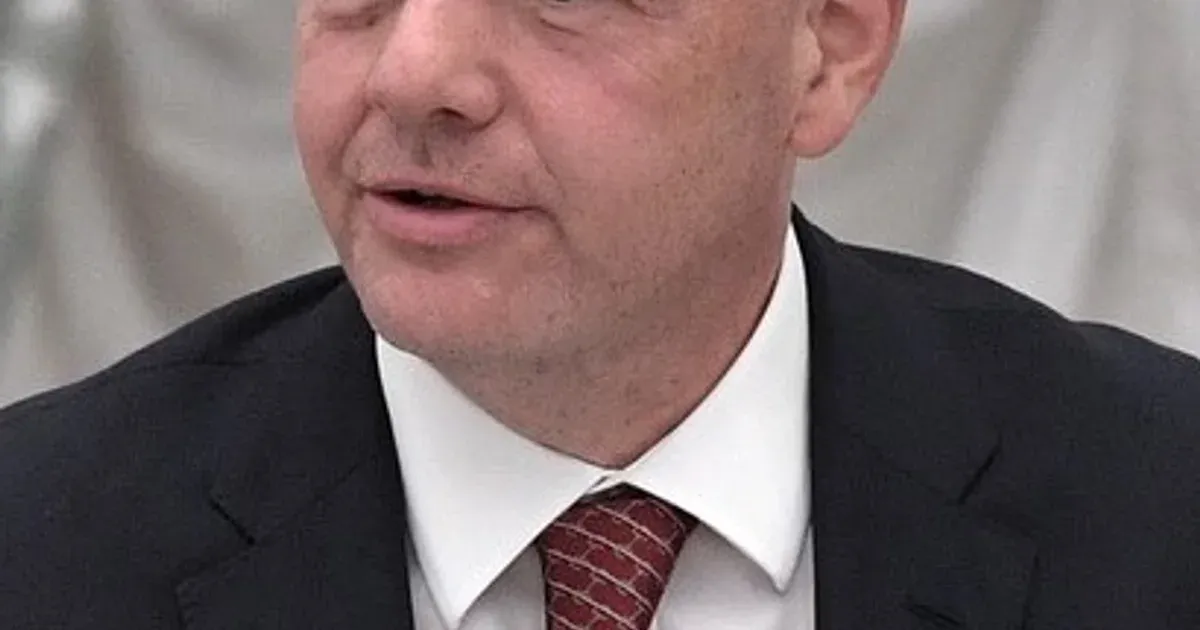
Gianni Infantino emerged from a private strategy session at the White House with a declaration that caught the diplomatic world by surprise. Football's most powerful executive confirmed that Donald Trump personally assured him the Iranian national team will be welcome to participate in the 2026 World Cup hosted across North America. Sources within FIFA indicate the conversation focused heavily on the logistical hurdles of bringing a nation currently at odds with US foreign policy onto American soil for the world's largest sporting event. The report was published March 11, 2026, as the issue drew renewed attention. Infantino used his social media channels to broadcast the news, claiming that preparations are moving forward despite the intense regional conflict currently gripping the Middle East. News of this agreement comes at a time when tensions between Washington and Tehran are at a generational peak, making the presence of Team Melli on US turf a complex security and political puzzle. White House officials have not yet released a formal transcript of the meeting, but the FIFA president was specific in his recap. He noted that the two leaders spoke at length about the current situation in Iran and how it might impact the tournament schedule. Iran qualified for the expanded 48-team tournament and is currently scheduled to play all three of its group stage matches within the borders of the United States. This scheduling creates a unique challenge for the State Department, which must now balance standard visa restrictions with the host agreement signed years ago that guarantees entry for all qualified athletes. Infantino characterized the President's stance as one of openness, suggesting that the spirit of the competition should override the ongoing geopolitical hostilities that have seen sanctions and military posturing dominate the news cycle lately. Tehran has yet to comment.
Infantino said Trump personally assured him that Iran's national team would be allowed to participate in the 2026 World Cup hosted across North America.
Logistical Hurdles and Visa Guarantees
Preparation for the 2026 tournament requires unprecedented cooperation between sports bodies and federal law enforcement. If Iran is to play in cities like Los Angeles, New Jersey, or Miami, the security apparatus required will be massive. Reports from Yonhap Sports suggest that FIFA has been seeking written guarantees that players, coaching staff, and officially sanctioned media members will receive expedited entry despite existing travel bans or heightened vetting processes. While the Guardian suggests Trump gave a verbal green light, Reuters' sources in the diplomatic corps suggest that the actual implementation of such a policy remains under intense debate within the Department of Homeland Security. Security experts worry that the presence of the Iranian team could serve as a lightning rod for protests, both for and against the current regime in Tehran, specifically in US cities with large Persian populations.
Bureaucracy often moves slower than the rhetoric of world leaders. FIFA officials are reportedly working on a specific protocol for the Iranian delegation that mirrors the arrangements made during the 1998 World Cup in France, where the two nations faced off in a highly charged match. However, the stakes in 2026 are sharply higher because the matches are physically located inside the United States. Infantino remains adamant that the World Cup must be a neutral ground where politics are sidelined in favor of the game. Critics of the FIFA president point out that his close relationship with various world leaders often blurs the line between sports governance and international lobbying.
Still, the promise of a peaceful tournament remains the primary marketing tool for FIFA as the June kickoff approaches.
Geopolitical Realities and the Middle East War
Conflict in the Middle East has rarely been more volatile than it is in early 2026. Military operations and drone strikes have become daily occurrences, leading many to wonder how a sports tournament can ignore the reality of a literal war zone. Trump's apparent welcome to the Iranian team stands in sharp contrast to his administration's broader policy of maximum pressure. Political analysts suggest this might be a tactical move to show US hospitality on the global stage, or perhaps a pragmatic realization that barring a qualified team would violate FIFA's hosting contracts and risk moving matches to Canada or Mexico. FIFA rules are clear: if a host country cannot guarantee entry to all qualified teams, they risk losing their hosting rights.
This ultimatum likely played a role in the discussions between Infantino and the President. The logistics remain politically and legally strained. Players from the Iranian squad often find themselves in an impossible position, caught between representing their country and managing the political minefield of their government's actions. During the 2022 tournament in Qatar, the team made headlines for their silent protest during the national anthem. Similar displays in 2026 on American soil would carry even more weight, potentially creating a media firestorm that neither FIFA nor the White House can fully control.
Broadcasters like FOX and Telemundo are already prepping for the inevitable overlap of sports and hard news during the Iranian group stage fixtures. Infantino's goal is to minimize these distractions, yet his own announcement has ensured that Iran's participation will remain a top-tier political story for the next three months.
Historical Context of US-Iran Football
Matches between these two nations have always been loaded with subtext. The 1998 meeting in Lyon, France, was dubbed the most politically charged match in World Cup history, yet it ended with players from both sides posing for a joint photo and exchanging flowers. That moment of sportsmanship is often cited by FIFA as proof that football can bridge diplomatic divides. When the teams met again in Qatar four years ago, the atmosphere was similarly tense but remained professional on the pitch. The 2026 tournament marks the first time the Iranian team will play a competitive match on US soil since the 1979 revolution.
This fact alone makes the upcoming matches more than a game for the millions of Iranians living in the diaspora across North America. Sanctions continue to complicate the financial side of Iran's participation. FIFA must find ways to pay out prize money and cover travel expenses for the Iranian Football Federation without violating US Treasury Department regulations. Previous tournaments saw FIFA hold funds in escrow or pay third-party vendors directly to circumvent these issues. Infantino's meeting at the White House likely touched on these financial mechanics, as the tournament cannot function if one of its participants is financially paralyzed by the host's laws.
Football remains the primary focus for the fans, but for the accountants and lawyers at FIFA headquarters in Zurich, the Iranian presence is a series of complex regulatory hurdles that require constant attention.
Why FIFA Neutrality Is a Commercial Claim
Does Gianni Infantino truly believe that a soccer ball can solve the most entrenched geopolitical rivalry of the 21st century or is he simply protecting his bottom line? FIFA's insistence on neutrality has always been a convenient fiction, a shield used to deflect criticism while the organization collects billions from regimes and host nations with checkered human rights records. By dragging Donald Trump into the spotlight to vouch for Iran's participation, Infantino is engaging in a dangerous game of sports-washing that ignores the reality of the missiles flying in the Middle East. It is a cynical maneuver. The FIFA president knows that a World Cup without a full roster of teams is a commercial failure, and he is willing to use the prestige of the White House to ensure his television contracts remain intact.
We should be skeptical of any claim that sports can exist in a vacuum. If the Iranian team arrives in Los Angeles or New Jersey, it won't be a celebration of unity; it will be a high-stakes security operation that costs American taxpayers millions. Infantino's rhetoric about the world being welcome sounds noble until you consider the administrative nightmares and the potential for real-world violence. It isn't about the beautiful game. It is about an organization so desperate for a smooth tournament that it is willing to pretend that a handshake in the Oval Office can erase decades of blood and sanctions.
This report sees through the glossy social media posts. The 2026 World Cup is rapidly becoming a political theater where the football is merely a secondary attraction to the ego of the men in charge.