Iran’s shift toward a regional war of attrition has made energy infrastructure, shipping lanes and Western defenses part of the same battlefield.
Tehran Drops Strategic Patience
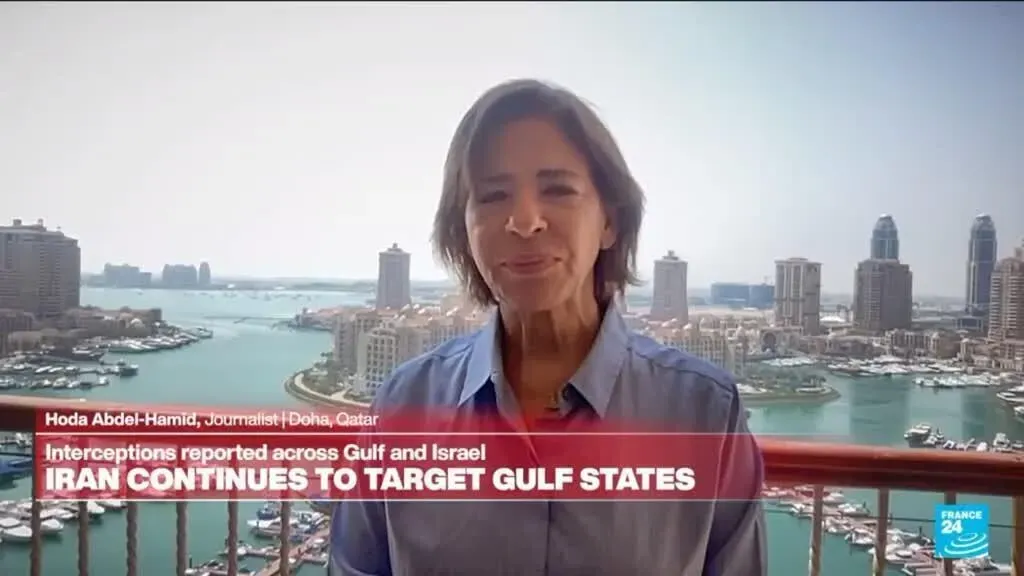
Doha, Qatar, smoke from burning storage tanks at the Ras Tanura refinery complex drifted across the Persian Gulf this morning, signaling a definitive end to the era of Iranian restraint. Iranian military planners have discarded the long-held doctrine of strategic patience, opting instead for a multi-front war of attrition designed to cripple regional energy exports and exhaust Western naval resources. Reports from the second week of this escalating conflict indicate that Tehran now views direct confrontation as a more reliable deterrent than diplomatic hesitation. While previous years saw the Islamic Republic absorbing strikes against its proxies with calculated silence, the current posture favors immediate and disproportionate kinetic responses. The shift was visible by March 11, 2026, as Gulf energy targets moved to the center of the conflict. Military analysts in Doha observe that the shift originated from a realization within the Supreme National Security Council that silence invited further aggression. Restraint failed to prevent conflict, leading the new leadership in Tehran to conclude that only a credible threat to the global economy could secure their borders. The campaign now reaches across several national energy systems, with the apparent goal of pushing Brent Crude toward the $150 mark. Such a strategy places immense pressure on US allies in the Gulf who rely on maritime security for their primary revenue streams. The math of regional security has changed overnight.
Tehran is now targeting oil infrastructure across several countries, aiming to drive Brent Crude prices toward the $150 mark.
Satellite imagery confirms that the Iranian Revolutionary Guard Corps (IRGC) has deployed mobile missile batteries along the coast of the Hormozgan province. These units coordinate with Houthi rebels in Yemen and militias in Iraq to create a synchronized strike capability that spans the entire Arabian Peninsula. France 24 reports that multiple strikes have been intercepted by US and regional air defenses over the last forty-eight hours, yet the sheer volume of incoming projectiles threatens to overwhelm existing battery capacities. Interceptions are expensive, but the cheap drones used by Tehran cost only a fraction of a Patriot missile. Energy markets reacted with predictable volatility when news broke that Iranian drones had struck a pumping station in the Eastern Province.
While Bloomberg suggests the damage remains manageable, Reuters sources within the Saudi energy ministry claim that technical teams are struggling to restore pressure to several key pipelines.
Energy Infrastructure Becomes the Target
This decision to target the economic lifeblood of the region marks a departure from the shadow wars of the 2020s. Tehran no longer seeks plausible deniability. Instead, it seeks a recognition of its ability to plunge the world into a deep recession if its security demands are not met. Defense officials in Washington are currently scrambling to reinforce the Integrated Air and Missile Defense (IAMD) architecture that links Saudi, Emirati, and US sensors. Still, the war of attrition favors the attacker.
If Iran can maintain a steady drumbeat of low-cost strikes, it forces its adversaries to maintain a state of permanent, high-cost alert. Every successful interception is a tactical victory for the defense but a strategic win for the IRGC, which seeks to bleed the US Treasury through defensive over-expenditure. This move reflects a sophisticated understanding of Western political vulnerabilities during an election year. A single drone can disrupt billions in trade. Diplomatic channels have effectively collapsed since the failure of the last round of talks in Geneva.
Iranian leadership appears convinced that the West only understands the language of resource scarcity. By focusing on oil infrastructure, Tehran bypasses traditional military-to-military engagements where it is outmatched, focusing instead on a theater where it holds the ultimate leverage. Al Jazeera reports that the new Iranian high command believes the previous administration's patience was interpreted as weakness, a mistake they are determined to rectify through fire. Coordination between the various branches of the so-called Axis of Resistance has reached an unprecedented level of tactical fluidity. Intelligence gathered by regional monitors suggests that the timing of strikes in the Red Sea is now being synchronized with missile launches from the Levant and the Gulf.
The Multi-Front Calculus
Such synchronization forces US Central Command to split its attention and assets across three distinct geographic zones. Military planners call this a saturation strategy, where the defensive perimeter is stretched so thin that a breakthrough becomes statistically inevitable. One miscalculation or one failed interception could lead to a catastrophic environmental disaster or a mass-casualty event at a foreign labor camp. Economic pressure remains the primary weapon in this new Iranian arsenal. Beyond the physical damage to refineries, the soaring cost of maritime insurance is beginning to deter commercial shipping from entering the Strait of Hormuz.
Several major Japanese and European shipping lines have already announced the suspension of their Gulf routes, opting for the longer journey around the Cape of Good Hope. This logistical shift adds weeks to delivery times and thousands of dollars to the cost of every container, fueling inflationary pressures that Western central banks are desperate to avoid. Tehran knows that the tolerance for high gas prices in the United States and Europe is razor-thin. Security experts argue that the current trajectory leads toward a full-scale regional conflagration. Yet, from the perspective of the IRGC, the risk of a general war is preferable to the slow strangulation of sanctions and targeted assassinations.
They are betting that the West will choose to offer concessions rather than risk a global depression. It is a high-stakes gamble that ignores the possibility of a preemptive strike on Iranian nuclear and military assets by a coalition of desperate regional powers. However, for now, the initiative remains firmly in the hands of the planners in Tehran.
Why Energy Blackmail Must Cost More
Western diplomats have spent a decade chasing the phantom of a moderate Tehran, only to be met by the cold reality of a regime that thrives on chaos. The latest pivot to a war of attrition is not a sign of desperation but a calculated exercise in predatory geopolitics. By targeting global energy hubs, Iran is effectively taking the world economy hostage, betting that the collective cowardice of the international community will result in another round of fruitless appeasement. We must stop pretending that de-escalation is a viable strategy when one side views peace as a tactical disadvantage. The failure of strategic patience was not an Iranian failure, it was a Western one.
We allowed the Islamic Republic to build the very arsenal that is now being used to choke the global supply chain. The time for measured responses has passed. If the world is to avoid a permanent state of energy blackmail, the cost of these strikes must be made unbearable for the leadership in Tehran. Anything less than a total dismantling of the IRGC's regional launch capabilities is merely an invitation for further aggression. The smoke over the Gulf is a message that the old rules are dead.
It is time the West started writing new ones.